
How To
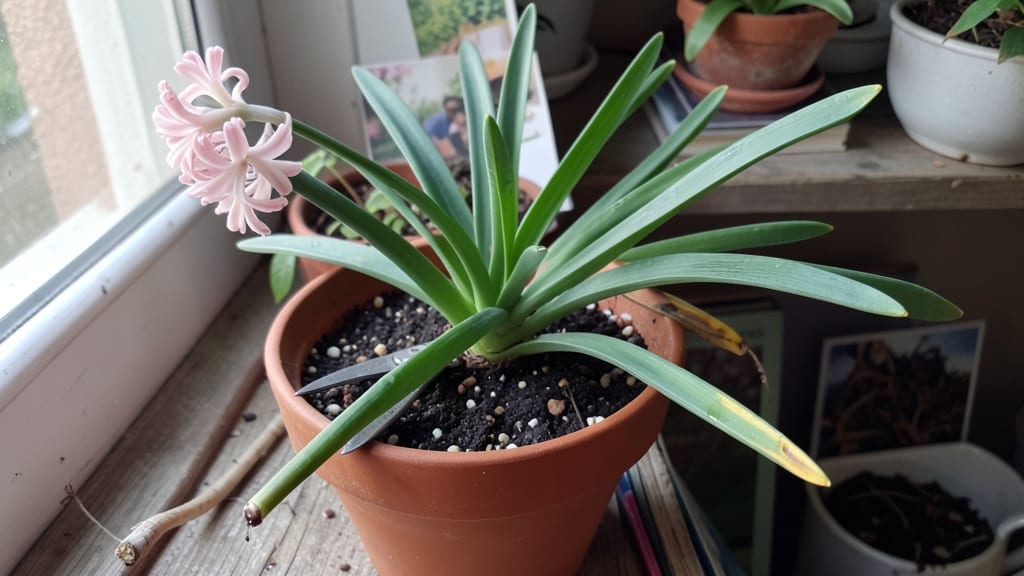
To care for indoor hyacinth bulbs after flowering, trim the stems just above the foliage to redirect energy, allow leaves to yellow naturally for nutrient absorption, then transfer bulbs to a cool, dry spot for 6-8 weeks of dormancy before replanting in fall for next year’s blooms.
After the vibrant blooms fade, these bulbs need proper rest to recharge.
The yellowing leaves are hard at work, converting sunlight into stored nutrients that fuel next year's flowers. 🌱 I’ve found that storing bulbs in a paper bag with a few holes works best—it mimics their natural dry environment while preventing rot.
Just avoid plastic containers, which trap moisture and encourage mold.
Once dormancy ends in fall, replanting in well-draining soil gives them the perfect fresh start. The key is patience: rushing this process weakens the bulb’s ability to produce strong stems and abundant blooms the following spring.
💡 In This Article
- How Hyacinth Bulbs Store Energy for Future Blooms
- Step-by-Step Guide to Storing Indoor Hyacinth Bulbs
How hyacinth bulbs store energy for future blooms
Here's what's actually happening when those green leaves stay attached after flowering: your hyacinth bulb is running a silent photosynthesis factory.
The leaves contain chlorophyll that captures sunlight and converts it into glucose through photosynthesis, while the bulb's base cells act like a natural storage unit, converting that glucose into starch and fructans - complex carbohydrates that serve as winter food reserves.
This process can continue for 6-8 weeks after flowering, with the bulb absorbing up to 70% more nutrients than if you cut the leaves immediately.
The science gets even more interesting when you consider the bulb's vascular system. When you trim the flower stems just above the foliage (not the leaves), you're essentially rerouting the bulb's energy supply from wasted seed production to leaf function.
The bulb's basal plate - that flat bottom where roots emerge - becomes the command center, directing nutrient flow upward into the leaves during daylight hours, then downward into storage cells at night.
This two-way traffic continues until the leaves naturally yellow, signaling the bulb has stored enough energy for dormancy.
What most people don't realize is how temperature affects this storage process. Ideal dormancy conditions create the perfect balance: 50-60°F keeps metabolic processes slow enough to prevent energy waste while allowing just enough activity to maintain cell integrity.
At these temperatures, the bulb's respiration rate drops by 75% compared to active growing conditions, meaning it uses stored energy more efficiently. Too warm (70°F+) and the bulb may start breaking dormancy prematurely, while too cold (40°F) can cause cell damage from ice crystal formation.
Humidity plays a surprising role too. While the bulbs need dry conditions (40-50% relative humidity), the surrounding air should have just enough moisture to prevent desiccation.
Think of it like a desert plant's adaptation - hyacinth bulbs have evolved to handle dry periods but still need minimal moisture to maintain cell turgor (that's the technical term for cell firmness).
This is why paper bags with small holes work better than plastic containers: they allow transpiration (water loss through leaves) to occur gradually while preventing moisture buildup that could lead to rot.
The color change from green to yellow isn't just visual - it's a biochemical signal. As chlorophyll breaks down, other pigments like carotenoids become visible, but more importantly, this process triggers the bulb to shift from energy production to storage mode.
The yellowing leaves actually contain higher concentrations of sugars and amino acids than green leaves, which get transported to the bulb's storage cells.
Forcing this process by cutting leaves too early can leave your bulb with only 30-50% of its potential energy reserves, resulting in weaker stems and fewer blooms next season.
Consider this comparison: a well-rested hyacinth bulb can produce 3-5 times more flower buds than one deprived of proper dormancy. The energy stored during this period fuels everything from root development to stem elongation to bloom production.
It's like charging a battery - you wouldn't use it immediately after charging, you'd let it sit and stabilize. The same principle applies to your hyacinth bulbs. 💫