
Pruning
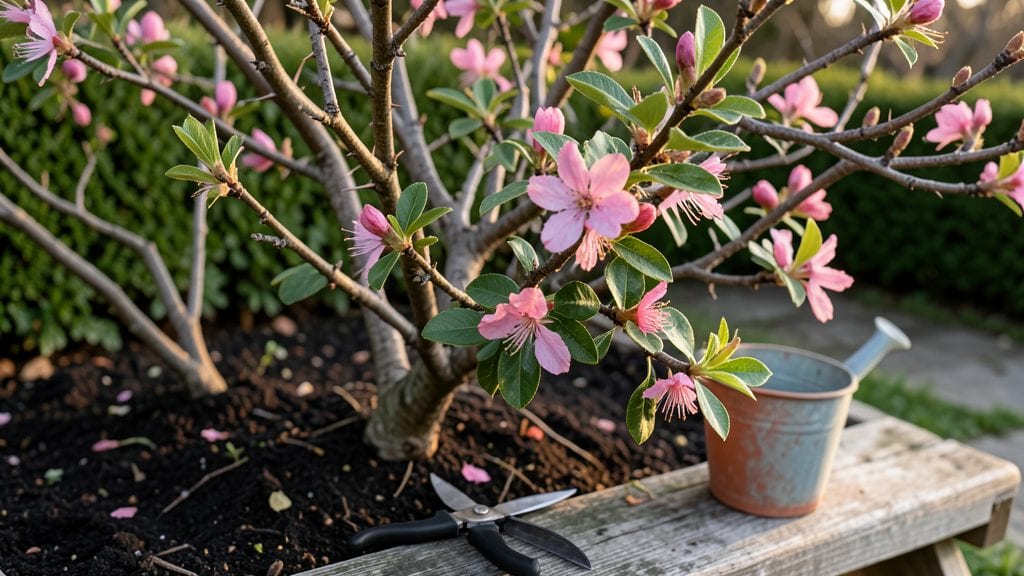
Pruning flowering quince right after spring blooms transforms a struggling shrub into a showstopper with thicker branches and more abundant flowers next year.
I’ve pruned these thorny beauties for over a decade, and the difference between a well-timed cut and a missed opportunity is dramatic—think three times the blooms or a plant that slowly declines.
The key isn’t just when you cut but how you shape the plant to encourage new growth where it matters most.
You’ll need sharp bypass pruners (dull blades tear bark), a pair of gloves (those thorns are no joke), and a clear day to avoid spreading disease. Start by removing any dead, crossing, or weak branches first—these compete with healthy growth.
Then focus on thinning out older stems at the base to open the center, which lets sunlight and air circulate where new blooms will form. Most flowering quince respond best to light pruning annually, but older plants may need a more aggressive rejuvenation every few years.
The payoff comes in late winter or early spring when you’ll see dense clusters of blossoms where you once had sparse growth. Proper pruning also reduces the risk of pests hiding in thick, shaded branches and keeps the plant’s energy focused on producing flowers rather than maintenance growth.
After pruning, apply a balanced fertilizer to support the new shoots you’re encouraging—your quince will reward you with vibrant, long-lasting blooms that outshine many spring shrubs.
This method works equally well for standard flowering quince (Chaenomeles speciosa) and dwarf varieties, though scaling back slightly on smaller plants. Whether you’re dealing with a mature shrub or a young specimen, the same principles apply—just adjust the intensity.
Ready to give your quince the attention it deserves? Let’s get started with the right cuts for the right season.
📚 In This Guide
- What you need
- Instructions
- Tips and common mistakes
- Wrapping up and next steps
What you need
- ● Bypass pruners – Sharp, high-quality pruners (e.g., Felco or Fiskars) for clean cuts on small to medium branches.
- ● Loppers – For thicker branches (½" to 1½" diameter), look for long-handled loppers for leverage.
- ● Pruning saw – A curved-bladed saw for larger branches (over 1½" in diameter).
- ● Disinfectant (70% isopropyl alcohol or bleach solution) – To sterilize tools between cuts and prevent disease spread.
- ● Garden gloves – Heavy-duty, cut-resistant gloves to protect your hands from thorns and sharp tools.
- ○ Pruning sealant (optional but helpful) – A wound sealant (like Tanglefoot Tree Wound Pruning Sealer) to coat larger cuts and reduce sap loss.
- ● Bucket or trash bag – For collecting pruned branches and debris.
- ● Hand pruners with a bypass blade – For precision cuts on delicate stems.
- ● Extension pole pruners – If your quince is tall, these help reach higher branches safely.
- ● Marking twine or flags – To tag branches for removal if you’re planning a multi-step pruning project.
- ● Safety glasses – Protect your eyes from debris, especially when using a pruning saw.
- ● Knee pads or a small stool – For comfort if you’re working on the ground or bending frequently.
Step-by-step guide to pruning flowering quince for vibrant spring blooms
Flowering quince thrives when pruned correctly—here’s how to shape it without sacrificing next year’s blossoms.
Time Your Pruning for Optimal Growth
Prune flowering quince immediately after it finishes blooming in late spring, typically between May and June. This timing ensures you remove spent flowers while preserving next year’s flower buds, which form on old wood. Avoid pruning in fall or winter, as cold stress can weaken the plant before dormancy.
If you missed the spring window, wait until early summer—just don’t delay past July, or you risk reducing next year’s bloom potential. I always check the plant’s health first: if branches are dead or diseased, remove them anytime, but healthy pruning waits for post-bloom.
Assess the Plant’s Structure and Remove Dead or Weak Growth
Start by examining the quince for dead, damaged, or crossing branches. Use sharp pruning shears to cut these at a 45-degree angle, about ¼ inch above a healthy bud or outward-facing branch. Dead wood is easy to spot—it’s brittle, dark, or lacks leaves, while weak growth appears thin or spindly.
Next, thin out crowded branches to improve airflow. Aim for an open center with sunlight reaching all parts of the plant. I like to step back every few cuts to visualize the shape—this prevents over-pruning and maintains the natural form of the quince.
Shape the Quince for Balance and Airflow
Prune to encourage a rounded, vase-like shape by shortening overly long branches to a strong lateral bud. Cut just above the bud at the desired height, ensuring the remaining branch grows outward rather than inward. Avoid leaving stubs, as they invite disease and weaken the plant.
For larger branches, use loppers and make cuts just outside the branch collar—the swollen area where the branch meets the trunk. This promotes faster healing. If a branch is too thick to cut cleanly, make a series of small notches to guide the branch’s natural breakage.
Clean Up and Disinfect Tools
After pruning, remove all clippings and dispose of them in a sealed bag—never compost diseased material. Wipe your pruning tools with 70% isopropyl alcohol or a bleach solution (1 part bleach to 9 parts water) to prevent spreading pathogens between cuts.
Finally, apply a layer of mulch around the base of the plant to retain moisture and suppress weeds. Keep mulch 2-3 inches deep and avoid piling it against the trunk. This step ensures your quince recovers quickly and stays healthy for next year’s spectacular blooms.
Monitor and Adjust for Future Growth
Watch the quince over the next few weeks for signs of stress, like yellowing leaves or wilting. If you pruned too aggressively, new growth may appear leggy—this is normal and will balance out as the plant matures. Fertilize lightly in early summer with a balanced, slow-release fertilizer to support recovery.
Each year, repeat the process after blooming, adjusting for the plant’s natural growth pattern. Over time, your quince will develop a stronger structure, producing even more abundant spring flowers. The key is patience—quince responds best to gradual, thoughtful pruning rather than drastic cuts.
Tips & tricks for pruning flowering quince
Mastering the art of pruning flowering quince transforms a simple gardening task into a strategic process that ensures years of vibrant blooms. Here’s how to elevate your technique beyond the basics.
Timing Precision: The window between late spring and early summer—specifically May through July—is non-negotiable for preserving next year’s flower buds. I’ve learned the hard way that pruning too early can remove potential blooms, while waiting too late risks reducing next year’s floral display. If your quince blooms later than average, mark your calendar based on when the last flowers fall rather than relying solely on the calendar month.
Branch Selection Strategy: When identifying branches to remove, focus on three key indicators: dead wood (brittle, dark, and leafless), crossing branches that rub against each other (creating wounds), and weak growth that competes with stronger branches. Pro tip: Use your fingers to gently bend branches—healthy wood bends slightly, while dead wood snaps. For thick branches, make your cut just outside the branch collar using loppers, and avoid leaving stubs longer than ¼ inch, as these can harbor pests and diseases.
Shape with Purpose: The goal is a rounded, vase-like silhouette that allows sunlight to penetrate the center. When shortening branches, always cut just above a strong lateral bud that faces outward. This encourages new growth in the right direction. I find it helpful to sketch a rough outline of the desired shape on paper first—this visual guide prevents over-pruning and ensures balance. For larger branches, if clean cuts aren’t possible, make small notches to guide the branch’s natural breakage at the branch collar.
Post-Pruning Care: After pruning, the work isn’t done. Remove all clippings immediately and dispose of them in a sealed bag—never compost diseased material. Disinfect your tools between cuts using 70% isopropyl alcohol or a bleach solution to prevent cross-contamination. Finally, apply a 2-3 inch layer of mulch around the base, keeping it clear of the trunk. This step is often overlooked but critical for retaining moisture and suppressing weeds, which helps the quince recover more quickly.
Pro Tips for Prune Flowering Quince
- Mastering the art of pruning flowering quince transforms a simple gardening task into a strategic process that ensures years of vibrant blooms.
- Timing Precision: The window between late spring and early summer—specifically May through July—is non-negotiable for preserving next year’s flower buds.
- Pro tip: Use your fingers to gently bend branches—healthy wood bends slightly, while dead wood snaps.
Frequently asked questions
Got questions about pruning your flowering quince? You’re not alone!
Here are answers to the most common concerns—so you can confidently shape your shrub for stunning spring blooms.
When is the best time to prune flowering quince?
Prune flowering quince right after flowering (late spring to early summer). This timing ensures you don’t cut off next year’s blooms, which form on old wood. Avoid heavy pruning in fall or winter—it can stress the plant or encourage disease. Light shaping in late winter (before buds swell) is fine, but keep it minimal.
How much can I prune my flowering quince?
For established shrubs, remove no more than 1/3 of the plant in a single session to avoid shock. Focus on dead, diseased, or crossing branches first, then thin out crowded areas for airflow. Young quince can handle slightly more aggressive pruning to encourage shape. Never remove more than 25-30% of the canopy unless reviving a severely overgrown shrub.
Why aren’t my flowering quince blooms as abundant as last year?
Over-pruning (especially in late winter) is the #1 culprit! Blooms form on old wood, so heavy cuts too early can strip next year’s flowers. Also check for:
- Poor nutrition: Feed with acidic, high-phosphorus fertilizer in early spring.
- Disease: Fungal issues (like powdery mildew) weaken blooms—prune infected branches immediately.
- Sunlight: Quince needs 6+ hours of sun daily for robust flowering.
Can I prune flowering quince the same way as other shrubs?
Nope! Unlike re-blooming shrubs (e.g., hydrangeas), flowering quince blooms on old wood, so avoid heavy cuts in late winter. Skip renovative pruning (drastic rejuvenation cuts)—it often backfires. Instead, shape lightly in summer and remove only problem branches in dormant seasons. Think “less is more”!
What should I do if my quince branches look dead after pruning?
Don’t panic! If branches are brown, brittle, and hollow, they’re likely dead—cut them back to healthy wood. For gray, shriveled foliage, wait a few weeks: quince sometimes drops leaves post-bloom before regrowing. If the plant stays leafless, it may need water, fertilizer, or protection from pests (like scale insects).
Pro tip: Label branches you’re unsure about with a plant tie—observe for new growth in spring!
Wrapping up and next steps
Pruning your flowering quince doesn’t have to be intimidating—it’s all about timing, technique, and a little patience. 🌸 By following the right steps, you’ll reward yourself with show-stopping blooms and a healthier plant year after year.
Whether you’re a seasoned gardener or just starting, now’s the perfect time to roll up your sleeves and give your quince the care it deserves.
Ready to transform your garden? Grab your pruners, mark your calendar, and start with one branch at a time. Your future spring display will thank you!