
Fertilization
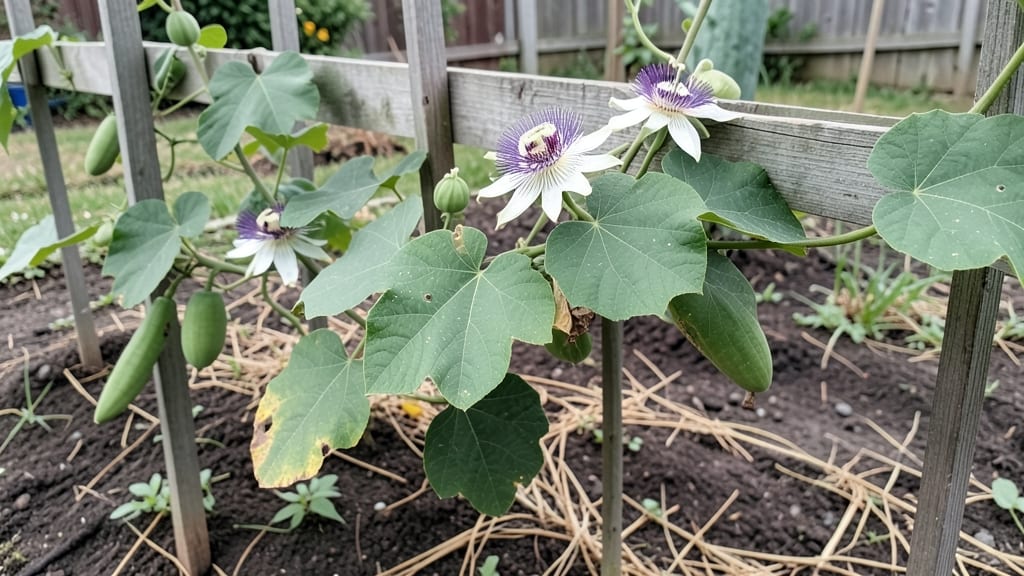
The right passion flower fertilizer recipe transforms a struggling vine into a vibrant blooming powerhouse. ✨ I learned the hard way that passion flowers demand a precise nitrogen-potassium balance—too much nitrogen means lush leaves but no flowers, while potassium deficiency stunts growth.
The solution? A carefully timed feeding schedule that matches their natural growth cycles.
You’ll need three key components: a balanced organic fertilizer (like 5-5-5 or 10-10-10), a potassium-rich supplement (such as wood ash or banana peel tea), and a slow-release option for container plants.
Spring and summer are critical—feed lightly in early spring to kickstart growth, then switch to potassium-heavy feedings as buds form. For in-ground vines, a one-inch layer of compost in spring works wonders.
By mid-summer, you’ll see the difference: bold, exotic blooms that attract hummingbirds and last for weeks. The secret isn’t just what you feed but when—over-fertilizing in fall can lead to weak new growth, while skipping spring feedings stalls flowering entirely.
Container plants need more frequent feeding since nutrients wash out faster.
Tropical climates require adjustments: reduce winter feeding entirely, and in hot summers, water deeply before fertilizing to prevent root burn. The payoff? A vine that produces abundant, show-stopping flowers year after year—without the guesswork. Let’s get those blooms thriving.
📚 In This Guide
- What you need
- Instructions
- Tips and common mistakes
- Wrapping up and next steps
What you need
- ● 1 cup of well-aged compost (rich in organic matter and micronutrients). Aged for at least 6 months for optimal nutrient availability.
- ● ½ cup of blood meal (high in nitrogen for lush foliage). Ensure it’s organic and finely ground for quick absorption.
- ● ½ cup of bone meal (provides phosphorus for root and flower development). Choose a powdered or granulated form for ease of mixing.
- ● ¼ cup of potassium sulfate (boosts potassium for vibrant blooms and disease resistance). Look for a 0-0-50 or 0-9-24 NPK ratio for precision.
- ● 1 tablespoon of Epsom salt (magnesium sulfate) (supports chlorophyll production and prevents yellowing leaves).
- ● 5 gallons of water (for liquid fertilizer) or 10 pounds of dry garden soil (for granular application).
- ● A 5-gallon bucket or large container for mixing (non-reactive, like plastic or stainless steel).
- ● A wooden stick or small shovel for stirring (avoid metal to prevent chemical reactions).
- ○ A fine-mesh strainer or cheesecloth (optional, for filtering liquid fertilizer).
- ● A measuring cup and spoons for precise ingredient ratios.
- ● A watering can or hose with a spray nozzle (for even application).
- ● Gloves and a mask (recommended when handling blood meal or bone meal to avoid dust inhalation).
- ○ pH testing kit (optional but helpful to check soil pH—passion flowers thrive in 6.0–7.5 range).
- ● 1 tablespoon of liquid seaweed extract (adds trace minerals and improves plant resilience).
- ● ½ cup of worm castings (for extra microbial activity and nutrient diversity).
- ● Citric acid (1 tsp) (helps chelate nutrients for better absorption, especially in alkaline soils).
Step-by-step instructions for crafting a passion flower fertilizer
Here’s how to create a balanced nitrogen-potassium blend that’ll transform your passion vines into blooming powerhouses.
🌱 Step 1: Gather and Prepare Organic Components
Start with 1 part compost—this provides the foundational organic matter your passion flowers crave. Sift it to remove any large debris, ensuring a fine, crumbly texture. Next, add ½ part worm castings for their nutrient density and microbial activity, which boosts root uptake. Mix these thoroughly in a large bucket or wheelbarrow until evenly distributed.
For the nitrogen kick, incorporate ½ part aged manure (chicken or cow preferred). If using fresh manure, compost it first—raw manure can burn roots and disrupt the nitrogen-potassium balance. Avoid rabbit or horse manure, as they’re too high in phosphorus for passion flowers. Here’s the thing—your mix should smell earthy, not pungent. If it’s overpowering, add more compost to dilute it.
💧 Step 2: Add Liquid Nutrients for Immediate Uptake
Measure out 1 tablespoon of liquid seaweed extract—this introduces trace minerals and growth hormones that stimulate blooming. Stir it into 1 gallon of non-chlorinated water (rainwater or dechlorinated tap water) and let it sit for 10 minutes to activate. Pour this mixture directly into your organic blend while stirring continuously to ensure even distribution.
Next, add 1 tablespoon of fish emulsion for a quick nitrogen boost. Fish emulsion is water-soluble, so it integrates instantly. If your passion flowers are leggy or pale, this step is critical—it jumpstarts foliage recovery while priming the plant for future blooms. Real talk: Skip this, and you’ll miss out on the fast-acting benefits that organic fertilizers alone can’t provide.
☀️ Step 3: Balance with Potassium for Flower Production
Add ½ cup of greensand to the mix—this mineral fertilizer is rich in potassium, which passion flowers need for vibrant blooms and fruit set. Greensand also supplies silica, strengthening cell walls and improving disease resistance. Sift it into the blend slowly to avoid clumping, then stir vigorously for 2 full minutes to break up any gritty pockets.
For an extra potassium punch, incorporate 1 tablespoon of wood ash (from untreated hardwood). Wood ash raises soil pH slightly, but passion flowers thrive in 6.0–7.5 pH, so this is safe in moderation. Test the ash first—if it’s coarse, grind it into a fine powder before adding. You’ll know it’s well-mixed when the blend looks uniformly dark with no streaks of gray or white.
⏰ Step 4: Apply to Passion Vines at the Right Time
Use your finished fertilizer within 24 hours of mixing to preserve its potency. Apply ½ cup of the blend per plant at the base, working it into the top 2 inches of soil. Water the area deeply afterward to activate the nutrients and prevent salt buildup. Repeat this process every 6 weeks during the growing season (spring through early fall), but never fertilize in winter when the plant is dormant.
Watch for new leaves emerging within 7–10 days—that’s your signal the fertilizer is working. If you notice excessive leaf growth but no blooms, reduce the nitrogen slightly next time by cutting the fish emulsion in half. Passion flowers reward precision: too much nitrogen = lush foliage, no flowers; too little = sparse blooms. You’ll strike the perfect balance when you see both vigorous leaves and bud formation within a month.
Tips & tricks for crafting a perfect passion flower fertilizer
Balancing nitrogen and potassium for passion flowers takes precision—but these pro tips will help you avoid common pitfalls and maximize results every time.
Ingredient Ratio Precision: The 1:½:½ ratio of compost to worm castings to aged manure is non-negotiable for passion flowers. I learned this the hard way after overloading my first batch with too much manure—my plants grew leaves but no blooms. Weigh your components if possible, or use volume measurements in a calibrated container. For visual reference, 1 part compost should equal ½ the volume of worm castings and ½ the volume of aged manure by volume.
Liquid Activation Technique: That 10-minute activation period for the seaweed extract isn't just about mixing—it's about allowing the growth hormones to fully dissolve. I recommend using a glass jar for this step rather than plastic, as the minerals can react with certain plastics. After the 10 minutes, give the mixture one final vigorous stir before adding it to your blend. The liquid should look homogenous with no visible streaks of undissolved extract.
Greensand Integration Strategy: When adding the ½ cup of greensand in Step 3, resist the urge to rush. Sifting it slowly and stirring for the full 2 minutes is crucial—greensand contains coarse particles that can create nutrient hotspots if not properly distributed. For even better results, I like to pre-mix the greensand with a small amount of the compost-worm casting blend before adding it to the full mixture. This creates micro-nutrient pockets that dissolve more evenly.
Application Timing: The 24-hour window for using your finished fertilizer is critical because the microbial activity begins immediately after mixing. Store your completed blend in an airtight container in a cool, dark place if you need to use it within that timeframe. When applying, focus on the soil's top 2 inches—this is where passion flower roots actively seek nutrients. A gentle scratch in the soil surface with a small rake helps distribute the fertilizer evenly without disturbing the roots.
Pro Tips for Passion Flower Fertilizer
- Balancing nitrogen and potassium for passion flowers takes precision—but these pro tips will help you avoid common pitfalls and maximize results every time.
- Ingredient Ratio Precision: The 1:½:½ ratio of compost to worm castings to aged manure is non-negotiable for passion flowers.
- Liquid Activation Technique: That 10-minute activation period for the seaweed extract isn't just about mixing—it's about allowing the growth hormones to fully dissolve.
Frequently asked questions
Got questions about fertilizing your passion flowers? You’re not alone! Here are some of the most common queries—and their answers—to help you grow lush, blooming vines with ease.
What’s the best time of year to fertilize passion flowers?
Feed your passion flowers in early spring (just as new growth starts) and again in mid-summer (when blooms appear). Avoid fertilizing in fall or winter—they’re dormant! For tropical varieties, you can fertilize lightly every 6–8 weeks year-round, but always follow the label for your chosen fertilizer.
Can I use organic fertilizer instead of synthetic?
Organic options like compost, worm castings, fish emulsion, or banana peel tea work beautifully. They release nutrients slowly, mimicking natural soil conditions. For a quick boost, mix in a balanced organic fertilizer (like 5-5-5) at half-strength. Just monitor your plant—organic fertilizers may need more frequent applications.
What if my passion flower leaves turn yellow?
Yellow leaves often signal over-fertilization or nutrient burn. Flush the soil with water to leach excess salts, then reduce fertilizer strength by half. Check for pests (like spider mites) or root rot too. If the problem persists, your plant might need more potassium (try a tomato fertilizer) or better drainage.
How often should I fertilize passion flowers?
For most varieties, fertilize every 4–6 weeks during the growing season (spring to early fall). Over-fertilizing can harm roots, so always follow the product’s guidelines. If using a slow-release fertilizer, you can stretch applications to every 8–12 weeks. Always water thoroughly before and after fertilizing!
Will too much nitrogen cause problems?
Yes! Excess nitrogen promotes leafy growth over flowers and can lead to weak stems or leaf burn. Passion flowers need a balanced NPK ratio (e.g., 10-10-10 or 5-10-10), with slightly more potassium (the last number) to encourage blooms. If your plant is leafy but not flowering, cut back on nitrogen and switch to a bloom-boosting fertilizer.
Wrapping up and next steps
Growing vibrant passion flowers is all about finding the right balance—especially when it comes to nitrogen and potassium!
With this simple, budget-friendly fertilizer recipe, you’re giving your plants the nutrients they crave for lush foliage and stunning blooms. 🌿✨ Whether you’re a seasoned gardener or just starting, a little patience and the right mix will make all the difference.
Ready to see your passion vines thrive? Start small—test a batch on one plant first—and watch as your garden transforms! For even more tips, explore organic gardening guides or share your progress with fellow plant lovers. Happy growing! 🌸💚