Blooming
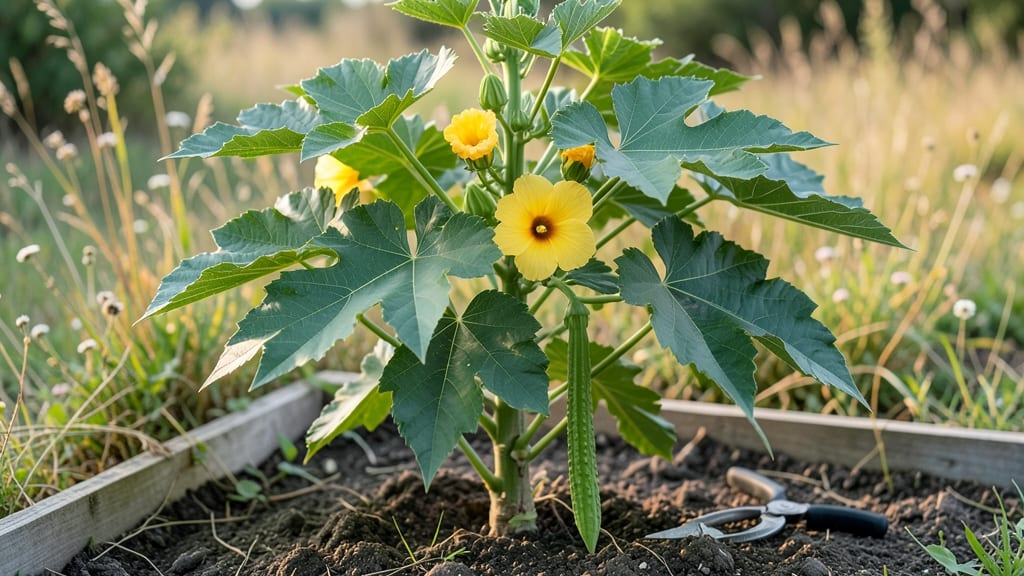
The okra flowering stage starts when those delicate yellow blossoms unfurl like tiny trumpets at dawn. 🌸 I’ll never forget the first time I saw my okra plants burst into bloom—it felt like a promise of harvests to come.
The flowers appear 45-60 days after planting, but only if the plant gets enough heat, light, and consistent moisture.
Here’s the thing—okra needs warmth to flower. Temperatures below 55°F shut down blooming, while 75-90°F is ideal. The soil should stay moist but not soggy, and a balanced fertilizer (like 10-10-10) at planting helps kickstart growth. Prune away any leggy stems to encourage bushier plants with more flower sites.
When those yellow flowers open, bees usually handle pollination—but if you’re growing in a greenhouse or a hot, dry climate, you might need to give them a hand.
Gently tap stems with a paintbrush or your finger to release pollen. Within 7-10 days, you’ll spot tiny okra pods forming where the flowers once were.
Troubleshooting poor flowering? Check for overwatering (root rot stops blooms), too much nitrogen (leads to leafy growth instead), or pests like aphids sucking sap. A quick spray of neem oil can save the day. With the right care, your okra plants will keep blooming—and producing—until frost.
📚 In This Guide
- What you need
- Instructions
- Tips and common mistakes
- Wrapping up and next steps
What you need
- ● Okra plants: Healthy, mature plants (3–6 months old) with visible buds or early blooms.
- ● Pruning shears: Sharp, sterilized bypass pruners (avoid dull blades to prevent plant damage).
- ● Gloves: Heavy-duty gardening gloves (to protect from thorns and sap).
- ● Disinfectant: 70% isopropyl alcohol or a mild bleach solution (1 part bleach to 9 parts water) for tool sterilization.
- ● Compost or mulch: Well-aged compost (5–10 lbs) or organic mulch (e.g., straw or wood chips) for soil enrichment.
- ● Fertilizer: Balanced 10-10-10 or organic fertilizer (e.g., fish emulsion or bone meal) for post-pruning nutrition.
- ● Watering can or hose: With a gentle spray nozzle (okra hates soggy roots!).
- ● Plant support: Small stakes or cages (for tall varieties like ‘Clemson Spineless’).
- ● Pruning spray: Copper-based fungicide (to prevent post-pruning infections).
- ○ Growth regulator: Gibberellic acid (optional for stubborn non-flowering plants; follow label instructions!).
- ● Journal or app: To track pruning dates, weather, and bloom progress (e.g., Gardenate or a simple notebook).
Step-by-Step guide to pruning okra during flowering
Here's how to keep your okra plants blooming abundantly all season long.
🌿 Step 1: Identify and Preserve Healthy Flowers
Start by scanning your okra plants for new flower buds—they appear as small, fuzzy green protrusions in the leaf axils. These buds will eventually open into bright yellow blossoms, so protect them from accidental damage. I always run my fingers gently along the stems to feel for these tiny growths before pruning.
Remove only wilted or dead flowers—they’ll drain energy from your plant instead of encouraging new blooms. Use clean, sharp pruning shears to snip just above the next leaf node. This ensures the plant can redirect its resources to healthier growth.
✂️ Step 2: Thin Overcrowded Flower Clusters
Okra plants produce flowers in clusters, and too many competing blooms can weaken the plant. When you see three or more flowers growing from the same node, leave only the strongest, healthiest bloom and prune the others at the base. This simple step boosts fruit production by giving the plant more energy to develop fewer, larger pods.
Watch for leggy stems with sparse foliage—these often signal overpruning or poor light. If you notice this, reduce pruning frequency and focus on maintaining leafy growth instead of aggressive flower thinning.
☀️ Step 3: Prune for Airflow and Light Penetration
Okra thrives in full sun, but dense foliage can block light from reaching the lower stems. Prune back any overly thick or tangled growth to improve airflow, which reduces humidity-related diseases like powdery mildew. Aim to keep the plant open and bushy, with sunlight able to reach the center.
Remove any yellowing or diseased leaves immediately—these can spread problems to healthy parts of the plant. Disinfect your pruning shears with rubbing alcohol between cuts to prevent contamination.
🌱 Step 4: Encourage New Growth After Pruning
After pruning, give your okra plants a light fertilizer application to support recovery. I use a balanced 10-10-10 formula diluted to half strength, applied at the base of the plant. This helps stimulate new flower buds and keeps the plant vigorous.
Water deeply right after pruning to help the plant recover. Keep the soil consistently moist but not soggy—okra roots need oxygen to thrive. Mulch around the base with 2-3 inches of organic mulch to retain moisture and regulate soil temperature.
⏰ Step 5: Monitor and Adjust Through the Season
Okra flowering stages can vary by climate, so check your plants weekly for new buds and signs of stress. In hotter regions, you may need to prune more aggressively to prevent heat stress, while cooler climates benefit from lighter trimming to extend the blooming period.
If you notice fewer flowers than expected, increase sunlight exposure or reduce watering slightly—okra often blooms more prolifically under slightly drier conditions. Adjust your pruning approach based on what you observe each week.
Tips & tricks for perfect okra pruning during flowering
Pruning okra right can transform your harvest—here's how to avoid common mistakes and maximize those bright yellow blooms.
Timing is Everything: Prune in the early morning when dew is still on the leaves. This reduces stress on the plant and gives it time to recover before the heat of the day. I always prune after a light watering—this helps the plant handle the trimming better and prevents shock. The weekly check mentioned in Step 5 is perfect for this routine.
Tool Prep Matters: Before you even touch your plants, disinfect your pruning shears with rubbing alcohol. I keep a small bottle in my gardening toolkit and wipe them down between every 3-4 cuts. This simple step prevents spreading diseases between plants. In Step 3, they mention this too—it's that important! Also, make sure your shears are sharp—dull blades crush stems instead of making clean cuts, which invites infection.
Visual Cues for Healthy Growth: When thinning clusters in Step 2, look for buds that are firm to the touch and have a vibrant green color. Avoid pruning anything with brown edges or spots—these are signs the flower isn't getting enough energy. I've learned the hard way that pruning stressed flowers actually stresses the plant more. Focus on the healthiest looking buds in each cluster.
Seasonal Adjustments: In cooler climates, you might notice slower growth after pruning. That's normal! When you see leggy stems in Step 2, it's often a sign to reduce pruning frequency and let the plant focus on leafy growth. In hotter regions, increase pruning frequency slightly to prevent heat stress—just watch for wilting as your signal to adjust. The weekly monitoring in Step 5 helps with this balance.
Pro Tips for Okra Flowering Stage
- Pruning okra right can transform your harvest—here's how to avoid common mistakes and maximize those bright yellow blooms.
- Timing is Everything: Prune in the early morning when dew is still on the leaves.
- Tool Prep Matters: Before you even touch your plants, disinfect your pruning shears with rubbing alcohol.
Frequently asked questions
Got questions about okra’s flowering stage? You’re not alone! Here are some of the most common queries—and straightforward answers—to help you nurture those vibrant blooms and pod-filled dreams.
How long does it take for okra plants to flower after germination?
Most okra varieties start flowering 40–60 days after planting, depending on warmth and sunlight. Early-maturing types (like ‘Clemson Spineless’) may bloom sooner, while heat-loving varieties might take longer in cooler climates. Pro tip: Ensure soil temps stay above 65°F (18°C) to speed up the process!
Why isn’t my okra flowering? What could be wrong?
Okra skips flowering for a few common reasons:
- Not enough heat: Okra thrives in 75–90°F (24–32°C)—cool nights delay blooms.
- Overcrowding: Plants need 18–24 inches of space to avoid stress.
- Nutrient imbalance: Too much nitrogen = leafy growth, no flowers. Fix it: Switch to a low-N, high-P/K fertilizer (like 5-10-10).
- Pests/disease: Aphids or fungal issues (like powdery mildew) sap energy. Solution: Spray neem oil or prune affected areas.
Should I prune okra flowers to encourage more pods?
Yes—but strategically! Prune spent flowers (those wilting after blooming) to redirect energy to new growth. Avoid heavy pruning early on, as okra flowers and pods grow from the same nodes. Best practice: Snip flowers after pods form (about 2–3 inches long) to boost yield.
Can okra flower in winter? What’s the trick?
Okra is a warm-season crop, so winter blooms are rare—but possible in USDA Zones 9–11 or with extensions. Use:
- Row covers for light frost protection.
- Greenhouses or cold frames to maintain 60°F+ (15°C+) soil temps.
- Dwarf varieties (like ‘Burgundy’) for smaller, hardier plants.
What can I plant near okra to attract more pollinators?
Okra relies on bees and butterflies—so plant these pollinator magnets nearby:
- Marigolds (repel pests and attract bees).
- Basil (boosts okra flavor + draws pollinators).
- Sunflowers or cosmos (provide nectar).
- Avoid strong herbs like mint—they can stunt okra growth.
Wrapping up and next steps
Mastering the okra flowering stage and pruning techniques is your ticket to a thriving, year-round harvest! 🌸 With the right tools, timing, and care, you’ll transform your okra plants into blooming powerhouses—ensuring vibrant flowers and bountiful pods. Don’t stop here! Experiment with different pruning styles, track your plant’s progress, and share your successes with fellow gardeners.
Your green thumb is about to get even greener—keep growing, keep blooming!
Next step: Grab those shears and give your okra plants the love they deserve—start pruning today for a garden that’s the talk of the neighborhood! 🌱