
Blooming
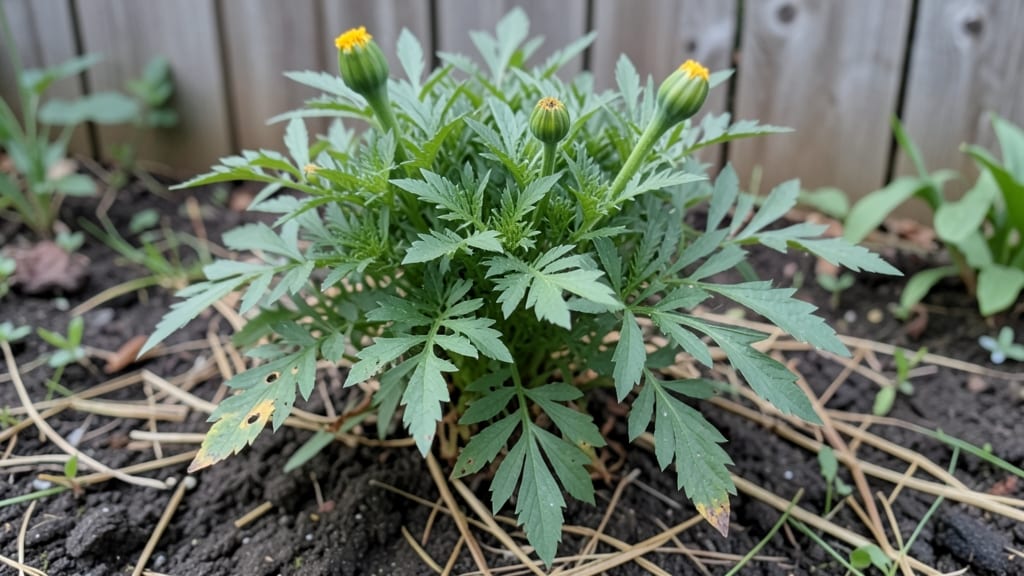
Marigolds not flowering usually points to one of three stubborn habits: too much shade, overfeeding, or lazy deadheading. I’ve rescued more than a few leggy, flowerless plants by fixing these exact issues—once you know what to look for, it’s all about timing and technique.
The biggest mistake? Assuming marigolds are low-maintenance. They’re not—at least not when it comes to blooms. Too much nitrogen (hello, leafy growth) or too little sunlight (hello, weak stems) sends them into survival mode instead of flowering.
Even pests like aphids can sap energy before buds form. The fix starts with a simple audit: check light, soil, and stems for clues.
Deadheading isn’t just tidying—it’s a growth hack. Snip off spent blooms right above the next set of leaves, and you’ll trigger new flowers within weeks. I’ve seen stubborn stems produce blooms by mid-summer just from this one trick.
The payoff? A bush bursting with those signature orange and gold flowers by peak season.
Works for French, African, or signet types—just adjust timing. Early bloomers need attention in May, while late varieties respond in July. Here’s how to diagnose and revive yours before the season slips away.
Underlying Causes Of Skipped Blooms
When your marigolds refuse to bloom, it’s usually a sign that something fundamental is out of balance—whether in their environment, care routine, or even their biological needs.
Understanding the root causes helps you target fixes with precision. Let’s break down the most common reasons why your marigolds might be holding back those vibrant flowers.
Marigolds (Tagetes spp.) are sun-worshippers, thriving in 6 to 8 hours of direct sunlight daily. When deprived of adequate light, they prioritize leafy growth over flowering—a survival tactic to maximize photosynthesis. Here’s why it happens:
- Photosynthesis slowdown: Low light reduces energy production, forcing the plant to allocate resources to foliage instead of flower buds.
- Daylength sensitivity: Some marigold varieties (like Tagetes erecta) need short-day conditions (12+ hours of darkness) to trigger blooming. If light lingers too late, they stay in a vegetative state.
- Weak stems: Shady conditions produce leggy, spindly growth with fewer buds, as the plant stretches toward light.
Actionable fix: Move pots to a sunnier spot or prune lower leaves to expose stems to more light. If growing in shade, opt for Tagetes patula (French marigolds), which tolerate partial shade better.
Marigolds are warm-season annuals with specific temperature triggers for blooming. Too much heat or cold can disrupt their natural cycle:
- Cold stress: Temperatures below 50°F (10°C) stunt growth and delay flowering. Early spring or late fall plantings may not bloom until conditions warm up.
- Heat shock: Sudden spikes above 90°F (32°C) can cause buds to drop or fail to open. High humidity also promotes fungal issues, weakening the plant.
- Dormancy confusion: Some varieties (like African marigolds) need a cooling period to reset their blooming cycle. If planted too early, they may not flower until summer.
Actionable fix:
- Wait until soil temps reach 60°F (15°C) before transplanting seedlings.
- Use shade cloth (30–50%) during heatwaves to protect buds.
- For container growers, move pots to a sheltered spot if night temps dip below 55°F (13°C).
Flowering is energy-intensive, and marigolds need the right balance of water and nutrients to produce blooms. Get it wrong, and they’ll focus on survival instead.
Overwatering or Poor Drainage
Soggy roots suffocate the plant, preventing nutrient uptake and triggering fungal diseases like Phytophthora. Symptoms include yellow leaves and stunted growth.
Underwatering or Drought Stress
Marigolds are drought-tolerant but need consistent moisture (1–1.5 inches per week) to support blooming. Dry soil forces the plant into a defensive mode, halting flower production.
Nitrogen Overload
Too much nitrogen (from fresh manure or high-N fertilizers) promotes lush leaves but suppresses blooms. The plant prioritizes vegetative growth over reproductive stages.
Phosphorus Deficiency
Phosphorus (the "P" in NPK) is critical for flower development. A deficiency (soil test shows <30 ppm available P) results in weak stems and few buds.
Actionable fix:
Issue
Solution
Overwatering
Ensure pots have drainage holes; amend soil with perlite or sand. Water only when top 1–2 inches of soil are dry.
Underwatering
Water deeply at the base (avoid wetting leaves) and mulch with straw to retain moisture.
High nitrogen
Switch to a balanced fertilizer (10-10-10 or 5-10-10) or one with low nitrogen (e.g., 2-4-2). Avoid fresh manure.
Low phosphorus
Apply a phosphate-rich fertilizer (e.g., bone meal or 0-10-0) at planting and mid-season.
Marigolds need space to breathe—literally. When planted too closely or competing with weeds/other plants, they divert energy to root expansion rather than flowering.
- Competition for nutrients: Dense foliage shades lower leaves, reducing photosynthesis and weakening the plant.
- Root-bound stress: In containers, overcrowded roots become tangled, limiting nutrient absorption and flower production.
- Weed pressure: Invasive grasses or clover steal water and nutrients, starving marigolds of blooming energy.
Actionable fix:
- Space seedlings 12–18 inches apart (check variety tags for specifics). Thin crowded pots by removing weaker stems.
- Mulch with 2–3 inches of straw to suppress weeds and retain moisture.
- For containers, use 1 gallon of soil per plant and prune neighboring plants to reduce competition.
Hidden pests or diseases can sap a marigold’s energy, leaving it too weak to flower. Common culprits include:
- Spider mites: These tiny pests suck plant sap, causing yellowing leaves and stunted growth. Severe infestations can halt flowering entirely.
- Aphids: Clusters of aphids on new growth distort leaves and transmit viruses, weakening the plant’s ability to produce buds.
- Fungal diseases (e.g., powdery mildew): White, powdery coatings on leaves block sunlight, reducing photosynthesis and flower production.
- Root rot: Caused by overwatering or poor drainage, this kills roots and starves the plant of nutrients.
Actionable fix:
- Inspect leaves weekly for pests (use a magnifying glass). Spray infested areas with neem oil or insecticidal soap.
- Improve airflow by pruning crowded branches and avoiding overhead watering.
- For fungal issues, apply baking soda spray (1 tsp baking soda + 1 quart water + a drop of dish soap) or copper fungicide.
- Repot affected plants in fresh, sterile soil to prevent root rot.
Pro tip: 💡 Marigolds often bloom in response to stress—like pruning or transplanting. If your plant seems stuck, give it a light trim to encourage new growth and reset its flowering cycle!
Revive Your Marigolds Quick Fixes
Now that you know why your marigolds might be holding back on those vibrant blooms, let’s roll up our sleeves and tackle the problem head-on! 🌼💥 The good news? Most fixes are simple, cost-effective, and can transform your marigolds from "stubborn stems" to "bloom machines" in no time.
Below, we’ve mapped out practical solutions for each common cause—plus pro tips to keep your plants thriving long-term.
Problem: Marigolds crave sunlight—at least 6 to 8 hours daily—and skimp on blooms when deprived. Solution:
- Relocate pots to a sunnier spot (south or west-facing is ideal).
- Thin nearby plants blocking light—marigolds are competitive!
- Use reflective surfaces (like white gravel or mirrors) to bounce extra light onto shaded areas.
- Extend daylight with a grow light (12–14 hours/day) if your climate is perpetually cloudy.
Prevention Tip: 🌡️ Plant in full sun from the start—check your yard’s sunlight map before committing!
Problem: Soggy roots = stressed plants = no energy for flowers. Solution:
- Check soil moisture—stick your finger 2 inches deep. Water only if dry.
- Improve drainage by:
- Adding perlite or sand to heavy clay soil.
- Elevating pots with feet or saucers to prevent waterlogging.
- Planting in raised beds if your garden holds moisture like a sponge.
- Water deeply but less often—marigolds hate "wet feet" but love a good soak.
Pro Tip: ✨ Mulch around the base (with straw or pine needles) to retain moisture without drowning roots.
Problem: Too much nitrogen = leafy greens, not flowers. Too little phosphorus = weak blooms. Solution:
- Switch to bloom-boosting fertilizer:
- Use a balanced 10-10-10 or high-phosphorus (5-10-10) formula.
- Homemade fix: Mix 1 tbsp bone meal into soil at planting time.
- Avoid over-fertilizing—marigolds are light feeders!
- Compost tea or fish emulsion (diluted) can give a gentle nutrient kick.
Prevention Tip: 📊 Test your soil (DIY kits are cheap!) to avoid guesswork.
Problem: Skipping deadheading = wasted energy on seeds instead of flowers. Solution:
- Snip spent blooms daily (or every other day) with clean pruners.
- Cut back to the first set of leaves—this prompts new buds.
- For French marigolds, trim 1/3 of the plant mid-season to encourage bushiness.
Pro Tip: 🔥 Deadhead in the morning—plants recover faster from pruning when it’s cool.
Problem: Too hot or too cold = marigolds go dormant. Solution:
- Move potted marigolds to a sheltered spot if temps drop below 50°F (10°C) or rise above 90°F (32°C).
- Use shade cloth (30–50%) in scorching climates to prevent wilting.
- Hardy varieties (like ‘Bonanza’ or ‘Tangerine’) handle heat better—swap out sensitive types if needed.
Prevention Tip: 🌿 Plant in late spring (after frost) for optimal blooming windows.
Problem: Aphids, powdery mildew, or root rot steal energy from blooming. Solution:
- Spray off pests with neem oil (mix 1 tbsp with 1 quart water) or soapy water.
- Remove affected leaves immediately to stop spread.
- Improve airflow by spacing plants 12–18 inches apart.
- Prevent fungal issues with copper fungicide (follow label instructions).
Pro Tip: 🎯 Encourage beneficial insects (like ladybugs) by planting basil or dill nearby—they’ll snack on pests for free!
Problem: Cramped marigolds compete for nutrients and light. Solution:
- Thin seedlings to 6–12 inches apart (check seed packet guidelines).
- Transplant extras to a new spot—marigolds love being repotted!
- Divide mature clumps every 2–3 years to rejuvenate growth.
Prevention Tip: 💡 Start with the right spacing—don’t wait until they’re choked!
Problem: Some marigolds (like ‘Signet’ types) bloom less prolifically than ‘French’ or ‘African’ varieties. Solution:
- Swap out low-performing types for high-bloom varieties (e.g., ‘Jingle Bells’ or ‘Crackerjack’).
- Replace biennial/perennial marigolds every 1–2 years—they slow down with age.
- Start fresh from seeds in spring for a bloom boost.
Pro Tip: 🌟 Save seeds from your best bloomers—they’ll likely produce similar vigorous plants!
Want instant results?
Try these hacks: - Pinch back young plants (when 4–6 inches tall) to encourage bushier growth. - Chill seeds for 2 weeks before planting (mimics winter) to jumpstart blooming. - Add a handful of Epsom salt (magnesium sulfate) to the soil—it can rev up flower production in 2–3 weeks.
Frequently asked questions
Why do my marigolds have lots of leaves but no flowers?
Too much nitrogen in the soil is the usual culprit. Marigolds prioritize leafy growth when they get excess nitrogen from fertilizers or compost. Switch to a balanced 10-10-10 fertilizer or one with higher phosphorus (like 5-10-10) to encourage blooming instead. Deadheading spent flowers also redirects energy to new buds.
Can I force marigolds to bloom faster?
Yes! Start by deadheading regularly—cut back to the first set of leaves below each spent bloom. For a quick boost, pinch back leggy stems to encourage bushier growth. Move plants to a sunnier spot (they need 6-8 hours of direct sun daily) and avoid overwatering, which stresses them. Some gardeners also swear by a light application of Epsom salt (1 tbsp per plant) to stimulate flowering.
Are some marigold varieties better for blooms than others?
French marigolds (Tagetes patula) and African marigolds (Tagetes erecta) are the most prolific bloomers. French types produce continuous flowers from early summer to frost, while African varieties have larger blooms and longer stems. If your marigolds are underperforming, consider swapping them for one of these high-bloom varieties next season.
What should I do if my marigolds are leggy and not flowering?
Leggy growth usually means they're stretching for light. Trim back the stems by 1/3 to encourage bushier, stronger growth. Move the plant to a sunnier location immediately—marigolds need full sun to bloom. After pruning, they'll often produce new growth with flowers within 2-3 weeks. Avoid fertilizing with high-nitrogen products during this recovery period.
Will overwatering prevent marigolds from flowering?
Yes, it can. Marigolds hate soggy roots, which leads to stress and diverts energy away from blooming. Water only when the top 1-2 inches of soil are dry. Improve drainage by adding perlite to heavy soil or using raised beds. If your plants are in containers, ensure they have drainage holes and avoid letting them sit in saucers of water.