
Flowers
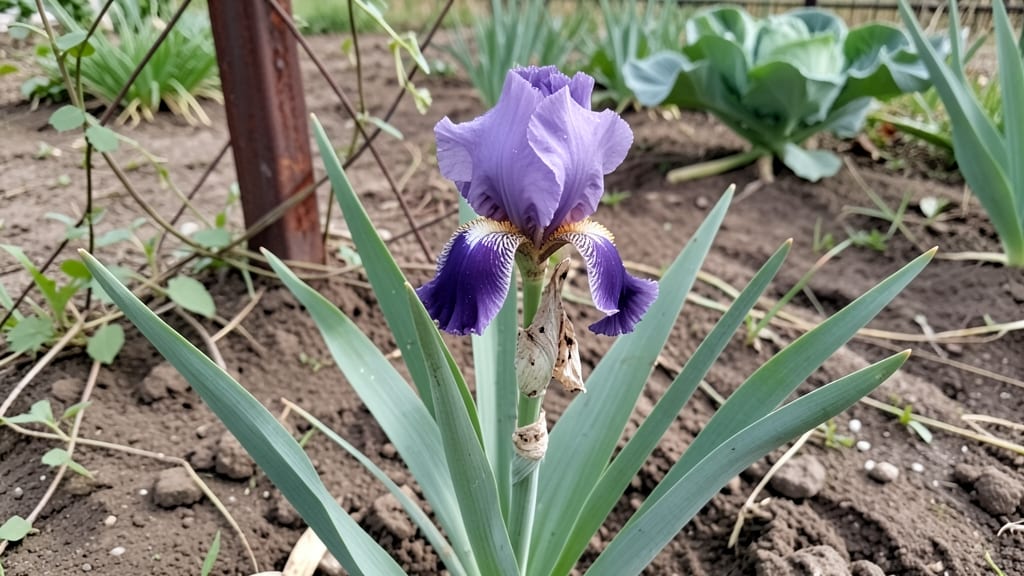
If your iris won’t flower, it’s usually one of three stubborn culprits: too much shade, overcrowded roots, or old rhizomes that need a reset. 🌿 I’ve wrestled with this myself—last spring, my irises sent up leaves but no flowers. and it turned out to be a combination of poor sunlight and neglected division.
The good news? Most fixes take less than an hour and pay off in bold purple, blue, or white blooms by next season.
Start by checking sunlight—irises demand at least 6 hours of direct sun daily, preferably more. If your spot’s shady, move them or prune nearby trees. Next, dig around the clumps: if the rhizomes are packed tightly with no space between them, they’re competing for nutrients.
Thin them out, keeping only the healthiest, firmest sections. Old age is another culprit—irises often skip blooming after 3-5 years and need dividing to rejuvenate.
Fertilizing matters too, but not how you’d expect. Skip high-nitrogen feeds—they promote leaves, not flowers. Instead, use a low-nitrogen, balanced fertilizer (like 5-10-10) in early spring, and avoid feeding after midsummer.
Deadheading spent blooms also signals the plant to focus energy on next year’s buds. With these tweaks, you’ll see flower stalks emerging by late spring or early summer.
For stubborn cases, try a mid-summer trim: cut back all foliage to 6 inches tall. It sounds drastic, but it forces the plant to redirect energy into next year’s blooms.
Works especially well for irises that’ve gone years without flowering. Just don’t do it every year—reserve this reset for truly neglected clumps.
Hidden Reasons Your Iris Refuses to Bloom
If your iris plants are putting out lush foliage but stubbornly skipping the flower show, don’t blame bad luck—there are often clear (and fixable!) reasons behind it. Irises are hardy but particular, and their blooming habits can be influenced by a mix of environmental, biological, and even seasonal factors.
Let’s break down the most common culprits and why they might be keeping your iris in "leaf mode" instead of "flower mode."
Irises, especially bearded irises, are cool-season perennials that rely on a period of dormancy to trigger blooming. If your region doesn’t experience cold winters—or if your irises aren’t getting enough chill exposure—they may stay in a vegetative state, focusing energy on leaves instead of flowers.
Why it happens:
- Irises need 12–16 weeks of temperatures below 40°F (4°C) to break dormancy and set flower buds for the next season.
- In warm climates (Zones 8–10), irises may not get enough chill, or they might bloom erratically.
- Heat stress during summer can also disrupt bud formation, especially if soil temperatures exceed 85°F (29°C) for prolonged periods.
Actionable fix:
- In mild-winter zones, simulate dormancy by lightly covering iris rhizomes with 2–3 inches of mulch (straw or shredded bark) in late fall to cool the soil.
- Plant Siberian irises or Louisiana irises, which tolerate heat better and may bloom more reliably in warm climates.
Irises are light feeders, and too much (or the wrong kind) of fertilizer can lead to leafy growth at the expense of flowers. Over-fertilizing—especially with high-nitrogen formulas—encourages lush foliage but starves the plant of the phosphorus and potassium needed for blooming.
Why it happens:
- Nitrogen-heavy fertilizers (like lawn fertilizers) promote green growth but delay or reduce flowering.
- Phosphorus deficiency (critical for root and flower development) is common in sandy or acidic soils.
- Potassium shortages weaken the plant’s ability to form buds, especially under stress (drought, heat, or disease).
Actionable fix:
- Use a balanced, low-nitrogen fertilizer (like 5-10-10 or 10-20-20) in early spring (just as leaves emerge) and early fall.
- For a natural boost, top-dress with bone meal (high in phosphorus) or wood ash (adds potassium) in late winter.
- Avoid compost or manure near the rhizomes—it can cause rot and deter blooming.
Irises multiply quickly, and when rhizomes become overcrowded, they compete for resources, often prioritizing leaf growth over flowers. Old, congested clumps also struggle to get enough sunlight and air circulation, leading to weak blooming.
Why it happens:
- Rhizomes should be spaced 12–24 inches apart for optimal growth. When they’re too close, the center dies out (a process called "choking"), and the outer fans produce mostly leaves.
- Lack of division (splitting up clumps) every 3–5 years prevents rejuvenation.
- Shade from dense foliage blocks sunlight, which irises need for photosynthesis to fuel blooms.
Actionable fix:
- Divide and replant in early fall or spring:
- Dig up the clump and separate rhizomes with a sharp knife, ensuring each has 1–2 healthy fans of leaves and a firm, plump rhizome (no soft or mushy spots).
- Discard the old, woody center (it won’t regrow).
- Replant rhizomes shallowly (top should be exposed to sunlight) in well-draining soil.
- Thin out crowded areas to improve airflow and reduce disease risk.
Irises are drought-tolerant but hate soggy feet. Watering issues—whether underwatering or overwatering—can disrupt the delicate balance needed for flower bud formation.
Why it happens:
- Underwatering: Irises need deep watering 1–2 times per week (more in extreme heat). Stress from drought forces the plant to conserve energy, often halting bloom production.
- Overwatering: Waterlogged soil rots rhizomes and starves roots of oxygen, preventing nutrient uptake. This is especially deadly in clay or poorly draining soils.
- Irregular watering: Fluctuations between drought and excess moisture confuse the plant’s growth cycle.
Actionable fix:
- Water deeply but infrequently: Aim for 1–1.5 inches of water per week, delivered at the base (avoid wetting the leaves to prevent fungal diseases).
- Improve drainage: Amend heavy soil with sand or grit, or plant irises on a slight mound to prevent pooling.
- Mulch lightly (1–2 inches) to retain moisture without suffocating the rhizomes.
Hidden pests and pathogens can sap your iris’s strength, leaving it too weak to produce flowers. Common culprits include iris borers, thrips, and fungal infections, all of which divert energy away from blooming.
Why it happens:
- Iris borers: The larvae of these moths tunnel into rhizomes, causing rot and stunted growth. Infested plants often produce fewer or no flowers.
- Thrips: These tiny insects damage flower buds, causing them to abort before opening. They also spread viral diseases like Iris Yellow Spot Virus.
- Fungal diseases (e.g., Rhizoctonia, Botrytis): Thrives in humid, poorly ventilated conditions, leading to leaf spot and rhizome rot.
- Aphids and spider mites: While less destructive, they weaken the plant by feeding on sap, reducing overall vigor.
Actionable fix:
- Inspect rhizomes in early spring for borer holes or mushy spots. Treat with neem oil or Bt (Bacillus thuringiensis) spray if borers are present.
- Remove and destroy any yellowing or spotted leaves to prevent fungal spread.
- Encourage beneficial insects (ladybugs, lacewings) by planting marigolds or dill nearby.
- Space plants properly to improve airflow and reduce humidity around foliage.
Pro Tip: 💡 If your irises have been blooming poorly for more than two years, consider whether they’re past their prime. Some varieties (like German iris) have shorter lifespans—replacing them with fresh rhizomes can bring back the flowers!
Revive Your Irises Naturally
When your irises refuse to bloom, the good news is that most issues have straightforward fixes—often involving a little patience, proper care, and a few tweaks to their growing conditions.
Below, we’ve mapped out practical solutions for each common cause, along with prevention tips to keep your irises thriving and flowering year after year.
If your irises aren’t getting enough sunlight (typically 6–8 hours of direct sun daily), they’ll focus on survival rather than blooming.
How to Fix It:
- 🔥 Relocate your irises to a sunnier area of your garden. South- or west-facing spots are ideal.
- 🍳 Thin nearby plants blocking sunlight—irises hate competition for light.
- 🌡️ If moving isn’t an option, supplement with a grow light (12–14 hours/day) during short winter days.
Prevention Tip: ✨ Plant in full sun from day one—irises thrive in open, unshaded spaces. Avoid planting under trees or tall shrubs.
Irises hate soggy feet—excess moisture can rot rhizomes and prevent blooming.
How to Fix It:
- 👨🍳 Check soil moisture—stick your finger 2 inches deep. Water only if it’s dry.
- ⏰ Reduce watering in late summer/fall to encourage dormancy (they need dry soil then!).
- 🔪 Improve drainage by amending heavy clay soil with sand, perlite, or compost (but avoid rich compost—it causes leafy growth over flowers).
Prevention Tip: 💡 Plant irises in raised beds or slopes to prevent water pooling. A 50/50 mix of garden soil and coarse sand works wonders.
Too much nitrogen = lush foliage, zero flowers. Irises need low nutrients, especially in early spring.
How to Fix It:
- 🔪 Stop fertilizing for at least 6–8 weeks before bloom time (usually late winter/early spring).
- 🥘 Use a balanced, low-nitrogen fertilizer (like 5-10-10) only in early spring—never in summer or fall.
- 🌡️ Skip organic matter (like compost) near the rhizomes—it promotes leaf growth over blooms.
Prevention Tip: 🎯 Feed lightly and late—a single application of bulb fertilizer in early spring is enough. More = fewer flowers!
Irises self-divide over time, and overcrowded rhizomes lead to weak, non-flowering clumps.
How to Fix It:
- 🔪 Dig up rhizomes in late summer/early fall (after foliage yellows but before frost).
- 🍳 Separate sections with 3–4 healthy fans (leaves) per rhizome. Discard soft, mushy, or pest-damaged ones.
- 🌡️ Replant with top ⅓ exposed (they need sunlight to dry out). Space them 12–24 inches apart.
Prevention Tip: 💡 Divide every 3–4 years to keep plants vigorous. Healthy rhizomes = more blooms!
Aphids, iris borers, or fungal issues (like leaf spot) sap energy irises need for flowering.
How to Fix It:
- 🔪 Prune damaged leaves immediately to prevent spread.
- 🍳 Spray with neem oil (for aphids) or insecticidal soap (for borers).
- ⏰ For fungal issues, apply copper fungicide in early spring before rain.
Prevention Tip: ✨ Plant irises in well-draining soil (fungi love soggy conditions). Rotate planting spots every few years to break disease cycles.
Some irises (like bearded types) bloom reliably, while others (like Japanese irises) may take years to mature.
How to Fix It:
- 🔥 Be patient—newly planted irises may take 2–3 years to establish and bloom.
- 🌡️ Choose the right variety for your climate (e.g., dwarf irises bloom earlier than tall bearded types).
- 🍳 Deadhead spent blooms to encourage reblooming (except for once-blooming varieties like Siberian irises).
Prevention Tip: 🎯 Plant multiple iris varieties—some bloom early (spring), others late (summer), extending your flowering season!
Irises need a cool, dry rest period in late summer/fall to rebloom the next year.
How to Help Them Rest:
- ⏰ Stop watering by mid-summer.
- 🔪 Cut back foliage after it yellows (but leave some leaves until frost).
- 🌡️ Mulch lightly (if in a cold climate) to protect rhizomes but avoid thick mulch—it traps moisture.
Remember: Irises are hardy and resilient—most issues are fixable with a little adjustment. Try one or two solutions at a time, and soon you’ll be enjoying vibrant blooms again! 🌈💐
Frequently asked questions about stubborn irises
Why do my irises grow leaves but never bloom?
This usually happens from overcrowding, too much nitrogen, or insufficient sunlight. Irises need 6+ hours of direct sun daily and low-nitrogen fertilizer (like 5-10-10) to encourage blooms instead of leaves. Divide congested clumps every 3-4 years to refresh growth.
Can I force my irises to bloom if they've gone years without flowers?
Yes! Try a mid-summer trim—cut back all foliage to 6 inches tall to redirect energy. For neglected clumps, divide and replant healthy rhizomes in well-draining soil with full sun. Some varieties (like Siberian irises) naturally bloom less frequently, but most respond within 1-2 seasons to proper care.
What's the best fertilizer for blooming irises?
Avoid high-nitrogen lawn fertilizers—they promote leaves, not flowers. Instead, use a balanced, low-nitrogen formula (like 5-10-10) applied once in early spring as leaves emerge. For natural options, try bone meal (phosphorus boost) or wood ash (potassium) in late winter. Never fertilize after midsummer.
How do I know if my iris rhizomes are too old to bloom?
Old rhizomes become woody, shriveled, or hollow with no firmness. Healthy ones should feel plump and firm with 1-2 healthy leaf fans. If your clumps are over 5 years old or the center is dead, it's time to divide and replace them. Some varieties (like German irises) have shorter lifespans than bearded types.
Will pruning iris leaves affect next year's blooms?
Pruning after blooming (when leaves turn brown) won't hurt—it just keeps the garden tidy. However, never cut leaves before mid-summer, as they fuel next year's flowers. For a growth reset, you can trim all foliage to 6 inches in late summer, but this should be a one-time rejuvenation, not annual practice.