
Flowers
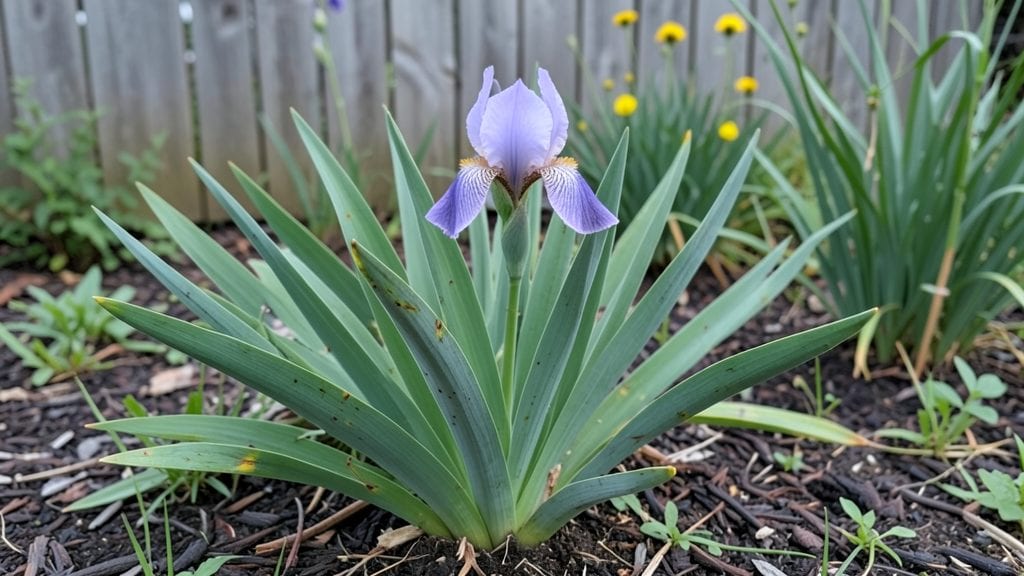
Iris flower names carry centuries of symbolism, from royal purple Iris germanica to delicate Japanese irises like Iris ensata—each with its own story and garden purpose. 🌿 The right name isn't just pretty; it's a shortcut to the perfect spot in your yard, whether you want drama along a pond or soft color in a cottage border.
My first garden mistake was treating all irises the same—until I learned their names revealed their secrets.
Take Black Gamecock, a bearded iris with deep burgundy-black blooms that demands center stage, or Winona, a pale lavender Iris ensata that thrives in moist soil and pairs beautifully with hostas.
Names like Professor Bluestone (a striking blue bearded iris) or Immortality (a white Siberian iris) instantly tell you where they'll shine—dry borders, shady spots, or even containers. The key is matching the name's promise to your garden's personality.
Beyond aesthetics, these names carry meaning: Florence honors the Renaissance city, while Mary Todd Lincoln celebrates the Civil War-era first lady through purple blooms. Planting them isn't just gardening—it's weaving history into your landscape.
You'll end up with a garden that feels intentional, where every bloom tells a story before you even see it.
For cottage gardens, mix Iris germanica with peonies and roses; for modern spaces, pair Iris ensata with ornamental grasses. The names become your design cheat sheet—once you know them, your garden starts telling its own tale. Let's dive into the ones that'll transform your space.
📚 In This Guide
- What you need
- Instructions
- Tips and common mistakes
- Wrapping up and next steps
What you need
- ● Iris rhizomes or bulbs: Choose from varieties like Bearded Iris, Siberian Iris, or Japanese Iris (3–5 per plant, depending on desired fullness).
- ● Well-draining soil: Sandy loam or a mix of garden soil + perlite (avoid clay-heavy soil).
- ● Compost or organic fertilizer: 1–2 cups per planting hole (rich in phosphorus for root growth).
- ○ Mulch (optional but recommended): Pine bark or straw (2–3 inches) to retain moisture and suppress weeds.
- ● Garden trowel or shovel: For digging planting holes (6-inch depth recommended).
- ● Pruning shears: To trim dead foliage post-planting (sterilized with rubbing alcohol).
- ● Gloves & knee pads: For comfort during planting (especially for larger gardens!).
- ● Watering can or hose with gentle spray: Irises hate soggy roots—water lightly after planting.
- ○ Name tags or markers (optional):strong> Wooden stakes or metal labels to tag iris varieties by their symbolic names (e.g., "Hope," "Wisdom," or "Royalty").
- ● Sunlight: Full sun (6+ hours/day) is a must—irises thrive in bright, open spaces! ☀️
- ● Spacing: Plant rhizomes 12–24 inches apart to allow airflow and prevent disease.
- ● Season: Best planted in early fall or late winter (before active growth begins).
How to choose and style irises for maximum symbolic impact
These flowers carry deep meaning—here’s how to select and arrange them for gardens that tell a story.
🌿 Step 1: Identify Iris Varieties by Symbolic Meaning
Irises aren’t just pretty—they’re messengers. Bearded irises (like 'Blue Flag' or 'Purple Emperor') symbolize wisdom and courage, perfect for formal gardens where tradition matters. Japanese irises (such as 'Kiku-no-mai') represent purity and hope, ideal for serene water gardens where their delicate petals catch the light.
For bold statements, Louisiana irises (like 'St. Louis' or 'Avalanche') embody passion and rebirth, thriving in damp soil where their deep colors contrast with reflections. I always check the bloom time too—early varieties like 'Blue Magic' announce spring’s arrival, while late bloomers like 'Florence' extend summer’s drama.
🌱 Step 2: Group by Color for Visual Harmony
Irises read like a painter’s palette. Purples ('Cadence' or 'Blue River') create regal drama, while yellows ('Golden Harvest' or 'Harmony') radiate joy. For contrast, pair deep blues ('Blue Denim') with whites ('White Swirl')—their clean lines soften any garden bed.
I group by height too: Tall bearded irises (30–40 inches) anchor borders, while dwarf varieties (12–18 inches) spill over edges. Pro tip: Place lighter irises in front to avoid hiding their petals against darker foliage. The goal is layers that feel intentional, not accidental.
☀️ Step 3: Position for Light and Seasonal Interest
Irises crave full sun (6+ hours daily) but tolerate partial shade in hot climates. Louisiana irises love morning sun, while bearded irises thrive in afternoon light. I plant them where their blooms face the house—nothing says "welcome" like irises catching the light at dusk.
Extend their season by mixing early, mid, and late bloomers. Romance irises (April) lead into tall bearded irises (May–June), then reblooming varieties (like 'Butter and Sugar') stretch into fall. The key is overlapping blooms so no gap exists between spring and summer.
💧 Step 4: Layer Soil for Long-Term Health
Irises hate soggy roots but need consistent moisture. Amend clay soil with 2–3 inches of compost to improve drainage, then top with 1 inch of sharp sand to prevent compaction. For containers, use a mix of 50% potting soil, 30% perlite, and 20% orchid bark—this keeps roots aerated while holding enough water.
Here’s the trick: Never mulch heavily. A thin layer (½ inch) of pine needles or gravel keeps roots cool without suffocating them. I test moisture by squeezing a clump of soil—it should crumble, not stick together. Overwatering is the fastest way to lose irises.
✂️ Step 5: Prune and Divide for Renewed Vitality
After blooming, cut back leaf blades by one-third to encourage new growth, but never remove all foliage—irises store energy in their leaves. In fall, divide clumps when new shoots (pups) form at the base. Dig carefully with a fork, then replant rhizomes with two-thirds exposed—this prevents rot.
I divide every 3–4 years to prevent overcrowding. The rule: If a clump has more than 5 fans (leaf clusters), it’s time to split. Replant divisions 2–3 inches deep, spacing them 12–24 inches apart for air circulation. This keeps blooms bold and prevents disease.
Tips & tricks for perfect Iris flower arrangements
A few intentional choices will transform your iris garden from ordinary to extraordinary—here's how to elevate the symbolism and visual impact.
Symbolic Pairing: In Step 1, when selecting varieties, consider pairing bearded irises with Japanese irises for a garden that tells two stories simultaneously. The wisdom of bearded irises contrasts beautifully with the purity of Japanese varieties, creating visual harmony while deepening the symbolic narrative. For example, place 'Blue Flag' (wisdom) near 'Kiku-no-mai' (hope) along a formal pathway to create an intentional journey through meaning.
Color Theory in Practice: When implementing Step 2's color grouping, remember that irises read like a painter's palette—purples and blues create depth while yellows and whites provide contrast. I always place my white irises ('White Swirl') in front of deep purples ('Blue River') to create a visual recessional effect, making the garden feel more expansive. This technique works particularly well in formal gardens where symmetry matters.
Light Management: In Step 3, pay special attention to how you position your irises relative to light sources. Louisiana irises thrive in morning sun, so orient their blooms to face eastward where they'll catch the first light of day. For bearded irises that prefer afternoon sun, position them to face west—this ensures their petals will be fully illuminated during their preferred light window, enhancing their symbolic presence throughout the day.
Seasonal Layering Strategy: To execute the seasonal interest from Step 3, I recommend creating three distinct planting zones: early bloomers (April) in the front, mid-season varieties (May-June) in the middle, and late bloomers (like 'Butter and Sugar') at the back. This creates a cascading effect where each wave of blooms reveals new meaning as the seasons progress. The key is to overlap bloom times by at least two weeks between varieties to maintain continuous visual interest.
Pro Tips for Iris Flower Names
- A few intentional choices will transform your iris garden from ordinary to extraordinary—here's how to elevate the symbolism and visual impact.
- Symbolic Pairing: In Step 1, when selecting varieties, consider pairing bearded irises with Japanese irises for a garden that tells two stories simultaneously.
- Color Theory in Practice: When implementing Step 2's color grouping, remember that irises read like a painter's palette—purples and blues create depth while yellows and whites provide contrast.
Frequently asked questions
Got questions about iris flower names?
You’re not alone! Here are answers to the most common queries about these stunning blooms—from meanings to care tips—so you can choose with confidence.
What do different iris flower names mean?
Iris names often reflect their colors, origins, or symbolic meanings. For example, Iris germanica (German iris) symbolizes wisdom, while Iris pseudacorus (yellow flag iris) represents passion. Many varieties honor historical figures, like the Iris ‘Mary Barnard’, named after a renowned iris hybridizer. Pro tip: Check the American Iris Society for deeper lore!
When is the best time to plant irises based on their names?
Most irises thrive when planted in early fall (September–October) or spring (March–April), regardless of their name. However, bearded irises (like ‘Blue Flag’ or ‘Purple Haze’) prefer cooler soil, so fall planting is ideal. Siberian irises (e.g., ‘Caesarea’) tolerate wetter climates and can be planted in early spring. Always dig rhizomes after foliage dies back!
Can I grow irises indoors? Which named varieties work best?
While irises are outdoor stars, some compact varieties like Iris histrioides (dwarf iris) or Iris ‘Little Star’ can thrive in containers with bright light. Place them near a south-facing window or under grow lights. Avoid soggy soil—irises hate being overwatered! For indoor blooms, opt for miniature bearded irises (e.g., ‘Profile’ series) in well-draining pots. Warning: They’ll need a winter dormancy period.
Why isn’t my named iris blooming? Troubleshooting tips!
Even named varieties like Iris ‘Cadence’ or ‘Korean Dream’ may skip blooms due to:
- Overcrowding: Divide rhizomes every 3–4 years.
- Poor sunlight: Irises need 6+ hours of sun daily.
- Excess fertilizer: Too much nitrogen = leaves, not flowers!
- Dormancy needs: Let foliage die back naturally in late summer.
Are there iris names that attract pollinators?
Fragrant varieties like Iris ‘Blue Magic’, ‘Prof. Blume’ (yellow), or ‘Winnipeg’ (purple) draw bees and butterflies. For hummingbirds, choose Iris ‘Harmony’ or ‘Café au Lait’—their tubular blooms are irresistible. Plant them near pollinator-friendly perennials (like lavender or coneflowers) to create a buzz-worthy garden!
Wrapping up and next steps
From classic blue irises to exotic purple varieties, the world of iris flower names is as diverse as the gardens they grace.
Whether you’re drawn to symbolism, color, or history, there’s an iris that speaks to your unique style—and now you know exactly how to name and nurture it! 🌸
Ready to bring this beauty to life? Start by sketching your dream garden layout or browsing local nurseries for your favorite iris varieties. Plant with confidence—your garden’s new star is waiting!