
Companion Plants
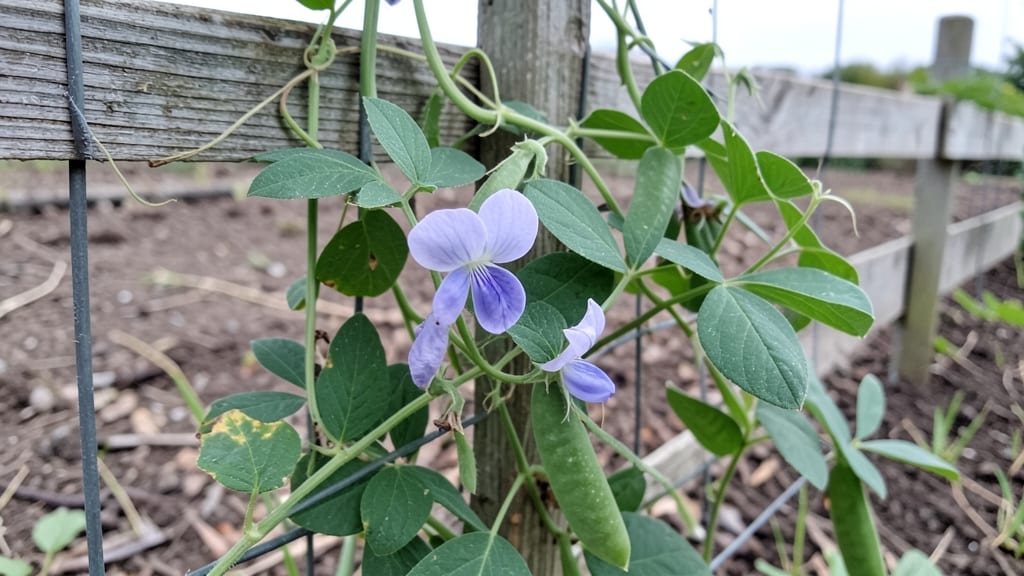
In pea plants, purple flowers are dominant because the gene for purple pigment (P) masks the recessive white-flower gene (p). This Mendelian trait means hybrid purple-flowered plants will always produce purple blooms if paired with another purple-flowered variety, ensuring predictable garden results.
This genetic dominance explains why gardeners can reliably grow purple pea blooms by selecting parent plants with the P allele. 🌱 When you cross two purple-flowered pea plants (both carrying P alleles), their offspring will inherit at least one dominant P gene, guaranteeing purple flowers in every generation.
The only way to get white flowers is by breeding two recessive p plants—a rare scenario in home gardens since most commercial varieties carry the dominant trait. This predictability makes purple-flowered peas an excellent choice for beginners learning about plant genetics.
Understanding this principle helps you plan garden layouts with confidence. For instance, if you want a consistent display of purple blooms, simply plant varieties known for their dominant P alleles together. Just be mindful of cross-pollination with nearby white-flowered varieties, which could introduce recessive genes into your plants over time.
💡 In This Article
- How Pea Flower Color Inheritance Works Genetically
- Garden Planning with Dominant Pea Flower Traits
How pea flower color inheritance works genetically
Here's what's actually happening at the molecular level: The P allele produces an enzyme that synthesizes anthocyanin pigments—those vibrant purple compounds found in pea flowers. This enzyme works like a biochemical factory, converting simple precursors into complex pigments through a series of reactions.
The p allele, however, contains a mutation that disrupts this pathway, preventing pigment production entirely. 🔥 When both alleles are present (heterozygous Pp), the P allele's enzyme still functions normally because it's dominant, while the defective p allele remains silent.
The dominance we observe follows Mendel's First Law (the Law of Dominance), which states that when two contrasting alleles exist, the dominant one will always express its trait. In pea plants, this means a single P allele (whether inherited from one or both parents) is sufficient to produce purple flowers.
The probability math is straightforward: If you cross two heterozygous Pp plants, there's a 75% chance each offspring will inherit at least one P allele and display purple blooms. This predictable ratio (3 purple:1 white) demonstrates why gardeners can reliably produce purple flowers through careful selection.
What most people don't realize is how this genetic mechanism translates to physical traits. The anthocyanin pigments aren't just color—they're protective compounds that shield flower tissues from UV damage and attract pollinators.
Purple flowers contain approximately 2-3 times more anthocyanins than white varieties, giving them that rich hue while providing a survival advantage. This biochemical advantage explains why purple-flowered peas became so prevalent in cultivated varieties over time.
Let's look at the actual genetic ratios in practical terms: When you breed two true-breeding purple plants (PP × PP), all offspring will be PP and display purple flowers.
But if you cross a true-breeding purple (PP) with a true-breeding white (pp), every offspring will be Pp—appearing purple but carrying the hidden p allele.
This hidden recessive trait only surfaces when two Pp plants are crossed, producing that classic 3:1 ratio in the next generation.
The predictability extends to flower structure too. Purple-flowered peas typically have larger petals (about 1.5-2 cm across) compared to white varieties (1-1.5 cm), which may contribute to their pollinator appeal.
The genetic dominance creates a feedback loop where the visual traits (color and size) reinforce each other, making purple flowers both more attractive and more likely to be passed down through generations. 💫
For gardeners, this means you can reliably produce purple blooms by selecting parent plants with known dominant traits. Even if you don't track genotypes, simply choosing purple-flowered varieties will give you consistent results in most cases.
The only exception occurs when white-flowered peas are introduced nearby, potentially through cross-pollination—a scenario we'll explore in the next section about garden planning.