
Pruning
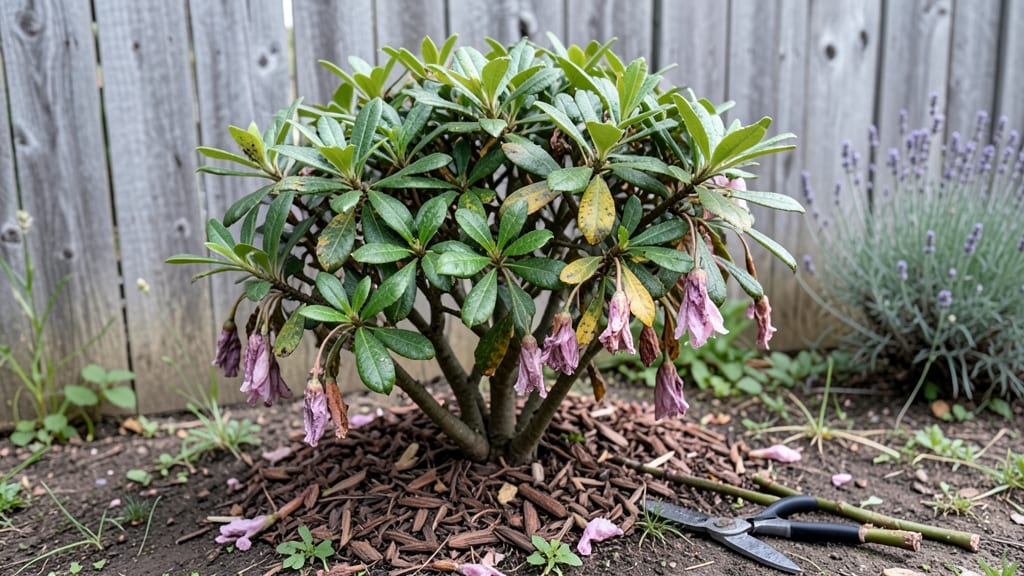
Pruning rhododendrons after flowering isn’t just about tidying up—it’s how you guarantee next year’s showstopping blooms. ✨ I learned the hard way that skipping this step means fewer flowers and leggy branches, but once I mastered the timing and technique, my bushes exploded with color.
The key is acting right after the flowers fade but before new buds form—usually between late May and early July, depending on your climate.
You’ll need just a few simple tools: sharp bypass pruners for clean cuts, gloves to protect your hands from those prickly stems, and maybe a small ladder if your bushes are tall.
The goal is to remove spent blooms and shape the plant without stressing it—think of it like giving your rhododendron a fresh haircut, not a buzz cut. Even a few minutes of careful pruning now means healthier growth and more flowers next spring.
Start by snipping off the faded flower clusters at the base, just above a set of leaves or buds. For shaping, focus on opening up the center to improve airflow, which keeps the plant disease-free.
Avoid cutting into old wood—new growth is what produces those fragrant blooms. By the time fall rolls around, you’ll see fresh, vibrant foliage and a sturdy framework for next year’s display.
This method works for all rhododendron varieties, whether you’ve got dwarf shrubs or towering specimens. The only rule? Don’t overdo it—rhododendrons hate being pruned too hard. With this approach, you’ll turn last year’s blooms into a roadmap for even more stunning flowers ahead.
📚 In This Guide
- What you need
- Instructions
- Tips and common mistakes
- Wrapping up and next steps
What you need
- ● Pruning shears or secateurs – Sharp, bypass-style shears (4-6" blade length) for clean cuts. Disinfect with rubbing alcohol before and after use to prevent disease spread. 💡 Pro tip: Test sharpness on a twig—if it crushes instead of snips, sharpen it!
- ● Hand pruners (for smaller branches) – Anvil-style for thick stems (if your rhododendron has woody growth).
- ● Garden gloves – Thick, cut-resistant gloves (e.g., mechanics’ gloves or gardening-specific) to protect from thorns and sap.
- ○ Loppers (optional but helpful) – For branches thicker than 1" (8-12" cutting range).
- ● Disposable pruning bags or bucket – For collecting debris (5-gallon capacity recommended).
- ● Rubbing alcohol (70% isopropyl) or bleach solution – 1 part bleach to 9 parts water for sterilizing tools.
- ● Sharpie or permanent marker – For marking cuts if you’re unsure about trimming spots.
- ● Pruning saw (for very thick branches) – Curved-bladed saw for stems over 1.5" in diameter.
- ● Hose with nozzle – To rinse tools and clean sap off hands.
- ● Knee pads or stool – For comfort if your rhododendron is tall or dense.
- ● Plant food or fertilizer – Balanced 10-10-10 or rhododendron-specific to nourish after pruning.
- ● Mulch (pine bark or shredded leaves) – 2-3 inches thick to protect roots post-pruning.
Step-by-step guide to pruning rhododendron after flowering
Here’s how to keep your rhododendron thriving with minimal effort—just a few simple cuts will ensure next year’s blooms are even more spectacular.
🌿 Step 1: Wait Until Blooms Fade Completely
Don’t rush to prune—wait until all spent flowers have dropped and new buds begin forming at the base of the stems. This usually happens 4-6 weeks after flowering, depending on your climate. Pruning too early removes next year’s flower buds, which form on last year’s growth.
Look for the first signs of fresh green foliage at the stem base—that’s your cue. If you prune before buds set, you’ll sacrifice next season’s blooms entirely. I’ve learned this the hard way after accidentally cutting too soon and ending up with a bare bush the following spring.
✂️ Step 2: Remove Dead or Damaged Wood First
Start by inspecting the plant for dead, diseased, or crossing branches. Use clean, sharp pruners to make 45-degree cuts just above a leaf bud or lateral branch. Dead wood is easy to spot—it’s brown, brittle, and won’t bend without snapping. Remove any branches rubbing against others, as these create wounds that invite pests.
I always work from the bottom up, removing the worst offenders first. This keeps the plant’s shape balanced and prevents overcrowding. If a branch is larger than ½ inch in diameter, sterilize your pruners with rubbing alcohol between cuts to avoid spreading disease.
🌱 Step 3: Thin Out Overcrowded Branches
Next, focus on thinning out congested areas to improve airflow and light penetration. Aim to remove no more than 25% of the plant’s total growth in one season—rhododendrons are sensitive to heavy pruning. Look for branches growing inward or crossing others, and cut them back to the nearest outward-facing bud.
This step is where the magic happens—thinning opens up the center of the plant, letting sunlight reach inner branches and encouraging stronger growth. You’ll see a noticeable difference in next year’s blooms if you skip this step, as crowded centers often produce fewer flowers.
💧 Step 4: Shape Lightly for Balance and Form
For a natural, full appearance, lightly shape the outer edges of the plant by trimming only the tips of branches that have grown too long or leggy. Avoid cutting into old wood—new growth emerges from the tips, so focus on the outer ⅓ of the plant. Use your pruners to make clean cuts just above a leaf bud, angling slightly downward to shed water.
Step back often to check your progress—rhododendrons respond best to minimal shaping. If you’re unsure, less is always better. Over-pruning stresses the plant and can lead to weak growth or even death in extreme cases. I promise, your rhododendron will reward you with lush foliage and abundant blooms if you keep cuts light and strategic.
☀️ Step 5: Clean Up and Mulch for Recovery
After pruning, remove all clippings from the area to prevent disease. Sterilize your tools with a 10% bleach solution (1 part bleach to 9 parts water) or rubbing alcohol to kill any lingering pathogens. Once the ground is clear, apply a 2-3 inch layer of organic mulch around the base of the plant, keeping it 6 inches away from the trunk.
Mulching helps retain moisture, regulates soil temperature, and suppresses weeds—all of which reduce stress on the plant after pruning. Water deeply right after pruning to help the rhododendron recover. Within a few weeks, you’ll see fresh growth signaling that your efforts paid off.
Tips & tricks for perfect rhododendron pruning
These simple but game-changing tips will help you prune like a pro and keep your rhododendron thriving for years to come.
Timing is Everything: The 4-6 week window after flowering is your sweet spot for pruning. I can’t stress this enough—waiting until you see fresh green foliage at the stem base is your foolproof cue. If you prune too early, you’ll be cutting off next year’s flower buds before they even form. Think of it like waiting for the perfect moment to harvest fruit—timing makes all the difference.
Tool Prep Saves the Day: Sterilizing your pruners between cuts is non-negotiable, especially when dealing with branches larger than ½ inch in diameter. I keep a small bottle of rubbing alcohol right by my gardening tools—it takes just seconds to wipe down your pruners and prevents disease from spreading. Sharp tools also make cleaner cuts that heal faster, so take 2 minutes to sharpen your blades before you start.
The 25% Rule: Remember that rhododendrons are sensitive to heavy pruning. When you’re thinning out overcrowded branches in Step 3, stick to removing no more than 25% of the plant’s total growth in one season. This might feel restrictive, but your plant will thank you with stronger growth and more abundant blooms next year. I’ve seen beginners take off too much in one go, and their plants struggled to recover.
Mulching Magic: That 2-3 inch layer of organic mulch isn’t just for looks—it’s a recovery powerhouse. Apply it right after pruning to lock in moisture and regulate soil temperature. Keep it 6 inches away from the trunk to prevent rot. I always add a thick layer of shredded bark mulch, and within weeks, I see fresh growth signaling the plant is bouncing back beautifully.
Pro Tips for Prune Rhododendron After Flowering
- These simple but game-changing tips will help you prune like a pro and keep your rhododendron thriving for years to come.
- Timing is Everything: The 4-6 week window after flowering is your sweet spot for pruning.
- Tool Prep Saves the Day: Sterilizing your pruners between cuts is non-negotiable, especially when dealing with branches larger than ½ inch in diameter.
Frequently asked questions
Got questions about pruning rhododendrons after they bloom? You’re not alone! Here are answers to the most common concerns—so you can keep your shrubs thriving and blooming beautifully for years to come.
When is the exact best time to prune rhododendrons?
Prune right after flowering (late spring to early summer) to encourage new growth for next year’s blooms. Avoid pruning in fall or winter, as it can stress the plant and leave it vulnerable to cold or pests. If you miss the window, wait until early summer—just don’t delay too long!
Do I have to deadhead rhododendron flowers?
Not strictly, but deadheading (removing spent blooms) boosts next year’s flowers by redirecting energy to new growth. If you skip it, your rhododendron may still bloom, but the flowers might be smaller or fewer. Think of it as a quick favor for your plant’s future beauty!
What if I prune too much? Can I kill my rhododendron?
Over-pruning (cutting more than 1/3 of the plant) can weaken your rhododendron, reducing blooms and stressing the shrub. Stick to light shaping—focus on removing dead wood and spent flowers. If you’ve already overdone it, don’t panic! Just avoid heavy cuts next time and keep it well-watered.
Should I prune rhododendrons in rain or dry weather?
Prune on a dry, overcast day to reduce stress on the plant. Rain can spread disease through fresh cuts, while hot, sunny days may cause shock. Early morning pruning (when dew is present but sun isn’t intense) is ideal—it gives the plant time to recover before the heat of the day.
Will pruning affect this year’s flowers?
Nope! Pruning after flowering won’t harm current blooms. In fact, it helps your rhododendron prepare for a bigger, more vibrant display next season. Just avoid cutting back old wood—those branches hold next year’s flower buds, so leave them be!
Wrapping up and next steps
Pruning your rhododendron after flowering doesn’t have to be intimidating—it’s all about timing, technique, and a little patience! 🌿 By following these steps, you’ll encourage healthier growth, stunning blooms next season, and a well-shaped shrub that steals the show in your garden.
Now that you’re equipped with the know-how, grab those shears and give your rhododendron the care it deserves.
Ready to take it further? Check out our guide on fertilizing rhododendrons for year-round vitality—your plants will thank you!