
Pruning
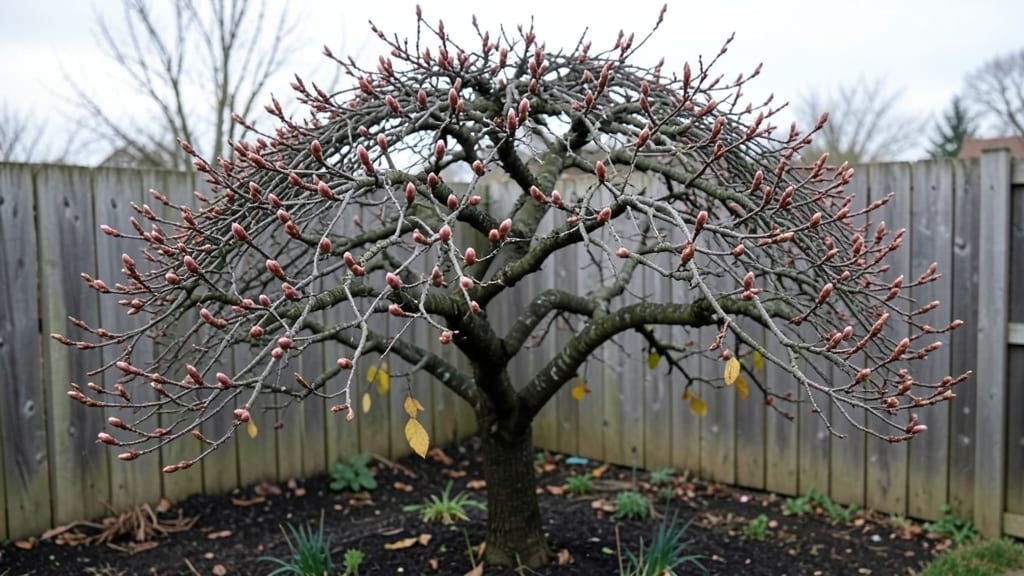
Winter is the perfect time to prune your flowering crabapple tree for next spring’s showstopper blooms. ✨ I’ve learned that sharp cuts now mean fewer surprises later—like overcrowded branches or weak growth.
The tree’s dormant state makes it easier to see the structure and plan your cuts without stressing the plant.
Your pruning toolkit only needs three things: clean, sharp bypass pruners, a small saw for thicker branches, and a bucket for clippings. Focus on removing dead, crossing, or weak branches first—they’re the low-hanging fruit (or should I say, crabapples?).
This is also the time to thin out crowded spots to improve airflow and light penetration for those future blossoms.
The payoff comes in spring when your tree bursts into color, its branches heavy with fragrant blooms. Proper winter pruning keeps the tree healthy, encourages stronger growth, and makes maintenance easier in future seasons. Plus, those winter berries add unexpected color and attract wildlife when everything else is bare.
Works for any mature crabapple, whether it’s a young sapling or a well-established specimen. Just remember: the goal isn’t perfection—it’s creating space for your tree to shine when spring arrives. Let’s get those branches looking sharp!
📚 In This Guide
- What you need
- Instructions
- Tips and common mistakes
- Wrapping up and next steps
What you need
- ● Pruning shears: Bypass pruners (for cuts up to ½ inch thick) – 1 pair (look for sharp, ergonomic handles for comfort).
- ● Loppers: Bypass or anvil type (for cuts up to 1.5 inches thick) – 1 pair (pivoting joints make thick branches easier to handle).
- ● Pruning saw: Curved-tooth or bow saw (for branches thicker than 1.5 inches) – 1 saw (choose a lightweight, rust-resistant blade).
- ● Gloves: Heavy-duty gardening gloves (cut-resistant and waterproof) – 1 pair (protects hands from thorns and splinters).
- ● Ladder: Sturdy extension ladder (aluminum or fiberglass, 12–16 feet tall) – 1 ladder (ensure it’s rated for outdoor use and has non-slip feet).
- ● Disinfectant: 70% isopropyl alcohol or bleach solution (1 part bleach to 9 parts water) – small spray bottle or rag (prevents disease spread between cuts).
- ○ Sealing wax or pruning paint: Optional but recommended (for cuts larger than ½ inch) – small container (helps protect large wounds from pests/disease).
- ● Trash bags or bucket: Heavy-duty bags (for collecting pruned branches) – 2–3 bags (or a wheelbarrow for larger jobs).
- ● Weather check: Prune on a dry, calm day (avoid frost or rain within 24 hours).
- ● Safety glasses: Protective eyewear (to shield from debris) – 1 pair.
- ● Long sleeves/pants: Wear layers (to protect from thorns and cold).
- ● First-aid kit: Basic supplies (bandages, antiseptic wipes) – small kit (for minor cuts or scrapes).
- ○ Tree map or sketch: Optional but helpful (mark branches to remove for clarity) – paper or digital notes.
Step-by-Step guide to winter pruning for flowering crabapple trees
Winter's the perfect time to shape your tree for stunning spring blooms—here's how to do it right.
✂️ Step 1: Gather Tools and Safety Gear
Start by assembling your tools: a sharp pruning saw for thick branches, hand pruners for smaller limbs, and loppers for medium-sized growth. I always wear thick gloves and safety glasses—those branches can snap back unexpectedly. Grab a bucket for clippings and a disinfectant spray to clean tools between cuts. This keeps diseases from spreading between branches.
Check your tools' sharpness first. Dull blades crush wood instead of cutting cleanly, which invites rot. A quick test: if you struggle to cut a small twig cleanly, sharpen your blades before starting. Work on a dry, calm day—wet branches are heavier and slippery, making control harder.
✂️ Step 2: Remove Dead, Diseased, or Damaged Wood
Scan your tree for dead branches (no leaves, gray/brown color) and diseased wood (mushrooms, oozing sap, or unusual spots). Cut these out first—they won’t bloom anyway and can infect healthy growth. Make cuts just outside the branch collar (the swollen area where the branch meets the trunk). This ensures the tree seals the wound properly.
Look for crossing branches rubbing together—they’ll tear bark and create entry points for pests. Remove one of the two, always choosing the smaller or weaker branch. If a branch is broken or split, cut it back to the nearest healthy bud. Never leave stubs; they’ll die and rot, inviting insects. Bag the clippings and dispose of them away from your yard.
✂️ Step 3: Thin the Canopy for Light and Airflow
Step back and visualize your tree’s shape. Aim for an open vase form—this lets sunlight reach inner branches, encouraging more blooms. Remove upward-growing branches competing with the leader (main trunk) and branches growing inward. Cut these back to a side bud or outward-facing branch to maintain an open structure.
Limit branch removal to no more than 25% of the tree’s canopy in one season. Flowering crabapples bloom on old wood, so aggressive pruning reduces next year’s flowers. Focus on water sprouts (fast-growing vertical shoots) and suckers (shoots from the base)—these drain energy from blooms. Use loppers for branches ½ to 2 inches thick and the saw for anything larger.
✂️ Step 4: Shape for Balance and Structure
Now refine the tree’s silhouette. Start at the top and work downward, cutting branches that disrupt the natural taper. Aim for a pyramidal or rounded shape—this reduces storm damage and makes blooms more visible. Prune outside the branch collar at a 45-degree angle for larger cuts to shed water away from the wound.
Watch for one dominant leader (central trunk). If the tree has multiple leaders, remove all but the strongest one to avoid a weak, multi-trunked structure. For mature trees, avoid heavy pruning—focus on light maintenance. After shaping, step back and check for symmetry. You’ll see a balanced, open framework ready for spring’s floral display.
🪴 Step 5: Clean Up and Protect the Tree
Sterilize your tools again with disinfectant spray to prevent spreading disease. Rake up all clippings and dispose of them in a sealed bag—never compost diseased wood. Apply a wound dressing only if the cut is larger than 4 inches in diameter; smaller wounds seal naturally. For extra protection, wrap the base with tree guard to deter rodents and voles.
Water the tree deeply after pruning to help it recover. Mulch the base with 2-3 inches of organic mulch, keeping it 6 inches away from the trunk to prevent rot. This insulates roots and retains moisture. Avoid pruning in late winter if frost is forecasted—wait until temperatures stabilize above 40°F to prevent shock.
Tips & tricks for perfect flowering crabapple winter pruning
Winter pruning transforms your crabapple tree into a spring blooming masterpiece—here's how to avoid common mistakes and elevate your results.
Tool Sharpness is Non-Negotiable: In Step 1, when checking your tools, don't just glance at the blades—actually make a test cut on a small twig. Dull blades tear wood instead of cutting cleanly, creating wounds that invite disease. I've ruined three pruning sessions by skipping this step—trust me, it's worth the 30 seconds. A sharp saw or pruner will glide through branches with minimal effort, reducing stress on both you and the tree.
Branch Collar Respect: During Step 2 and Step 4, focus on cutting just outside the branch collar—never flush with it. This swollen area contains healing tissues that help the tree seal the wound naturally. I learned this the hard way when a poorly made cut led to rot spreading through my tree. For larger branches, make a 45-degree angle cut to shed water away from the wound, preventing fungal infections.
Pruning Percentage Matters: In Step 3, remember the 25% rule—never remove more than one-quarter of the canopy in a single season. Flowering crabapples bloom on old wood, so aggressive pruning reduces next year's floral display. I once pruned too heavily and was disappointed by sparse blooms the following spring. Focus on strategic cuts rather than aggressive thinning, especially for mature trees where you want to preserve that stunning floral show.
Timing is Everything: The instructions mention avoiding late winter pruning if frost is forecasted, but I'll add this critical detail: aim for temperatures consistently above 40°F for at least 3-4 days before and after pruning. Cold stress can weaken the tree, making it vulnerable to disease. I've seen trees struggle to recover when pruned during temperature swings—wait for stable warm weather to give your tree the best chance to heal properly.
Pro Tips for Flowering Crabapple Tree In Winter
- Winter pruning transforms your crabapple tree into a spring blooming masterpiece—here's how to avoid common mistakes and elevate your results.
- Tool Sharpness is Non-Negotiable: In Step 1, when checking your tools, don't just glance at the blades—actually make a test cut on a small twig.
- Branch Collar Respect: During Step 2 and Step 4, focus on cutting just outside the branch collar—never flush with it.
Frequently asked questions
Got questions about pruning your flowering crabapple tree in winter? You’re not alone! Here are some of the most common queries—and their straightforward answers—to help you prep for a stunning spring display.
When is the best time to prune a flowering crabapple tree in winter?
The ideal window is late winter (just before buds swell), typically February to early March in most U.S. zones (3–8). Pruning then avoids stressing the tree and encourages vibrant spring blooms. Pro tip: Check your local frost dates—prune after the worst cold snaps but before active growth resumes!
Can I prune a flowering crabapple tree in late winter if I missed early winter?
Yes, but act quickly! If you missed the late-winter window, prune as soon as possible—just avoid pruning after buds break (late March/April). Late pruning may reduce flower production that year, but the tree will recover. Warning: Never prune in fall; it invites disease and pests.
How much can I trim off a flowering crabapple tree without harming it?
Aim to remove no more than 25% of the tree’s canopy in one season. For young trees, light pruning (10–15%) suffices. Focus on:
- Dead, diseased, or crossing branches
- Suckers at the base
- Overcrowded growth
Will pruning my flowering crabapple tree reduce next year’s flowers?
Pruning correctly won’t kill blooms—in fact, it enhances them! The key is timing and technique. Avoid over-pruning (especially flower buds, which form on last year’s wood). If you prune too late (after buds swell), you might see fewer flowers that season, but the tree rebounds quickly.
What’s a good alternative if my flowering crabapple tree isn’t thriving after pruning?
If your tree struggles post-pruning, consider:
- Fertilizing (balanced 10-10-10 in early spring)
- Checking for pests/diseases (e.g., fire blight, aphids)
- Switching to a hardier variety like ‘Royalty’ or ‘Adirondack’ if your climate is harsh
Wrapping up and next steps
Winter is the perfect time to shape your flowering crabapple tree for a stunning spring display! By following these pruning steps—cleaning, thinning, and shaping—you’ll encourage vibrant blooms, better airflow, and a healthier tree.
The key? Patience and precision—your efforts will pay off with a breathtaking canopy come spring.
Ready to transform your tree? Grab your tools, review the checklist, and get pruning! 🌸✂️ For extra confidence, watch a quick tutorial or consult a local arborist before diving in.