
Shrubs
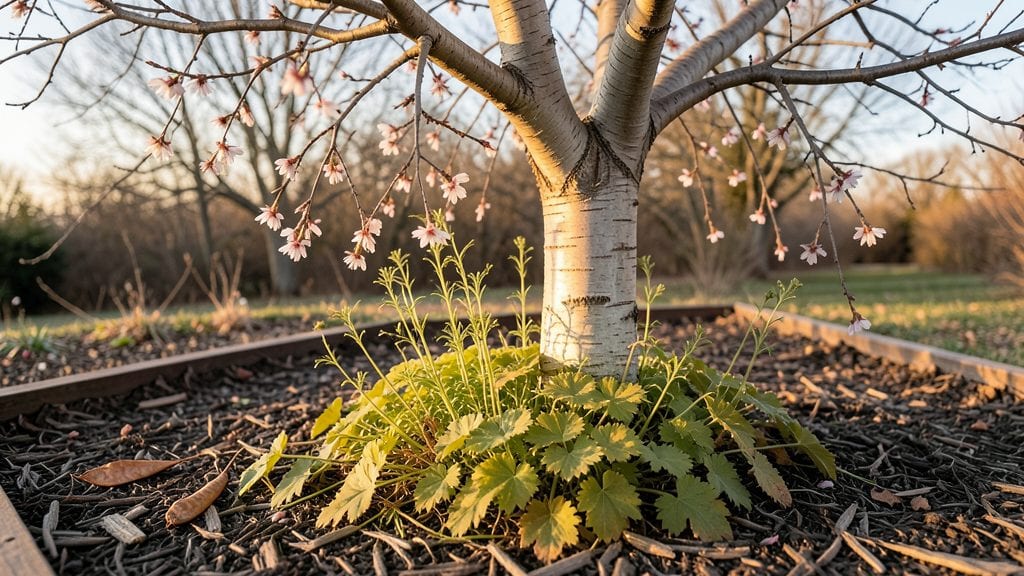
Flowering almond (Prunus triloba) is an invasive shrub in many regions because its sprawling roots and abundant seed production allow it to outcompete native plants quickly once established. Its rapid growth and adaptability make eradication particularly challenging.
This ornamental shrub earns its invasive reputation through a combination of biological traits. 🌱 Its underground suckers can spread 10 feet or more from the parent plant annually, while birds and squirrels readily disperse seeds from its bright red fruit.
Unlike many invasive species, flowering almond thrives in disturbed soils—common in construction sites or roadsides—where it forms dense thickets that choke out native vegetation. The real challenge comes when homeowners unknowingly plant it as an ornamental, only to watch it dominate their landscape within 3-5 years.
What makes containment so difficult is its deep taproot system, which can reach 6 feet underground. This makes traditional removal methods like mowing ineffective, as the plant simply regrows from its roots. Many gardeners underestimate its persistence until they've already spent years battling it, making early intervention absolutely critical.
💡 In This Article
- How Flowering Almond Spreads Aggressively in Landscapes
- Effective Flowering Almond Removal and Prevention Strategies
How flowering almond spreads aggressively in landscapes
The flowering almond's invasion begins with its underground network of suckering roots, which can extend up to 10 feet from the parent plant annually. These roots develop from the plant's root crown and create genetically identical clones, forming dense thickets that outcompete native species.
Unlike many ornamental shrubs, flowering almond doesn't rely solely on seeds—its root system alone can create hundreds of new shoots, making mechanical removal nearly impossible without addressing the entire root zone.
Above ground, the plant's bright red drupes (fruits) become a dispersal vehicle for wildlife. Birds like robins and mockingbirds consume these fruits and spread seeds through their droppings, often depositing them in sunny, disturbed areas where native plants struggle to establish.
Squirrels also play a role by burying seeds for later consumption, sometimes forgetting locations that become new flowering almond colonies. This dual propagation method—both vegetative and seed-based—gives the plant a survival advantage in diverse environments.
The plant's deep taproot system, capable of reaching 6 feet underground, provides another competitive edge. This root structure allows flowering almond to access water deep within the soil profile, making it more drought-tolerant than many native shrubs.
Its preference for disturbed soils—common in construction sites, roadsides, and abandoned fields—creates ideal conditions for rapid colonization. Unlike ornamental trees such as crape myrtle (which spreads primarily through seeds), flowering almond combines both root and seed dispersal, making it particularly difficult to control.
Growth rates further amplify its invasiveness. Flowering almond typically grows 1-2 feet per year, with mature specimens reaching 15-20 feet in height. In optimal conditions—full sun and well-drained soil—it can form nearly impenetrable thickets within 3-5 years.
This rapid growth outpaces many native shrubs, allowing it to dominate landscapes before homeowners or land managers realize the extent of the problem. The plant's adaptability to various soil types, from sandy to clay, only compounds its invasive potential.
When compared to other ornamental trees, flowering almond's invasiveness stands out due to its combination of traits. While trees like Bradford pear produce abundant seeds, they lack the aggressive root system of flowering almond.
Similarly, Russian olive spreads through seeds but doesn't form the same dense underground network. This dual propagation method—along with its drought tolerance and adaptability—makes flowering almond particularly challenging to manage once established in natural areas.
What most people don't realize is how quickly flowering almond can transform a landscape. A single planted shrub can create dozens of new shoots through its root system within a year, while wildlife dispersal ensures seeds spread across entire neighborhoods.
The plant's ability to thrive in both urban and rural settings—from suburban backyards to wild prairies—makes it a persistent challenge for land managers and gardeners alike. 🌿