
Trees
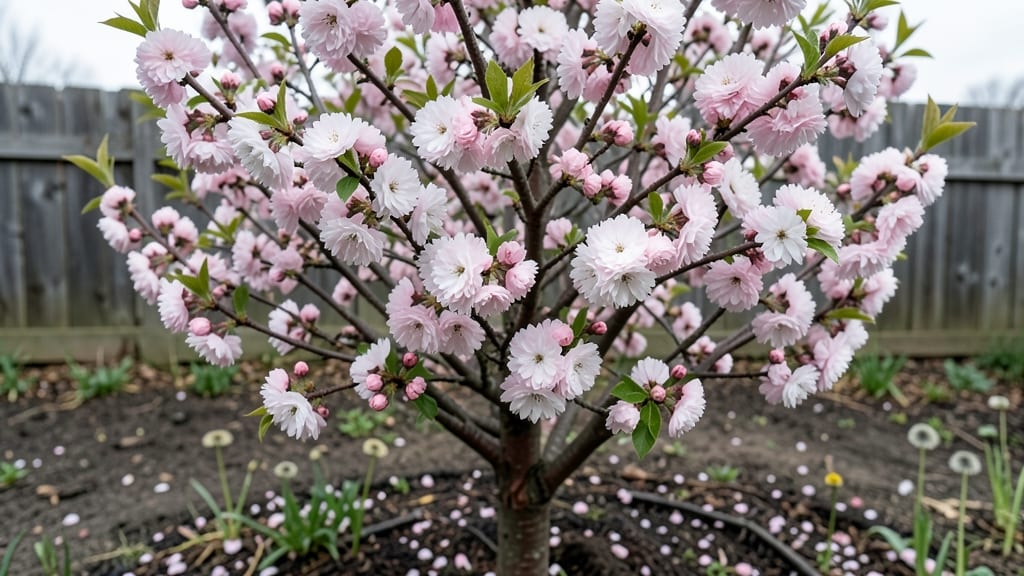
A double flowering plum tree transforms your yard into a fragrant cloud of pink and white every spring. 🌸 I’ve grown these showstoppers for years, and the secret to their continuous blooms lies in how you prune—not just when.
Most gardeners overlook the second flush of flowers that appear after the first wave, but with the right cuts, you’ll get two stunning displays instead of one.
The key starts with well-draining soil mixed with compost and a sunny spot with at least 6 hours of direct sunlight daily. Water deeply once a week, but avoid soggy roots—these trees hate wet feet. Pruning isn’t just about shaping; it’s about encouraging new growth where flowers form.
I prune mine in late winter to remove dead wood and open the center, then do a light trim after the first bloom to trigger the second flush.
By summer, you’ll have a tree so lush with blossoms it looks like a living painting. The fragrance lingers for weeks, and the double blooms mean twice the impact.
Even in heat waves, these trees stay resilient with proper care. The trade-off? They need regular pruning to prevent overcrowding, but the payoff is worth every cut.
Works beautifully in landscapes, urban spaces, or even large containers. Once established, they’re low-maintenance but high-reward—perfect for gardeners who want drama without the fuss. Let’s get those branches blooming again.
📚 In This Guide
- What you need
- Instructions
- Tips and common mistakes
- Wrapping up and next steps
What you need
- ● Double flowering plum tree: Choose a healthy, disease-resistant variety (e.g., Prunus cerasifera ‘New Dawn’ or ‘Thundercloud’). 1-2 trees recommended for optimal blooms.
- ● High-quality potting soil or native soil mix: Well-draining, enriched with compost (avoid heavy clay). 5-10 gallons per tree.
- ● Organic fertilizer: Slow-release, balanced (10-10-10) or citrus-specific blend. 1-2 lbs per tree.
- ● Mulch: Wood chips or shredded bark (2-3 inches thick) to retain moisture and suppress weeds.
- ● Pruning shears: Sharp, bypass-style (for clean cuts). 1 pair (sterilize with rubbing alcohol between cuts!).
- ● Hand pruners or loppers: For thicker branches (up to 1.5 inches). 1 set.
- ● Gloves: Heavy-duty, cut-resistant (to protect from thorns). 1-2 pairs.
- ● Watering can or hose with nozzle: For deep, consistent watering.
- ● Trowel or shovel: For planting or amending soil.
- ● Tree support stake: If planting in windy areas (especially for young trees).
- ● Pruning sealant: For large cuts (controversial—some gardeners skip it!).
- ● Drip irrigation system: For automated, efficient watering.
- ● Bird netting: To protect blooms from hungry birds (if desired).
How to prune a double flowering plum tree for maximum blooms
Here's how to keep your plum tree bursting with fragrant flowers year after year.
✂️ Step 1: Time Your First Cut Right After Flowering
Prune immediately after the spring blooms fade, around early to mid-April in most climates. This timing ensures you never cut off next year's flower buds, which form on last year's growth. I use sharp bypass pruners to make clean cuts at a 45-degree angle, just above an outward-facing bud.
Remove any dead, crossing, or inward-growing branches first—they compete for energy. Look for branches that rub against each other or grow straight into the center of the tree. These weak spots invite disease and block sunlight from reaching inner blooms. Aim to open up the canopy so air circulates freely.
✂️ Step 2: Thin Out 1/3 of the Oldest Growth
Select the thickest, oldest branches—these are the ones with the smallest diameter and dullest bark. Cut them back to their base, but never remove more than 25% of the canopy in one season. This prevents shock and maintains the tree's structural balance.
I prioritize branches that haven't produced many flowers in recent years. These are often the ones growing straight up or outward from the trunk. Removing them encourages younger, more vigorous growth to take their place. Always step back after each cut to visualize the tree's new shape.
✂️ Step 3: Shape for Optimal Airflow and Light
Next, shape the tree by cutting back 1/3 of the length of any branch that's too long or crowded. Make your cuts just above a bud that faces outward or slightly upward. This ensures new growth will fill gaps and improve the tree's overall form.
Pay special attention to the tree's center. If you see dense clusters of branches growing inward, thin them out to create an open vase shape. This prevents future rot and allows sunlight to reach all blooms. Avoid heavy pruning on the lower branches—these produce the most fragrant flowers.
⏰ Step 4: Light Summer Trimming for Vigorous Growth
In late June or early July, do a second light pruning to remove any water sprouts or suckers that appear after the first cut. These are the fast-growing, vertical shoots that steal energy from flower production. Snip them off at the base with clean pruners.
This mid-season trim also helps control the tree's size. If your plum tree is getting too large, cut back the tips of the fastest-growing branches by about 1/4 to 1/3. You'll see new side branches form, creating a fuller, more compact shape. Avoid heavy pruning now—it can delay fall color and next year's blooms.
✂️ Step 5: Clean Up and Protect for Winter
After your final pruning in late fall, clean up all debris and sterilize your tools with rubbing alcohol. Remove any fallen leaves or small branches from the base of the tree to prevent disease. I like to apply a 2-inch layer of mulch around the tree's drip line to protect roots from winter cold.
If your tree is young or in a cold climate, consider wrapping the trunk with burlap or tree guards to prevent sunscald. Avoid heavy pruning in winter—dormant trees are more susceptible to frost damage. By spring, you'll have a tree that's ready to burst into fragrant blooms again.
Tips & tricks for perfect double flowering plum tree pruning
Here's what I learned after years of pruning plum trees—and how to avoid the mistakes I made early on.
The Timing Secret: That early April window for Step 1 is critical because flower buds form on last year's growth. If you prune too early, you risk cutting off next year's blooms. I always mark my calendar when the spring blooms start fading—this is your cue to begin. Don't wait until the leaves appear, as that can be too late for some varieties.
Visual Cue for Step 2: When selecting branches to remove in Step 2, look for those with dull, grayish bark—they're the oldest. Healthy branches have smooth, vibrant bark. Also, check for branches that grow straight up (called "vertical shoots")—these rarely produce flowers and should be prioritized for removal. The 25% canopy rule is non-negotiable to prevent stressing the tree.
Equipment Upgrade: Invest in a good pair of bypass pruners—they make cleaner cuts than anvil pruners, which can crush branches. I also keep a small pruning saw on hand for any branches thicker than a pencil. Always sterilize your tools with rubbing alcohol between cuts to prevent spreading disease. This is especially important when working with double flowering varieties that are prone to fungal issues.
Seasonal Strategy: For the summer trimming in Step 4, I recommend doing this on a dry day when the tree isn't under water stress. Water sprouts often appear after heavy rains, so check your tree after significant rainfall. The 1/4 to 1/3 reduction on fast-growing tips creates a natural branching pattern that produces more flowers while maintaining a compact shape.
Pro Tips for Double Flowering Plum Tree
- Here's what I learned after years of pruning plum trees—and how to avoid the mistakes I made early on.
- The Timing Secret: That early April window for Step 1 is critical because flower buds form on last year's growth.
- Visual Cue for Step 2: When selecting branches to remove in Step 2, look for those with dull, grayish bark—they're the oldest.
Frequently asked questions
Got questions about keeping your double flowering plum tree blooming beautifully? Here are some common concerns—and their answers—to help you enjoy year-round fragrance!
How do I encourage my double flowering plum tree to bloom twice a year?
Prune strategically in late winter or early spring (before buds swell) to promote spring blooms. For a second flush, do a light pruning in early summer (after the first bloom fades) to stimulate new growth. Avoid heavy cuts—focus on shaping and removing dead wood to avoid stressing the tree.
When is the best time to plant a double flowering plum tree?
Plant in late fall or early spring when the tree is dormant. This gives roots time to establish before summer heat or winter cold. If planting in summer, water deeply and mulch to retain moisture. Avoid transplanting during flowering seasons—stress can reduce bloom quality.
Why aren’t my double flowering plum tree’s blooms lasting long?
Short-lived blooms often mean overwatering, poor drainage, or nutrient deficiencies. Ensure the soil drains well (plum trees hate soggy roots) and fertilize in early spring with a balanced, phosphorus-rich formula. Also, check for pests like aphids or scale, which can weaken the tree.
Can I prune a double flowering plum tree in summer?
Yes, but lightly! Heavy summer pruning can remove next year’s flower buds. Stick to deadwood removal or shaping after the first bloom cycle. If you must prune for aesthetics, do it in early summer and avoid cutting more than 20% of the canopy at once.
Are there dwarf varieties of double flowering plum trees?
Yes! Look for cultivars like ‘Okame’ or ‘Shirotae Nigra’, which stay compact (10–15 ft tall). These are perfect for small gardens or containers. Dwarf varieties still need full sun and well-draining soil, but they’re easier to prune and maintain than standard sizes.
Wrapping up and next steps
Transforming your double flowering plum tree into a fragrant, year-round beauty is entirely within reach with the right techniques! By mastering precision pruning—timing, tools, and techniques—you’ll unlock stunning blooms and a garden that feels like a springtime sanctuary all year.
The key? Start small, stay consistent, and let your tree’s natural elegance shine.
Ready to take the next step? Grab your pruners and schedule that first trim—your tree (and future visitors!) will thank you. 🌸✂️