
Pests
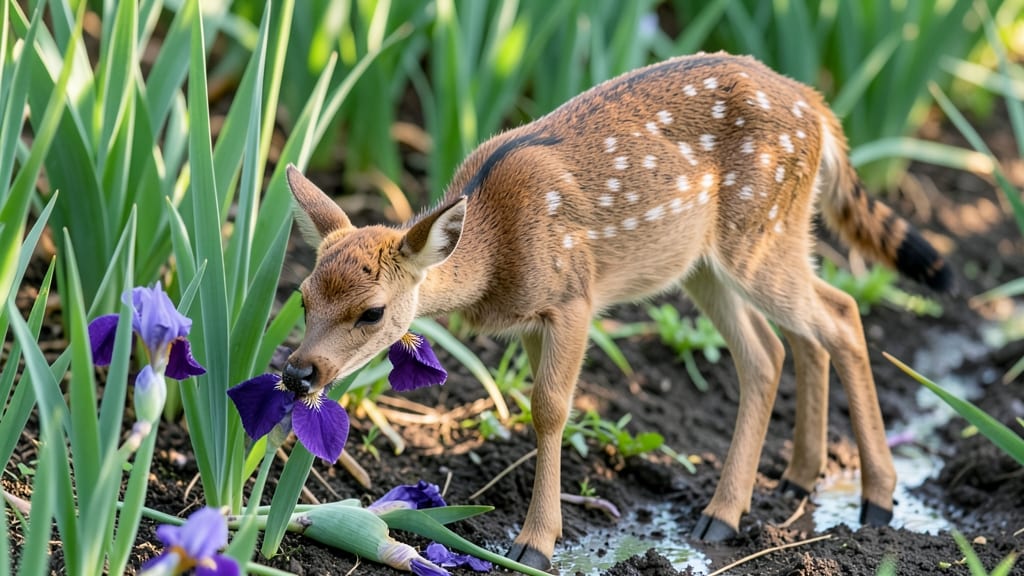
Deer eat iris flowers and foliage, especially the tender young shoots and blooms, because of their high water content and nutrient density. Without protection, this browsing can weaken or kill iris plants, particularly during peak feeding times in early spring and fall.
Deer are drawn to irises because these plants lack natural defenses like thorns or strong scents that deter herbivores. 🌿 The soft, water-rich leaves and delicate blooms make them an easy meal, especially when other food sources are scarce.
Unlike some plants, irises don’t produce chemicals that repel deer, which explains why they’re often the first to suffer in gardens where deer browsing is common.
What makes this worse is how deer prioritize irises during their seasonal cycles. In early spring, they target emerging shoots for quick energy, while in fall, they go after mature foliage and seeds. This two-pronged attack means gardeners need year-round strategies—not just a springtime fix—to protect their iris beds effectively.
💡 In This Article
- Why Deer Target Iris Plants in Gardens
- Effective Deer-Resistant Iris Planting Strategies
Why deer target iris plants in gardens
Here's what's actually happening when deer zero in on your irises: these plants are essentially nutritional powerhouses for browsing animals. 🌱 Irises contain high levels of moisture—up to 85% water content in their leaves—and a balanced mix of proteins and carbohydrates that deer crave.
Unlike many ornamental plants, irises lack chemical defenses like alkaloids or toxic compounds that would make them less appealing. Even their rhizomes, which store nutrients underground, are palatable to deer when exposed during planting or disturbance.
The lack of physical deterrents plays a huge role too. Most iris varieties grow in clumps without thorns, prickles, or rough foliage that would discourage chewing. 🦌 Compare this to roses, which deer often avoid due to their sharp stems and strong fragrance—irises offer none of these protections.
Even the bearded iris varieties, prized for their fuzzy "beards," don't have enough chemical defense to deter determined deer. What's more, the vertical growth habit of irises (often 2-3 feet tall) brings their tender shoots and blooms directly into a deer's browsing height range.
Seasonal feeding patterns explain why damage peaks during specific times.
In early spring, deer target newly emerging shoots because they're packed with 30-40% more protein than mature leaves, making them an energy-rich snack. 🌿 Meanwhile, fall becomes a critical feeding period as deer prepare for winter—irises' seed heads and mature foliage provide both calories and fiber.
The key factor is that deer are opportunistic feeders, and when preferred foods like clover or apples are scarce, irises become the default choice.
Not all iris varieties face equal threats, though. Siberian irises tend to be slightly less palatable than their bearded cousins due to their slightly tougher leaves, but they're still vulnerable. 🌸 The real difference comes in planting conditions—irises grown in poor soil or under stress produce less robust foliage, making them even more attractive to hungry deer.
What most people don't realize is that deer actually learn from each other: once one deer discovers a tasty iris patch, others quickly follow the scent trails left behind.
There's also a fascinating behavioral aspect: deer have been observed to "garden" by selectively browsing iris plants. 🌿 They often leave the toughest, most fibrous leaves while targeting the most tender growth, which can actually stimulate new shoots—creating a cycle where damage paradoxically encourages more growth.
This explains why some gardeners see their irises come back stronger after deer browsing, even when the plants look devastated in the moment.
The science behind this preference goes back to deer digestion.
Irises' high water content helps deer stay hydrated while their moderate fiber content aids digestion—making them an ideal "fast food" option. 🦌 Unlike plants with high tannin content (which can cause digestive upset), irises provide a safe, easily digestible meal that deer can consume in large quantities without immediate consequences.
This perfect nutritional profile explains why irises consistently rank among the most browsed garden plants in deer-active regions.