
Flowers
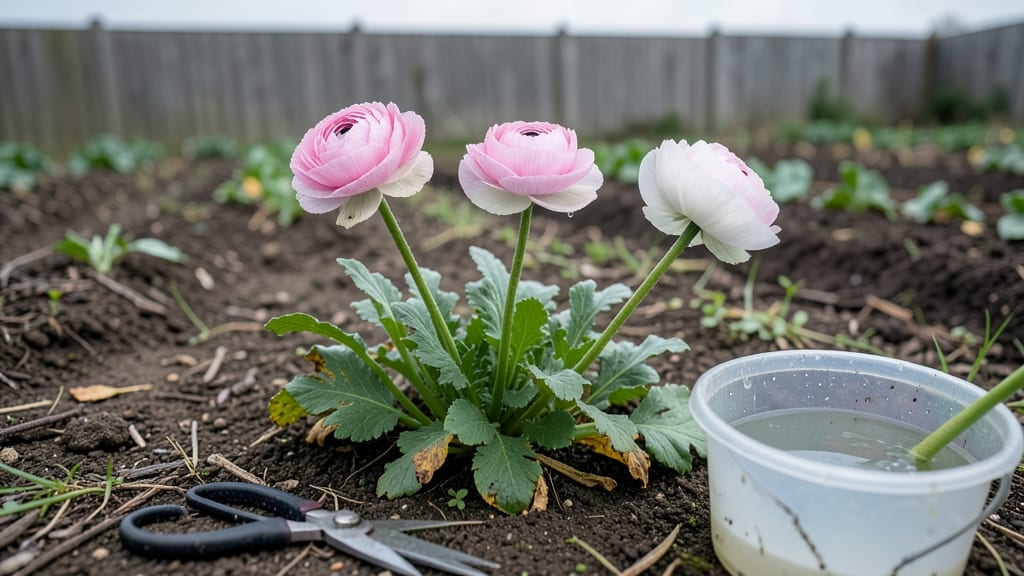
Cutting ranunculus flowers at the right moment transforms your garden into a bouquet factory. ✨ I learned the hard way that snipping stems without knowing when or how to do it shortens both the flowers' life and the plant's future blooms.
The secret lies in timing, sharp tools, and a few simple techniques that keep your ranunculus looking fresh for days.
You'll need clean pruners or sharp scissors, a bucket of fresh water, and a cool spot to store your cuttings. The best time to harvest is early morning when stems are fully hydrated and temperatures are mild—this ensures your blooms last longer.
Don't forget to cut at a 45-degree angle just above a leaf node to encourage new growth and prevent the plant from drying out.
Once cut, your ranunculus will stay vibrant in water for up to two weeks if you give them a fresh cut every few days and change the water every other day.
The paper-thin petals and layered blooms make them perfect for elegant arrangements, and with proper care, your plants will reward you with more stunning flowers all season long.
This method works for both garden ranunculus and those grown in containers, making it perfect for small spaces or large beds. The key is consistency—harvest regularly to promote continuous blooming, and your garden will become a never-ending source of fresh, long-lasting flowers.
📚 In This Guide
- What you need
- Instructions
- Tips and common mistakes
- Wrapping up and next steps
What you need
- ● Fresh ranunculus flowers: 10–50 stems (depending on bouquet size; note: buy unopened buds for best longevity).
- ● Sharp floral shears: 1 pair (bypass pruners with clean, sterilized blades to prevent crushing stems).
- ● Clean water: A bucket or vase (use room-temperature, chlorine-free water—chlorine shortens vase life!).
- ● Floral preservative: 1 packet (e.g., Floralife or Chrysal Clear) to extend freshness by 3–5 days.
- ● Buckets or containers: 2–3 (one for holding stems, one for water + preservative, and one for waste).
- ● Newspaper or towels: 2–3 sheets (to dry stems and protect surfaces).
- ● Rubbing alcohol (70%+) or hydrogen peroxide: 1 small bottle (for sterilizing shears between cuts).
- ● Floral tape or twine: For securing stems during transport or arrangement.
- ● Chalk or marker: To label stems by color/type if mixing varieties.
- ● Bucket with ice: For long-term storage (up to 7 days if refrigerated).
- ● Glove: 1 pair (to protect hands from sap or thorns on some varieties).
- ● Floral foam: If arranging in vases without water (follow package instructions!).
Step-by-Step instructions for cutting ranunculus flowers
Here's how to harvest these stunning blooms at their peak for vase life that lasts weeks.
🌿 Step 1: Identify the Perfect Blooms to Cut
Look for fully open ranunculus flowers with petals just beginning to unfurl—these will last longest in arrangements. Avoid buds that are still tightly closed or blooms that have already started to wilt. The ideal stem should feel firm when gently squeezed, not mushy or hollow.
I always check the underside of the leaves for signs of pests or disease before cutting. A healthy stem will have vibrant green foliage without brown spots or sticky residue. Cutting in the early morning gives you the freshest stems, as they've had the whole night to hydrate.
✂️ Step 2: Make Clean, Precise Cuts
Use sharp floral shears or pruning shears to make a clean cut at a 45-degree angle about 2-3 inches below the bloom. This angled cut increases the surface area for water absorption, which is crucial for ranunculus stems that can be thick and woody. Never use dull scissors—they crush stems and reduce vase life.
I always cut stems underwater if possible. Fill a bucket with room-temperature water and submerge the stems before cutting. This prevents air bubbles from blocking the stem's vascular system. For thick stems, make a second cut just above the first to create a fresh surface that drinks up water immediately.
💧 Step 3: Prepare Stems for Maximum Freshness
Immediately after cutting, strip off any lower leaves that will sit below the waterline in your vase. These leaves rot quickly and create bacteria that shorten vase life. Use your fingers to gently remove leaves, being careful not to damage the stem. For ranunculus, I also remove any side buds that might compete with the main bloom for energy.
Place the prepared stems in a clean bucket of lukewarm water (never cold) and store them in a cool, dark place until you're ready to arrange them. This simple step can add 2-3 extra days of freshness to your bouquet. Change the water every 24 hours to prevent bacterial growth.
☀️ Step 4: Create the Perfect Vase Setup
Fill your vase with room-temperature water and add 1 teaspoon of floral preservative (or a mix of 1 tablespoon sugar + 1 tablespoon bleach per quart of water) to extend vase life. Ranunculus stems are particularly thirsty, so use a vase with a narrow neck to force stems to drink up water quickly.
Arrange the stems by placing them in the water one at a time, spreading them out evenly. The thick, layered petals of ranunculus make them perfect for dramatic centerpiece arrangements. Trim stems again under water if they need adjusting, and recut any stems that look wilted or limp before arranging.
⏰ Step 5: Maintain Your Bouquet for Long-Lasting Beauty
Change the water every 2 days and trim stems by ½ inch each time to encourage fresh water uptake. Keep arrangements away from direct sunlight, heat sources, and drafts—these three things age flowers fastest. If you notice petals wilting but stems still feel firm, give them a quick "shower" by misting with water in the morning.
With proper care, your ranunculus bouquet will maintain its stunning layered petals and vibrant colors for 7-10 days or longer. The secret is treating these delicate blooms like the high-maintenance divas they are—give them water, attention, and a little TLC, and they'll reward you with weeks of beauty.
Tips & tricks for perfect ranunculus flower arrangements
These game-changing tips will help you transform your ranunculus harvest into show-stopping bouquets that last for weeks—no floral design degree required!
The Early Morning Edge: I can't stress this enough—cutting in the early morning when stems are fully hydrated from the night makes all the difference. The petals will be crisp and vibrant, and stems will hold water like champs. If you absolutely must cut later in the day, give them a quick soak in lukewarm water for 30 minutes before arranging. This hydration boost can add an extra day or two of freshness!
Angle Secrets for Water Uptake: That 45-degree angle cut in Step 2 isn't just for show—it's science! The increased surface area lets stems drink up water like thirsty gardeners. For extra insurance with thick ranunculus stems, make that second cut just above the first. This creates a fresh surface that absorbs water immediately, keeping your blooms perky for days. Don't skip this—it's the difference between wilting by noon and lasting a full week!
Leaf Removal Strategy: When stripping leaves in Step 3, think "below the waterline only." Any leaves submerged will rot and create bacteria that shorten vase life dramatically. But here's a pro move: leave a few leaves near the top—these act as natural water filters! Just make sure they're above the waterline when arranged. Also, those side buds? Snip 'em off—they'll only compete with your main bloom for energy.
Vase Life Extension Hack: The 24-hour water change in Step 3 isn't just about freshness—it's about bacterial control. Here's my secret weapon: add a pinch of bleach (just 1/4 teaspoon per quart) to that water change. It's not noticeable but creates a sterile environment that can extend vase life by another 2-3 days. I know it sounds counterintuitive, but trust me on this—your bouquet will thank you!
Pro Tips for Cutting Ranunculus Flowers
- These game-changing tips will help you transform your ranunculus harvest into show-stopping bouquets that last for weeks—no floral design degree required!
- The Early Morning Edge: I can't stress this enough—cutting in the early morning when stems are fully hydrated from the night makes all the difference.
- Angle Secrets for Water Uptake: That 45-degree angle cut in Step 2 isn't just for show—it's science!
Frequently asked questions
Got questions about cutting ranunculus flowers? You’re not alone!
Here are the most common concerns—plus expert answers—to help you master the art of harvesting these stunning blooms for vase life that’ll wow.
How do I know when ranunculus flowers are ready to cut?
Pick them when 50-70% of the blooms are fully open—typically 2-3 days before peak. Look for vibrant petals (not wilted or fully closed) and sturdy stems. Avoid cutting when buds are still tightly closed or flowers are already fading; this ensures the longest vase life. Morning harvests yield fresher stems!
How deep should I cut the stems for the best results?
Trim stems at a 45-degree angle about 2-3 inches below the base (or deeper if the plant is mature). This increases water uptake and prevents air bubbles from blocking the stem. Use sharp, clean scissors or pruners—never tear stems by hand. Pro tip: Re-cut stems every 2-3 days to refresh the water intake!
What’s the best water treatment to extend their vase life?
Fill your vase with lukewarm water and add a commercial floral preservative (or a DIY mix of 1 tsp sugar + 1 tsp bleach per quart of water). Change the water every 2-3 days and trim stems again to keep them hydrated. Avoid tap water with high chlorine—let it sit out for 24 hours first if needed.
Can I cut ranunculus from my garden and still grow more?
Yes! Cutting ranunculus encourages more blooms if done correctly. Leave at least 3-4 healthy leaves per stem to support regrowth. Avoid over-harvesting—limit cuts to 1/3 of the plant at a time. With proper care, your ranunculus will rebound and produce even more stunning flowers for future bouquets!
What if my cut ranunculus flowers wilt or close up quickly?
Wilting or buds closing too soon often signals stress from poor cutting or handling. Check for these fixes:
- Ethylene gas: Keep stems away from ripe fruit (like apples) or other flowers that release ethylene.
- Heat stress: Store cut ranunculus in a cool place (50-60°F) until arranging.
- Bacterial blockage: If stems refuse water, recut under warm water and soak for 1 hour.
Wrapping up and next steps
Mastering the art of cutting ranunculus flowers transforms your bouquets into stunning, long-lasting centerpieces!
With the right tools, timing, and techniques—like angled cuts, proper hydration, and gentle handling—you’ll unlock their full potential. Don’t let perfection intimidate you; every snip sharpens your skills! 🌸 Ready to bloom? Grab your shears, a vase, and try your hand at a fresh arrangement today. Experiment with colors, textures, and styles—your next masterpiece is just a cut away!