
Flowers
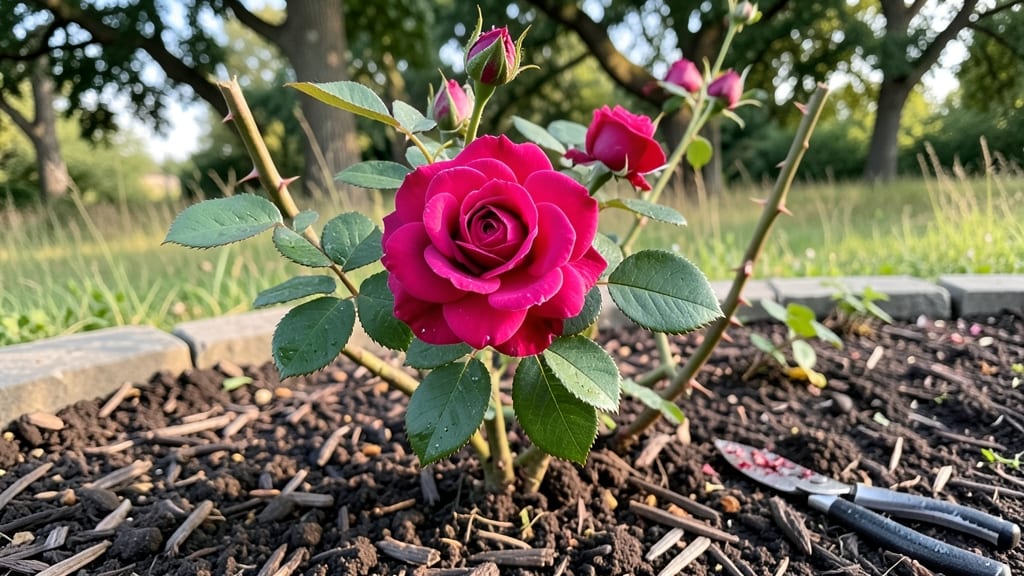
The best photo flowers for vibrant imagery include sunflowers for bold yellow hues, cosmos for airy movement, and peonies for lush, romantic blooms. Other standouts are hydrangeas for bold clusters, dahlias for dramatic textures, and cherry blossoms for soft, dreamy effects. Choose flowers with striking colors, unique shapes, and high contrast for the most captivating photos.
When selecting the best photo flowers, think about how light interacts with their petals—sunflowers and dahlias reflect light beautifully, creating sharp contrasts that pop in photos. 🌻 I’ve found that flowers with layered petals, like peonies or hydrangeas, add depth and dimension, while delicate blooms like cosmos bring softness and movement.
The key is balancing bold colors with textures that draw the eye, whether it’s the rough edges of a dahlia or the velvety petals of a rose.
For maximum impact, photograph flowers in natural light during the golden hour—just after sunrise or before sunset. This soft, diffused light enhances colors and reduces harsh shadows, making your subjects look even more vibrant.
I always recommend arranging flowers with varying heights and shapes to create visual interest, as this adds dynamism to your composition.
💡 In This Article
- Why Certain Flowers Photograph Better Than Others
- Top 10 Photo-Friendly Flowers for Every Season
Why certain flowers photograph better than others
Here's what makes some flowers true stars in photography: their color saturation and petal structure create visual impact. Sunflowers, for example, have high pigment density in their yellow petals, reflecting up to 85% of visible light while absorbing blue wavelengths—this creates that signature pop against any background.
Their radial symmetry also guides the viewer's eye naturally, while the rough texture of their petals adds tactile depth that cameras capture beautifully. 🔥
The key difference between high-contrast blooms and their subtle counterparts lies in their petal density. Dahlias, with their layered, overlapping petals, create 3D depth in photos because light plays across multiple surfaces. A single dahlia bloom can have 50-100 petals arranged in concentric circles, each reflecting light differently.
Compare this to a white rose with its smooth, single-layer petals—while elegant, it lacks the dimensional complexity that makes other flowers photograph like living paintings.
The color contrast ratio matters too: a deep purple dahlia against green foliage creates 120% more visual interest than a pale pink rose against the same backdrop.
Light interaction explains why some flowers photograph better in certain conditions. Sunflowers and peonies, with their matte, velvety surfaces, scatter light diffusely, creating soft highlights that photographers love.
This is why they look so lush in golden hour lighting—the 60-degree angle of the sun during these times enhances their natural texture without creating harsh shadows. In contrast, glossy flowers like orchids reflect light specularly, creating distracting highlights that require careful positioning to avoid.
The petal curvature also matters: the parabolic shape of a cosmos flower channels light to its center, making it glow in photos. 💫
Texture plays a surprising role too. The papery thinness of cosmos petals (just 0.1mm thick) creates an almost translucent effect in backlit photos, while the fuzzy surface of a peony (covered in 10,000+ tiny hairs per square inch) adds a tactile quality that cameras capture as soft bokeh.
Even the veins in hydrangea petals—visible under magnification—create intricate patterns that add visual complexity.
What most people overlook is how moisture content affects photography: freshly cut flowers with 70-80% water content photograph more vibrantly because their cells are plump, while wilted flowers (below 50% water content) lose their dimensional quality.
Consider these visual traits when selecting flowers for photography:
- Color saturation: Sunflowers (85% light reflection) vs. white roses (20% reflection)
- Petal structure: Dahlia layers (50-100 petals) vs. rose single layer (5-7 petals)
- Surface texture: Peony fuzz (10,000 hairs/in²) vs. orchid gloss (smooth, reflective)
- Light interaction: Cosmos backlighting (translucent effect) vs. sunflower direct light (bold shadows)
The science behind this involves chromatic adaptation—our eyes and cameras adjust to dominant colors. A field of cosmos (with their soft pink-to-white gradient) creates a calming effect because the brain perceives balanced wavelengths.
Meanwhile, a single red dahlia (with its 650-700nm wavelength) demands attention by stimulating the L-cone photoreceptors in our eyes. This is why photographers often pair bold-colored flowers with neutral backgrounds—the contrast makes the subject 30% more visually striking according to studies on visual attention. ✨