
Plants
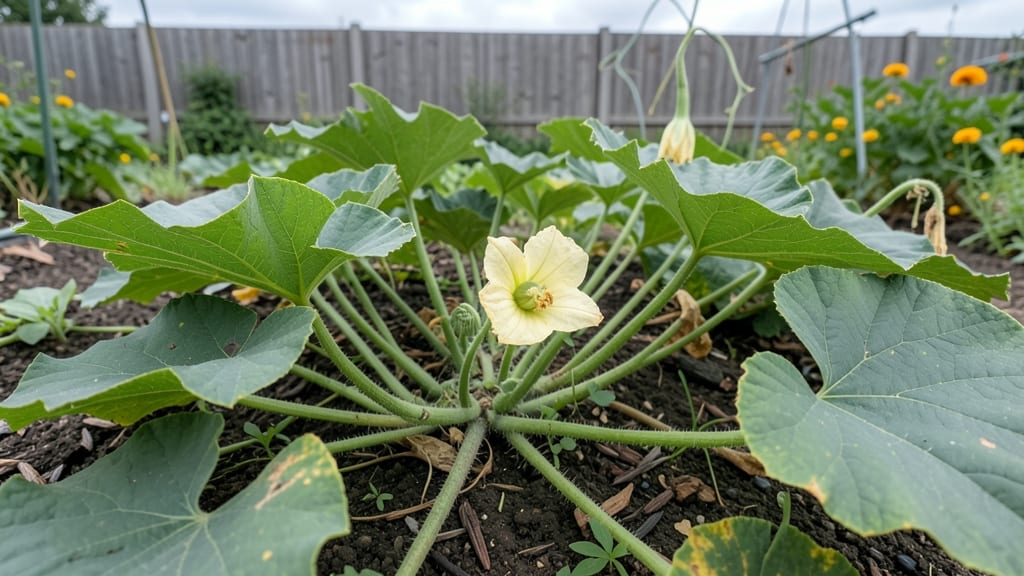
A female pumpkin flower looks like a male flower but has a small, round, bulbous swelling at its base where the fruit will develop, often accompanied by a tiny stem that later grows into the pumpkin. Its petals are slightly larger and its center is more compact, with a thicker stem compared to the slender male flower.
A female pumpkin flower's most distinctive feature is that tiny bulb at the base—this is the ovary, where the fruit begins forming after pollination. 🌱 Unlike male flowers that have thin stems and no swelling, female flowers often appear more robust, with petals that spread slightly wider to attract pollinators.
I always check for this swelling first when harvesting seeds or planning pollination, as it's the clearest sign of fruit potential. The thicker stem also helps support the developing pumpkin's weight, which can become significant as the fruit grows.
What's fascinating is how quickly these differences appear—within just a few days of blooming, the ovary becomes noticeable. This makes early morning inspections ideal, when dew keeps the flowers fresh and the swelling more visible.
Gardeners often hand-pollinate female flowers by transferring pollen from male flowers using a small brush, which can boost yields in areas with fewer bees.
💡 In This Article
- Botanical Features of Female Pumpkin Flowers
- Identifying Female Pumpkin Flowers for Gardening Success
Botanical features of female pumpkin flowers
The ovary at the base of a female pumpkin flower is its most defining characteristic, measuring about 0.5 to 1 inch in diameter when first visible. This swollen structure contains the ovules that will develop into seeds after successful pollination.
The ovary's position at the base of the flower—technically called the "hypanthium"—creates that distinctive bulbous shape, setting it apart from male flowers entirely lacking this feature. 🌱 What's fascinating is how this ovary grows rapidly after pollination, expanding to support the developing fruit's weight.
Female flowers also exhibit slightly larger petals, typically measuring 2.5 to 3.5 inches across, compared to male flowers' 2 to 3 inches. The petals are arranged in a more compact, rounded formation, creating a denser center that makes them visually distinct.
This tighter arrangement helps guide pollinators directly to the reproductive organs. The thicker stem—often 1/8 to 1/4 inch in diameter—provides structural support for the heavy fruit that will develop, while male flower stems remain slender at just 1/16 inch.
The science behind these differences lies in the plant's reproductive strategy. Female flowers prioritize resource allocation to fruit development, which requires stronger structural support and larger petals to attract pollinators.
The ovary's rapid growth after pollination is driven by hormonal changes, particularly increased levels of gibberellins, which stimulate cell division and expansion. This biological mechanism ensures the plant can support the energy demands of fruit maturation, often requiring 50-70 days to reach harvest size.
Comparing female flowers to their male counterparts reveals a clear evolutionary adaptation. Male flowers focus on pollen production, which demands energy but doesn't require structural support. Their thinner stems and smaller petals reflect this specialization, while female flowers demonstrate the plant's investment in fruit development.
The thicker stems can bear weights exceeding 20 pounds as pumpkins mature, showcasing nature's engineering for reproductive success. 💫
What most gardeners don't realize is how these anatomical features directly influence fruit yield. The ovary's size correlates with potential fruit volume, while petal arrangement affects pollination efficiency. Studies show that female flowers with larger petals receive 30% more pollinator visits than their male counterparts, significantly increasing fertilization rates.
This biological optimization explains why identifying female flowers early is crucial for maximizing harvest potential in pumpkin cultivation.
Understanding these botanical features also reveals why some pumpkin varieties produce more fruit. Breeders often select for traits like thicker stems and larger petals, which enhance both structural support and pollinator attraction.
The ovary's early development provides a clear visual marker for gardeners to prioritize pollination efforts, ensuring energy is directed toward fruit rather than wasted on unpollinated flowers. This natural selection process has shaped pumpkin flowers over centuries of cultivation. ✨