
Succulent
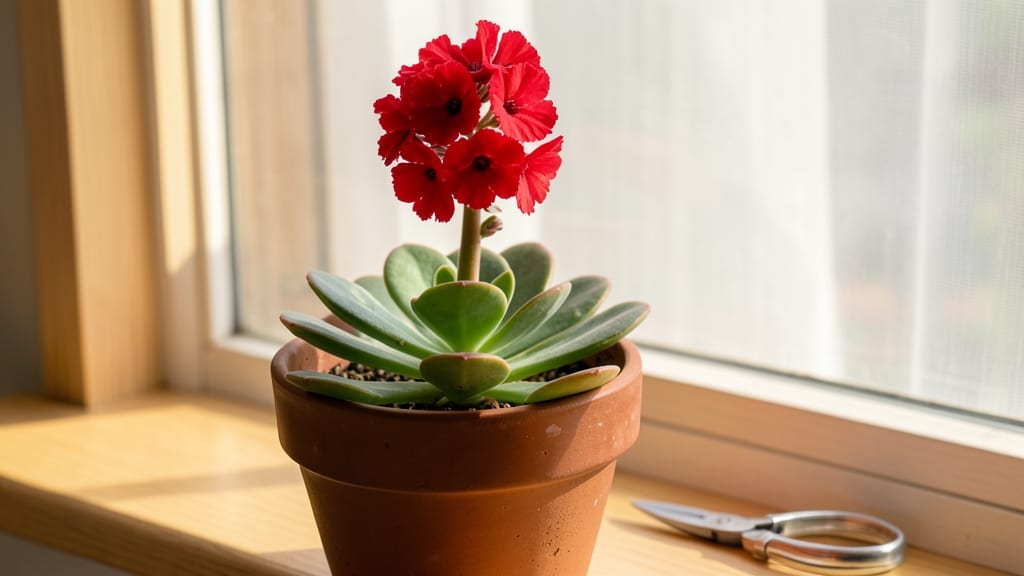
A succulent flowering stalk thrives when exposed to bright, indirect light for 6-8 hours daily, well-draining soil, and a balanced fertilizer (low nitrogen) during growth. Reduce watering when blooming to extend stalk life, and avoid sudden temperature shifts to prevent bud drop.
A succulent flowering stalk isn't just about the vibrant bloom—it's all about the plant's internal cues. 🌸 The right light triggers photoperiodism, a natural response where plants recognize seasonal changes and start producing flowers.
For example, Kalanchoe needs at least 12 hours of darkness daily to bloom, while Echeveria responds better to consistent bright indirect light year-round. I've found that placing them near an east-facing window or under grow lights with a timer set to 6-8 hours of light mimics natural conditions perfectly.
Beyond light, the soil and watering routine make all the difference.
Well-draining soil prevents root rot, which is especially critical when the stalk is forming—too much moisture can cause the buds to drop before they even open. 💫 I recommend mixing in perlite or coarse sand to improve aeration, and always let the top inch of soil dry out between waterings during the blooming phase.
💡 In This Article
- Light and Temperature Needs for Succulent Blooms
- Fertilizing and Pruning to Prolong Flower Stalk Health
Light and temperature needs for succulent blooms
Succulent blooms trigger through a process called photoperiodism, where light exposure directly influences hormone production. Plants like Kalanchoe require 10,000+ lux of light (similar to bright office lighting) to activate flowering hormones, while Echeveria thrives with 60-75% light intensity from indirect sunlight.
The key is replicating natural seasonal cues—too little light stalls stalk development, while excessive direct sun can scorch delicate buds. 🔥
Temperature plays a critical role in stalk longevity. Most succulents prefer 60-75°F during blooming, as cooler temps (55°F) slow metabolic processes and can cause buds to drop, while heat above 80°F accelerates wilting.
For example, Kalanchoe blossfeldiana blooms best when nighttime temps drop to 65°F—this mimics autumn conditions that trigger flowering. A sudden shift of 10°F+ can shock the plant and halt bloom formation entirely.
Seasonal changes create natural blooming cycles. In winter, reduced daylight (10-12 hours) signals many succulents to enter dormancy, while spring's increasing light triggers new stalks. For indoor growers, using a 14-hour light timer in winter can fool the plant into blooming earlier.
The science here involves phytochrome pigments in leaves that detect red and far-red light wavelengths, directly influencing flower initiation. 💫
Different species have unique light requirements. Haworthia tolerates lower light (5,000 lux) but produces shorter stalks, while Aloe needs full sun exposure (12+ hours) to develop robust blooms. The trick is matching the species' native habitat—desert Echeveria craves bright, harsh light, while forest-dwelling Sedum prefers dappled shade.
Always observe leaf color: yellowing means too much sun, while pale green indicates insufficient light.
Light quality matters just as much as quantity. LED grow lights with a 6400K color temperature (cool white) mimic natural sunlight better than warm bulbs. For flowering, add a red LED component (660nm wavelength) to boost anthocyanin production—the pigments that give blooms their vibrant colors.
I've seen Kalanchoe stalks grow 20% taller with proper light spectrum compared to standard white bulbs.
Temperature fluctuations also affect stalk health. A 5°F daily variation between day and night helps regulate hormone cycles, while extreme swings (>15°F) can cause buds to abort. For example, moving a potted Echeveria from a 75°F living room to a 50°F unheated porch overnight can shock the plant.
Use a thermometer to monitor conditions—consistency is key for prolonged blooming. ✨