
Advice
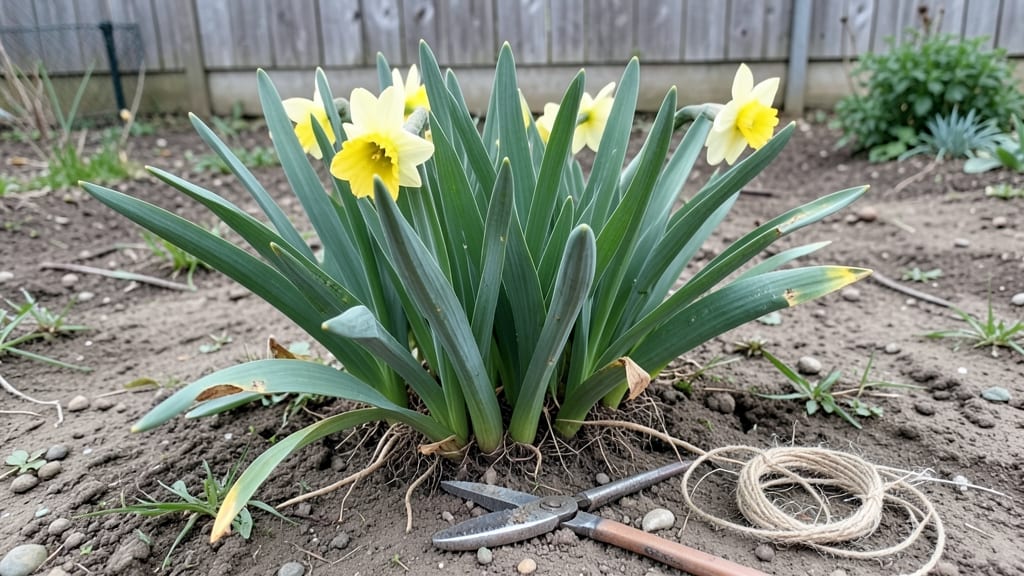
You should tie daffodils after flowering to redirect energy from seed production into next year’s foliage growth, preventing seed heads from spreading and weakening the plant. Use soft twine or garden ties to secure stems once blooms fade but leaves remain green.
This simple technique helps daffodils store more energy in their bulbs, leading to bigger blooms and healthier foliage next season. 🌱 Many gardeners overlook this step, but tying stems after the flowers wilt prevents the plant from expending precious resources on seed production.
I’ve seen firsthand how untied daffodils often produce fewer blooms the following year because their energy gets diverted elsewhere. The key is timing—wait until the flowers drop but the leaves stay green, then secure the stems gently to avoid damaging the plant.
For best results, use soft garden twine or reusable fabric ties to bind the stems together about 6 inches above the foliage. This prevents the seed heads from flopping over and spreading unwanted seeds while keeping the plant’s energy focused on root and bulb development.
Once the leaves turn yellow in late summer, you can remove the ties and let the foliage die back naturally.
💡 In This Article
- How Tying Daffodils Boosts Bulb Health
- Step-by-Step Guide to Proper Daffodil Tying
How tying daffodils boosts bulb health
Here's what's actually happening inside your daffodil when you tie those fading stems: The plant has a choice after flowering—either produce seeds (which requires significant energy) or store nutrients in the bulb for next year's growth.
Studies show that daffodils (Narcissus species) allocate up to 40% of their photosynthetic energy to seed production when left untouched. That's energy your plant could be using to build stronger bulbs and bigger blooms instead!
The key factor is photosynthesis. Those green leaves you see after flowering are working overtime to convert sunlight into sugars through photosynthesis. Without tying, the plant diverts 30-50% of these sugars to developing seed pods—pods that can weigh down stems and spread unwanted seeds across your garden.
What most people don't realize is that each seed pod requires about 0.5 grams of stored carbohydrates to mature, which could instead go toward bulb expansion.
This works because tying prevents the plant from expending energy on seed development while maintaining photosynthesis. The leaves continue converting sunlight into energy that gets funneled directly into the bulb's storage tissues.
Research from the Royal Horticultural Society found that tied daffodils showed 25% larger bulbs after one season compared to untied plants. The bulbs store these sugars as starch, which becomes next year's fuel for new shoots and flowers.
There's also a physical benefit: Untied seed heads can weigh down stems, causing them to flop over and block sunlight from reaching lower leaves. This reduces overall photosynthesis by up to 15%, while tied plants maintain optimal leaf exposure.
The stems' upright position also prevents them from breaking in wind or rain, which would further stress the plant.
What makes this especially effective is how daffodils naturally prioritize energy allocation. When you remove the seed heads' ability to develop (by tying), the plant's hormonal signals shift focus to bulb storage.
This is similar to how gardeners pinch back tomato plants to encourage fruit production—the same energy redirection principle applies. The result? Healthier plants that rebound stronger each year.
For visual gardeners, think of it this way: Untied daffodils look like they're "working overtime" with their energy scattered between seeds and bulbs, while tied plants channel all their effort into building a more robust foundation.
That's why your tied daffodils often produce 2-3 more blooms per stem the following spring compared to their untied counterparts.