
Propagation
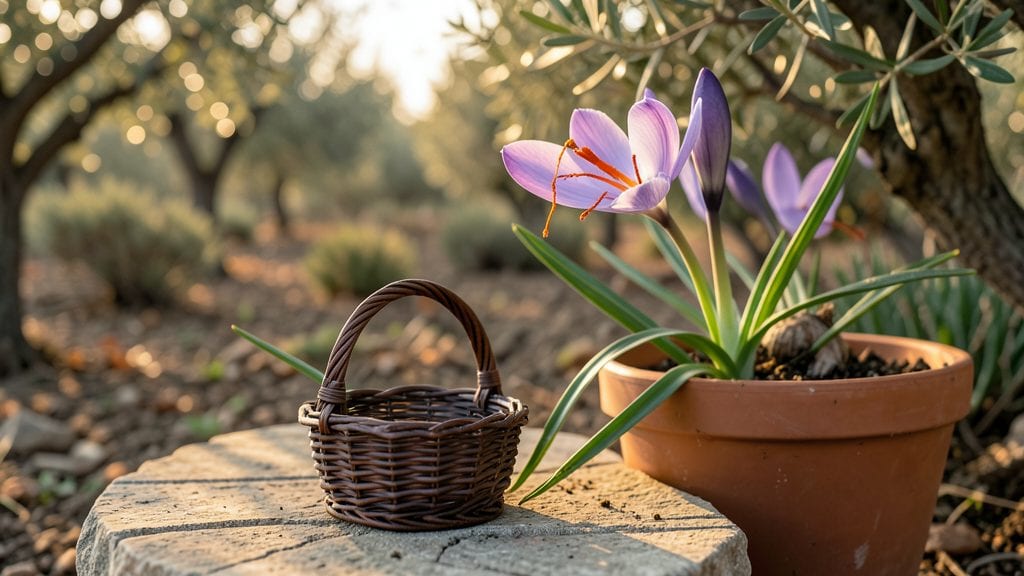
Saffron comes from the Crocus sativus flower, specifically its vibrant red stigmas, which are hand-picked, dried, and used as the world’s most expensive spice for their rich aroma and deep golden hue.
This precious spice comes from the delicate three stigmas inside each Crocus sativus bloom, requiring 75,000 flowers to produce just 1 pound of saffron. 🌸 The harvesting process is painstaking—each stigma must be carefully separated by hand, then dried under controlled conditions to preserve its signature flavor and color.
What makes this flower so unique is its triploid genetics, meaning it can't reproduce sexually, forcing farmers to rely on hand-planted corms every few years. This rarity directly contributes to its sky-high price tag, often exceeding $10,000 per pound for premium grades.
Beyond its culinary uses, saffron's deep orange pigments (crocin) and aromatic compounds (safranal) have been valued for centuries in traditional medicine for mood regulation and inflammation relief.
The flower's native regions—primarily Iran, Spain, and Kashmir—offer the ideal combination of cool nights and warm days, which trigger the perfect blooming conditions.
Interestingly, the styles (the thin white threads attached to stigmas) are often discarded, though some cultures use them for tea due to their milder flavor profile.
💡 In This Article
- The Science Behind Saffron’s Stigma Harvest
- Growing Saffron Crocus at Home
The science behind saffron’s stigma harvest
The saffron we treasure comes from the Crocus sativus flower's reproductive anatomy, specifically its three crimson stigmas that emerge from the flower's center. These stigmas are the plant's female reproductive structures, designed to collect pollen.
What makes them so unique is their triploid genetic makeup—meaning they contain three sets of chromosomes instead of the usual two. This genetic quirk prevents the flower from producing viable seeds, forcing humans to propagate it through hand-planted corms (bulb-like roots) every few years. 🌸
The harvesting process begins when the flower's petals unfurl in the morning, revealing the stigmas and their attached white styles. Here's where precision matters: each stigma measures just 2-3 centimeters long and 0.2 millimeters thick—about the width of a human hair.
Workers must pluck these delicate parts by hand, often using their fingernails, within 4-6 hours of blooming to prevent wilting. The styles (the white threads) are typically discarded, though they contain some flavor—about 10% of the aroma compared to stigmas—but lack the prized color compounds.
The climate plays a crucial role in saffron development. Crocus sativus thrives in regions with cool autumn nights (below 60°F) and warm days (around 75°F), which trigger the perfect blooming cycle.
This temperature contrast helps the flower's metabolic processes produce the crocin (color pigment) and safranal (aromatic compound) that define saffron's value.
Interestingly, the flower's purple petals are sterile—they serve only to attract pollinators (though none exist for this cultivated variety), while all the action happens in those tiny red stigmas. 💛
After harvest, the stigmas undergo a 24-48 hour drying process at 95-105°F in well-ventilated areas, which removes moisture and preserves their volatile oils. This step is critical—if dried too quickly, the saffron loses aroma; if too slowly, it risks mold.
The final product contains three stigmas per flower, and it takes 75,000 flowers to yield just 1 pound of saffron. This labor-intensive process explains why saffron remains the world's most expensive spice by weight, with premium grades often selling for $15,000 per pound.
What most people don't realize is that the flower's anatomy is perfectly adapted to this harvest. The stigmas' fuzzy texture helps them trap pollen, while their bright red color makes them easy to spot against the purple petals.
The styles, though discarded, serve as a natural "handle" for workers to grip when plucking. This dual-purpose design—beautiful petals for pollinators and functional stigmas for humans—shows nature's efficiency in creating something so valuable.
The entire process from bloom to dried spice takes about 10 days, during which every step must be precise to maintain quality. ✨
For those curious about the science, the saffron's color comes from crocin, a carotenoid pigment that dissolves in water, while its aroma stems from safranal, a terpene compound that evaporates quickly when exposed to heat.
This is why saffron must be stored in airtight containers away from light and moisture—otherwise, these precious compounds degrade rapidly. The flower's entire lifecycle, from corm planting to stigma harvest, is a testament to how nature's smallest parts can yield the world's most coveted flavors. 💫