
Trees
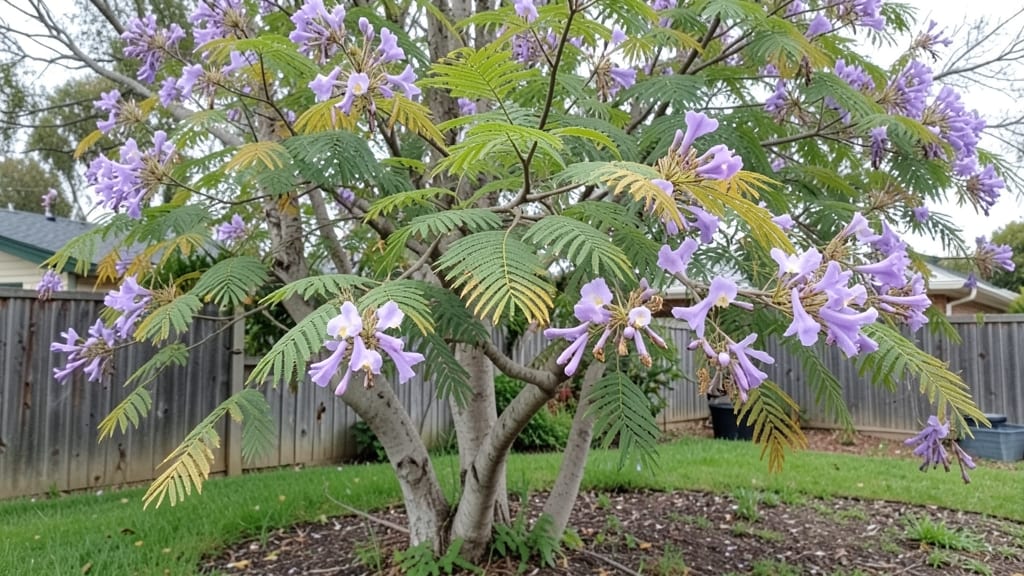
The purple jacaranda mimosifolia flowering tree 🌳 turns neighborhoods into a dreamy purple haze every spring—but getting those show-stopping blooms depends on more than luck.
Imagine your garden transformed into a dreamy purple paradise every spring—this isn’t just a fantasy for jacaranda owners. With the right timing and care, you can trigger massive, show-stopping blooms that turn heads for weeks. But when exactly should you expect flowers, and what triggers this stunning spectacle?
This drought-tolerant beauty thrives in USDA Zones 9b-11 (like Phoenix) but can also flourish in colder climates like Ohio with proper winter protection. The key? Full sun, well-draining soil, and a few strategic tricks—like light pruning and smart watering—to coax those iconic purple flowers into action.
In this guide, I’ll walk you through the exact timing, care tips, and even a few secret stress tricks that force your jacaranda to bloom like crazy. Ready to turn your yard into a purple paradise?
Best seasons & climate conditions for jacaranda mimosifolia mass flowering
The purple jacaranda mimosifolia tree is famous for its dramatic spring blooms, but timing is everything. These trees thrive in USDA zones 9-11, where warm winters and long daylight hours trigger their flowering cycle.
In cooler zones like 6-8, blooms may appear later or be less abundant due to shorter growing seasons. Understanding these seasonal triggers will help you maximize your tree’s flowering potential.
For mass flowering, your jacaranda needs a combination of mild winter temperatures (50-70°F) followed by warm spring days (70-90°F). This temperature shift signals the tree to produce flowers.
In Zone 9b, blooms typically appear in late winter to early spring, while in Zone 6, they may wait until late spring or early summer.
Daylight hours also play a critical role. Jacarandas need 12+ hours of daylight to trigger blooming. In northern climates, this means waiting until late spring when days lengthen. Meanwhile, in southern regions, the tree may bloom earlier due to consistent long daylight throughout the year.
Interestingly, drought stress can actually boost flowering in jacarandas. When water is limited during late winter or early spring, the tree redirects energy toward flower production instead of leaf growth.
This is why overwatering in bloom season can reduce flower counts. Let the soil dry slightly between waterings to encourage blooms.
Here’s a quick reference for ideal conditions:
<summary-table>| Season | Temperature Range | Daylight Hours | Water Needs | USDA Zones |
|---|---|---|---|---|
| Late Winter | 50-70°F | 10-12 hours | Reduce water | 9-11 |
| Early Spring | 60-80°F | 12+ hours | Moderate water | 6-8 (delayed) |
| Full Bloom | 70-90°F | 12-14 hours | Deep watering | 9-11 |
| Post-Bloom | 80-100°F | 14+ hours | Increase water | All zones |
In Zone 9b, where winters are mild, jacarandas often bloom in February or March. The cooler nights followed by warm days create the perfect flowering trigger. If you live in a warmer microclimate, like coastal California, blooms may start as early as January.
In contrast, Zone 6 gardeners should expect blooms in May or June, once soil temperatures rise above 60°F.
Humidity also affects flowering. Jacarandas prefer low to moderate humidity (30-50%). High humidity can lead to fungal issues like powdery mildew, which weakens the tree and reduces blooms. If you’re in a humid climate, ensure your tree has good air circulation and avoid overhead watering during bloom season.
One of the most surprising tricks for maximizing blooms is controlled drought stress. In late winter, reduce watering to encourage the tree to focus on flower buds rather than leaf growth.
Once buds appear, resume regular watering to support their development. This method works best in drought-prone regions like Arizona or Texas, where jacarandas naturally thrive.
If your tree isn’t blooming as expected, check for these common climate-related issues:
- Too much water in bloom season
- Sudden temperature drops (below 40°F)
- Insufficient sunlight (less than 6 hours/day)
- High humidity without airflow
For year-round blooming potential, consider planting your jacaranda near a south-facing wall to capture extra warmth. In cooler zones, a microclimate
Proven techniques to induce jacaranda blooms: pruning, fertilizing & stress tricks
Your purple jacaranda mimosifolia may already be stunning, but maximizing those iconic purple blooms requires strategic care. The key lies in pruning at the right time, feeding with the right nutrients, and even using controlled stress to trigger flower production.
Unlike many trees, jacarandas respond best to light pruning and drought-like conditions before blooming season—counterintuitive but effective!
Timing is everything: late winter pruning (just before buds swell) removes dead or crossing branches while encouraging new growth that will bear next year's flowers. Meanwhile, high-phosphorus fertilizers in early spring give your tree the energy it needs to produce abundant blooms.
But skip the heavy hand—over-fertilizing can lead to leafy growth at the expense of flowers.
🌷 Triggering Jacaranda Blooms: What Works vs. What Doesn’t
✅ DO THIS
- Prune in late winter (remove dead wood and thin dense areas)
- Use high-phosphorus fertilizer (e.g., 6-12-6 NPK) in early spring
- Apply controlled drought stress (reduce watering 2 months before blooming)
- Try root pruning (trim 10% of roots in early spring)
- Choose well-draining soil (mix compost with sandy loam)
❌ AVOID THIS
- Heavy pruning in summer (stops flower bud formation)
- Overwatering (root rot kills blooms)
- Using nitrogen-heavy fertilizers (promotes leafy growth, not flowers)
- Pruning after blooms fall (removes next year’s buds)
- Planting in shady spots (full sun is non-negotiable)
Start with pruning for structure—aim to open the canopy so sunlight reaches inner branches. This isn’t about drastic cuts; focus on removing suckers at the base and thinning crowded limbs. Use sterilized pruners to prevent disease, and always seal larger cuts with pruning sealant to avoid sap loss.
For fertilizing success, switch to a phosphorus-rich formula (like 6-12-6) in early spring—this boosts root and flower development. Apply it 6 inches from the trunk and water deeply afterward. In Zone 6 climates, feed again in mid-summer to support late-season blooms.
Here’s the secret weapon: controlled drought stress. Two months before your expected bloom time, reduce watering to every 3-4 weeks. This mimics natural dry seasons and signals the tree to prioritize blooming over leaf growth. Just don’t skip watering entirely—wilting branches won’t bloom!
Finally, root pruning can work wonders. In early spring, carefully trim 10% of surface roots using a sharp spade. This stimulates new root growth and redirects energy to flowers. Pair this with a mulch layer (3 inches of wood chips) to retain moisture without suffocating roots.
With these proven techniques, your jacaranda mimosifolia will reward you with dramatic purple cascades year after year—just remember, patience and precision are your best tools. 🌳