
Blooming
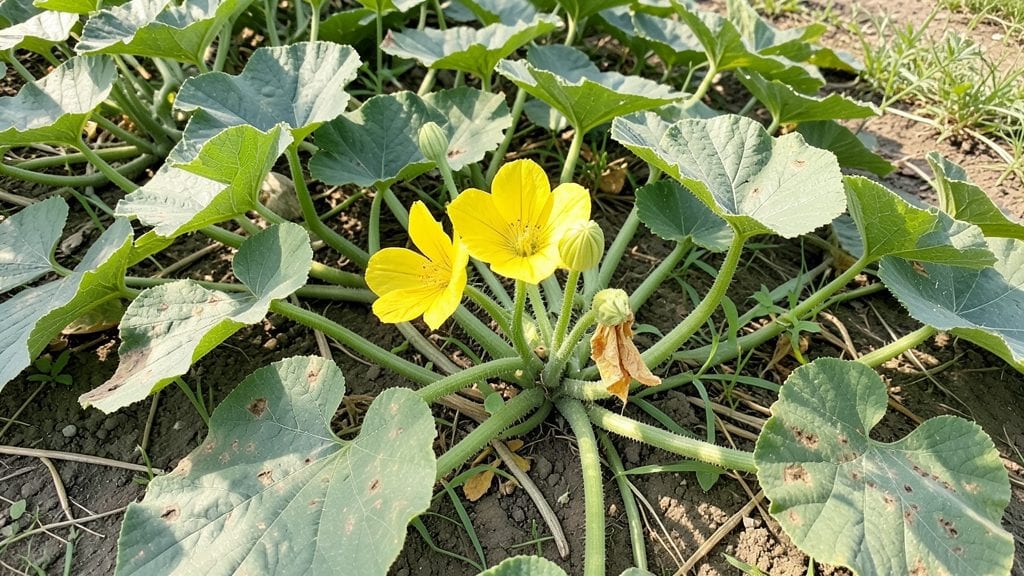
Understanding pumpkin flower stages is the secret to a bountiful harvest. 🌻 Those delicate blossoms go through three distinct phases—bud formation, vibrant bloom, and fruit development—each requiring different care to ensure pollination success and healthy growth.
First, you’ll spot tiny green buds forming along the vines, which take about 7-10 days to open into full flowers. Male flowers appear first, with long stems and no swelling at the base, while female flowers have a tiny pumpkin-shaped swelling behind the blossom.
Recognizing the difference is key to knowing which flowers to protect for pollination.
Once open, pumpkin flowers last just one day—but that single day is critical. Bees and other pollinators must visit within that window to fertilize the female flowers. Without pollination, those potential pumpkins will wither and fall off, leaving you with empty vines.
After successful pollination, the female flower’s petals wilt, and a small pumpkin begins to swell within 2-3 days. This is where the real magic happens—your attention shifts from flowers to fruit, ensuring proper watering and support as those pumpkins grow.
The stages don’t stop here, though; each phase builds on the last to deliver that harvest you’re dreaming of.
📚 In This Guide
- What you need
- Instructions
- Tips and common mistakes
- Wrapping up and next steps
What you need
- ● Pumpkin plants: Healthy, mature vines (preferably Cucurbita pepo, C. maxima, or C. moschata varieties) with visible buds or flowers. Tip: Choose disease-resistant varieties if growing from seed!
- ● Digital camera or smartphone: With a macro lens or zoom capability (for close-up shots of buds, blooms, and stamens/pistils). Pro tip: Use natural light or a ring light for clarity!
- ● Notebook or digital notes app: To log observations (e.g., dates, weather, flower colors, and developmental changes).
- ○ Magnifying glass (optional but helpful): For inspecting fine details like pollen or pistil structures.
- ● Garden journal or spreadsheet: To track stages (bud formation, bloom, pollination, and seed development).
- ● Hand lens or microscope: For ultra-close inspections of pollen grains or insect activity.
- ● Pruning shears: To gently remove spent flowers or encourage new growth.
- ● Pollination tools: A soft paintbrush or cotton swab to manually transfer pollen (useful for controlled breeding!).
- ● Weatherproof markers: To label plants or stages in your garden.
- ● Garden gloves: To protect hands from prickly vines or sap.
- ● Basic knowledge of pumpkin plant anatomy (buds, male/female flowers, and vines). 💡 Tip: Watch a quick YouTube tutorial if you’re new to this!
- ● Access to a garden, balcony, or container with full sun (6–8 hours daily).
- ● Patience! Pumpkin flowers typically bloom 45–60 days after planting, depending on the variety.
How to identify and track pumpkin flower development
Mastering these stages ensures you'll know exactly when to hand-pollinate for better yields.
🌱 Step 1: Recognize the Early Bud Stage
Pumpkin flowers begin as small, tight green knobs on the vine, typically appearing 4-6 weeks after transplanting when plants have 6-8 leaves. These buds are roughly ¼ inch wide and feel firm to the touch. I always check new growth daily—you'll see them clustered near leaf nodes, often in groups of 2-3.
Here's the thing—these buds won't open for 3-5 days, so patience matters. Watch for the tip to start splitting slightly—that's your first sign of imminent blooming. If you see buds falling off without opening, your plant may need more consistent watering or better sunlight exposure.
☀️ Step 2: Observe the Male and Female Flower Differentiation
Once buds open, you'll notice two distinct flower types. Male flowers appear first, with long, slender stems and no swelling at the base. Their petals are typically yellow-orange and 3-4 inches wide. Female flowers have a tiny marble-sized bump at their base where the fruit will develop—this is your key identifier.
I always check the base of every open flower. The female's swelling will be obvious after just 24 hours of blooming. Here's a pro tip: male flowers often open in the morning and fall by afternoon, while females tend to stay open longer—this timing helps with natural pollination.
🌿 Step 3: Monitor Pollination and Fertilization
After successful pollination, the female flower's base will begin growing rapidly within 48 hours. You'll see the bump expand to ½ inch diameter within a week. This is when the ovary starts developing into a fruit. The petals will wilt and drop off, leaving just the small pumpkin behind.
Watch for this transformation carefully—you'll know you've got a good pollination when the new growth appears plump and firm. If you notice shriveling instead, your pollination may have failed, and you'll need to try again with another flower. I keep a small notebook to track which flowers get pollinated and which don't.
⏰ Step 4: Track Fruit Development After Pollination
Once pollinated, the young pumpkin will grow 1-2 inches per week initially. You'll see the stem thicken and the fruit take on a more defined shape within 7-10 days. The skin will change from green to a more mature color (depending on variety), and you'll notice small bumps where seeds are forming inside.
This is where regular checking pays off. I like to run my fingers gently over the surface—you'll feel the seeds developing as small ridges. If the fruit stops growing or starts to wither, it may have been damaged or didn't get proper pollination. Healthy fruit will continue expanding for 4-6 weeks before reaching maturity.
💧 Step 5: Maintain Conditions for Continuous Blooming
For maximum yield, you'll want to keep your pumpkin plant producing flowers throughout the season. Consistent 1-2 inches of water per week and full sun exposure (6-8 hours daily) will encourage continuous blooming. I've found that applying a balanced fertilizer (10-10-10) every 2-3 weeks after the first flowers appear helps maintain vigorous growth.
Here's what I do: I remove any dead or diseased flowers immediately to redirect the plant's energy. And I always keep an eye out for squash vine borers—they love new growth. If you see wilting vines or sawdust-like frass, act fast to protect your blooms and developing fruit.
Tips & tricks for perfect pumpkin flower development
Understanding these stages transforms your pumpkin harvest from hit-or-miss to consistently bountiful. Here's what I've learned after years of tracking flower development in my own garden.
Visual Identification: For the 4-6 week bud stage, examine the leaf nodes carefully—buds often appear in clusters of 2-3. I use a small magnifying glass to check for the slight tip-splitting that signals imminent blooming within those 3-5 days. This early detection helps you prepare for pollination when the time comes.
Timing Secret: The 24-hour window after a female flower opens is critical for hand-pollination. I set a reminder on my phone to check blooms at dawn and dusk when humidity is lower. Male flowers often drop by afternoon, so having a backup male flower ready is wise—especially if your bees aren't as active as you'd hope.
Post-Pollination Check: After successful pollination, the 48-hour rapid growth phase is your best indicator. I measure the base bump daily with a ruler—when it reaches ½ inch within a week, I know fertilization worked. This method helps me track which flowers need repollination before they wilt.
Growth Monitoring: Those 1-2 inches per week of initial growth are your best quality control. I run my fingers along developing fruit weekly to feel for seed ridges—this tactile check reveals whether pollination occurred properly. If you notice uneven growth or soft spots, it's often a sign of incomplete pollination or pest damage.
Pro Tips for Pumpkin Flower Stages
- Understanding these stages transforms your pumpkin harvest from hit-or-miss to consistently bountiful.
- Visual Identification: For the 4-6 week bud stage, examine the leaf nodes carefully—buds often appear in clusters of 2-3.
- Timing Secret: The 24-hour window after a female flower opens is critical for hand-pollination.
Frequently asked questions
Got questions about pumpkin flower stages? You’re not alone! Here are some of the most common queries gardeners have—plus quick answers to help you grow like a pro.
How long does it take for pumpkin flowers to go from bud to bloom?
Most pumpkin flowers transition from bud to full bloom in 3–7 days, depending on sunlight, temperature (ideal: 70–85°F), and plant health. Male flowers (longer stems) usually appear first, followed by female flowers (with tiny pumpkins at their base). Patience pays off—wait for vibrant blooms before pollination!
Why aren’t my pumpkin flowers opening at all?
If buds stay closed or wilt, check these fixes:
- Heat stress: Flowers may close during extreme heat (above 90°F). Provide afternoon shade or mulch to keep roots cool.
- Lack of pollinators: Hand-pollinate with a paintbrush if bees are scarce (transfer pollen from male to female flowers).
- Nutrient deficiency: Yellowing leaves? Feed with compost or a balanced fertilizer (10-10-10).
Can I eat pumpkin flowers, and how do I harvest them?
Edible pumpkin blossoms (both male and female) are delicious in salads, stir-fries, or as garnishes. Harvest when fully open but still vibrant (morning is best). Gently twist the stem or snip with scissors. Note: Avoid flowers sprayed with pesticides—opt for organic pumpkins if possible.
What’s the best time of day to pollinate pumpkin flowers manually?
Pollinate on sunny mornings (7–10 AM) when flowers are fully open and dew has dried. Use a small brush to transfer pollen from male stamens (center of male flowers) to female pistils (the "bump" at the base of female flowers). Pro tip: Do this daily for 2–3 days to ensure fertilization!
What can I do if my pumpkin plant has mostly male flowers?
Don’t panic! Male flowers appear first to attract pollinators. To encourage female flowers (the ones that produce pumpkins):
- Reduce nitrogen-heavy fertilizers (they promote leafy growth over blooms).
- Prune excess male flowers to redirect energy to female blooms.
- Ensure consistent watering (1–2 inches per week) and full sun (6+ hours daily).
Wrapping up and next steps
Understanding the pumpkin flower stages—from bud to seed—isn’t just fascinating, it’s your secret weapon for a thriving harvest! 🌱 Whether you’re a seasoned gardener or a curious beginner, recognizing these stages helps you nurture your plants with confidence.
Now that you’re equipped with the knowledge, why not take the next step? Try planting a few pumpkin seeds and observe their journey firsthand—you’ll be amazed at how rewarding it is!
💡 Pro Tip: Keep a journal to track each stage. It’s a fun way to connect with nature and refine your gardening skills over time!