
Flowers
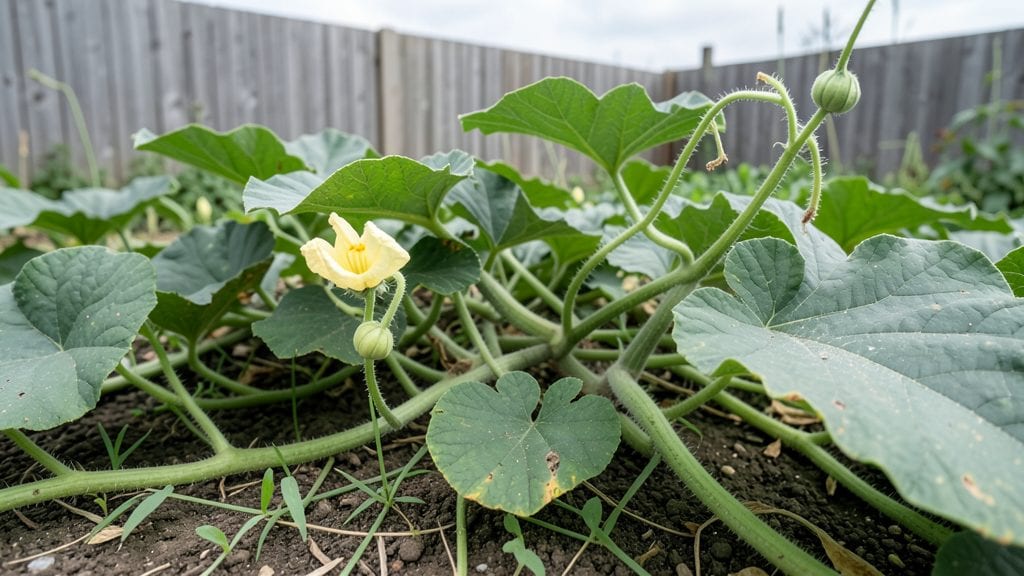
Understanding pumpkin flower gender is key to maximizing fruit production: male flowers grow on long stems without any swelling at the base, while female flowers show a small bulbous ovary beneath the bloom. Spotting these differences early helps optimize pollination and yields.
Knowing how to distinguish between male and female pumpkin blooms can transform your harvest.
Male flowers appear first and serve as pollen producers, while female flowers develop the fruit after successful pollination. 🌱 The bulbous ovary under female blooms is your visual cue—this is where pumpkins will form if pollinated properly.
I’ve seen gardens double their yield simply by focusing on preserving female flowers during peak bloom season.
This gender difference isn’t just about looks—it’s about efficiency. Male flowers often appear in clusters along the vine’s main stem, while female flowers tend to form later and closer to the plant’s center.
Pruning excess male flowers can redirect the plant’s energy toward fruit development, especially in varieties prone to excessive flowering. The key is balance: too many males mean wasted energy, while too few females limit your harvest potential.
💡 In This Article
- Biological Differences Between Male and Female Pumpkin Flowers
- Garden Tips to Maximize Female Pumpkin Flowers
Biological differences between male and female pumpkin flowers
Here's what's actually happening at the cellular level: male pumpkin flowers develop from axillary buds located higher on the vine, typically between 10-15 inches from the main stem.
These buds grow into flowers with long, slender stems (often 3-6 inches) because they're specialized for pollen production rather than fruit development. The plant allocates more energy to creating lightweight, pollen-rich anthers that can disperse easily in the wind or via pollinators.
Female flowers, however, emerge from lower nodes closer to the plant's center, where the vine has more stored energy reserves. What makes them instantly recognizable is the ovary—a small, round swelling at the base that contains up to 100-300 ovules depending on the variety.
This ovary begins developing before the flower even opens, fueled by auxin hormones that trigger cell division. 🌱 When pollinated, these cells rapidly expand to form the fruit, which can grow up to 50 times its original size in just 4-6 weeks.
The key factor is hormonal regulation: male flowers are dominated by ethylene production, which promotes pollen maturation, while female flowers show higher levels of gibberellins that stimulate ovary growth.
What most people don't realize is that temperature plays a crucial role—cooler mornings (55-65°F) tend to produce more female flowers, while warmer afternoons favor male blooms. This is why gardeners in hot climates often see an imbalance with too many males.
Under a magnifying glass, you can see the structural differences clearly: male flowers have 5 petals arranged symmetrically around a central cluster of 5 stamens (pollen-producing structures), while female flowers have the same petal structure but with a single pistil topped by a feathery stigma that catches pollen.
The ovary's texture is firm when young but becomes slightly spongy as it prepares for fertilization—a tactile clue that's often overlooked.
Some pumpkin varieties naturally produce more of one gender due to genetic predispositions. For example, Hubbard squash varieties often show a 60:40 female-to-male ratio, while Cinderella pumpkins can have up to 70% female flowers when given proper care.
This genetic tendency explains why certain vines seem "unbalanced"—it's not just environmental factors at play, but also the plant's inherent reproductive strategy to maximize survival.
What's fascinating is how the plant's energy allocation shifts after pollination: once a female flower is fertilized, the ovary's cells begin producing abscisic acid, which signals the vine to stop producing more flowers nearby and redirect nutrients to fruit development.
This hormonal shift explains why you'll often see clusters of male flowers near unfertilized female blooms—the plant is essentially "saving" its resources for potential fruit.