
Pruning
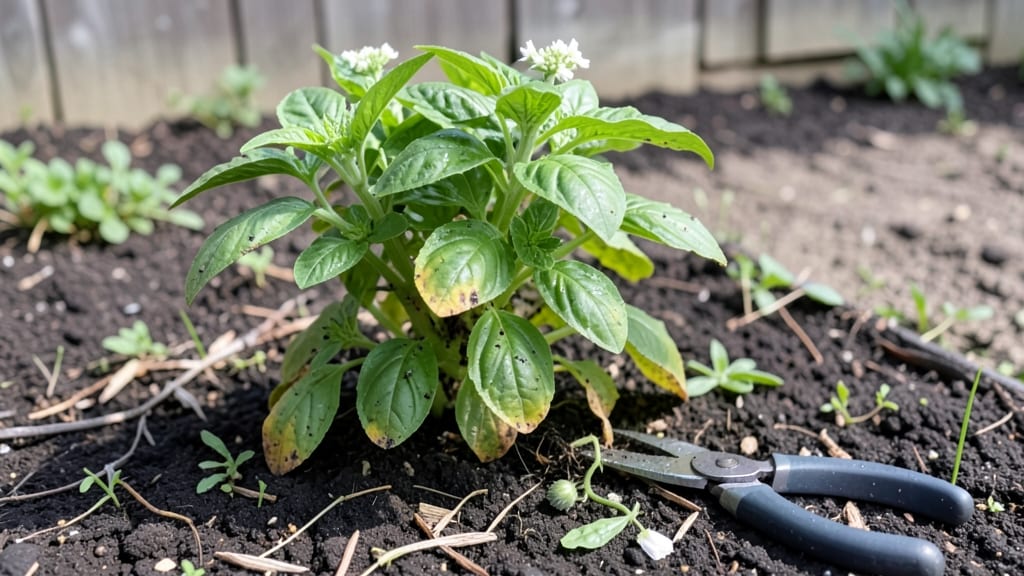
When basil starts flowering, your harvest shrinks—but pruning those blooms can double your leaf production. 🌿 I learned this the hard way after my pesto supply vanished overnight when my plants decided to focus on making seeds instead of leaves.
The fix is simple: snip off those flower buds early, and your basil will reward you with bushier, leafier growth all season.
You only need two things: clean pruning shears and a sunny morning when the plants are dry. Avoid cutting into woody stems—stick to the tender new growth where the flowers appear.
This isn’t about being gentle; it’s about redirecting the plant’s energy back to what you actually want: those fragrant, flavorful leaves you’ll be snipping for cooking all summer.
After pruning, your basil will respond within days with fresh new shoots. The plants stay compact, produce more leaves, and keep growing longer into fall.
You’ll end up with a harvest that lasts weeks longer than if you’d let those flowers stay—no fancy techniques, just a quick trim at the right time.
Works for both container basil and in-ground plants, and the same principle applies to other herbs like mint or oregano. The key is consistency: check your plants weekly after they start flowering, and you’ll keep that leaf production machine running strong.
📚 In This Guide
- What you need
- Instructions
- Tips and common mistakes
- Wrapping up and next steps
What you need
- ● Fresh basil plant(s) – Potted or in-ground, with visible flowers or buds (genovese, sweet, or Thai basil work great!).
- ● Pruning shears or sharp scissors – Clean, sterilized tools (rubbing alcohol or a 10% bleach solution works). Avoid dull knives to prevent damaging stems.
- ○ Gloves (optional but recommended) – Lightweight gardening gloves to protect hands from sap or prickly stems.
- ● Container or bowl – For collecting pruned flowers and stems (a stainless-steel bowl or reusable container is ideal).
- ● Water spray bottle – To mist leaves after pruning (encourages faster recovery).
- ● Pruning hormone (rooting powder) – Speeds up regrowth if you’re propagating cuttings (e.g., Clonex or hormone-free gel).
- ● Labeling tags – If propagating cuttings, mark them with dates or varieties.
- ● Balanced fertilizer (5-5-5 or 10-10-10) – A half-strength dose post-pruning to replenish nutrients.
- ● Hair dryer (low heat) – Quickly dries cuttings before rooting in water (prevents rot).
Step-by-step instructions for pruning basil flowers
Here’s how to keep your basil bushy and productive—no pruning experience needed.
🌿 Step 1: Identify and Locate Flower Buds
Basil flowers appear as small, delicate white or purple blooms at the top of stems. These buds signal the plant is shifting energy from leaf production to seed-making, which dulls flavor and stunts growth. Scan your plant for any tiny buds—even the size of a pencil eraser—and mark their locations with your thumb.
I like to check plants every 3-5 days during peak growing season. Early detection means less aggressive pruning later. If you spot buds, act within 24 hours to prevent them from opening. The sooner you remove them, the more leafy growth you’ll encourage.
✂️ Step 2: Prune with Clean Cuts
Use sharp scissors or pruning shears to snip off flower buds just above a leaf node (the point where leaves attach to the stem). This ensures the plant redirects energy to new growth rather than wasting it on spent blooms. Avoid tearing stems—clean cuts heal faster and prevent disease entry.
I always sterilize my tools with rubbing alcohol between plants to avoid spreading pathogens. Cut at a 45-degree angle if you’re also harvesting leaves, which helps water bead away from the stem and reduces rot risk. Never pull buds by hand—you’ll damage the stem and invite pests.
🌱 Step 3: Encourage Bushier Growth
After removing flower buds, pinch back the top set of leaves on the main stem. This forces the plant to branch out, creating a fuller, more productive bush. Aim to leave 2-3 sets of leaves below your cut—this gives the plant enough energy to regrow while maintaining structure.
Water the plant deeply after pruning to help it recover. You’ll see new leaves emerging within 7-10 days if conditions are right. If your basil grows leggy after pruning, it needs more light—move it to a sunniest spot with 6+ hours of direct sunlight daily.
💧 Step 4: Maintain Pruning for Continuous Harvest
Prune basil flowers weekly during active growth (spring through early fall) to keep the plant productive. Regular pruning also improves leaf flavor by preventing the plant from flowering prematurely. Harvest leaves alongside flower buds—this doubles your yield and keeps the plant focused on growth.
Stop pruning in late summer as temperatures rise above 85°F. Basil goes dormant in heat, and pruning at this stage stresses the plant. Instead, reduce watering slightly and let it rest until cooler weather returns. You’ll notice a rebound in growth when temps drop back to 70-75°F.
⏰ Step 5: Monitor for Regrowth and Repeat
Watch for new flower buds forming at stem junctions. These appear as tiny bumps or elongated shoots. The moment you see them, prune again—consistency is key. Over time, your basil will develop a dense, leafy habit with minimal flowering.
I keep a small notebook by my garden to track pruning dates and growth responses. This helps me adjust timing for my climate. For example, in humid summers, I prune more frequently to prevent fungal issues from trapped moisture in dense foliage.
Tips & tricks for pruning basil flowers
Here's what I've learned after years of pruning basil—these tricks will keep your plants thriving and productive.
The 24-Hour Rule: That 24-hour window after spotting flower buds is critical. I've seen buds open within hours if left unattended, which means wasted energy for the plant. Set a reminder on your phone if you're busy—don't let those buds get a foothold! The sooner you remove them, the more leafy growth you'll encourage, and you'll notice fresher, more flavorful leaves within days.
Clean Cuts Matter: Using sharp scissors and making clean cuts just above a leaf node makes all the difference. I've ruined plants by tearing stems, which creates entry points for diseases. Sterilize your tools between plants with rubbing alcohol—it takes 30 seconds but prevents fungal spread. For extra protection, cut at a 45-degree angle when harvesting leaves to help water bead away from the stem.
Light and Heat Management: Basil goes dormant when temperatures rise above 85°F, so stop pruning in late summer. Instead, reduce watering and let it rest until cooler weather returns. You'll notice a rebound in growth when temps drop back to 70-75°F. If your basil grows leggy after pruning, move it to the sunniest spot with at least 6 hours of direct sunlight daily—this prevents weak, stretched growth.
Consistency Pays Off: I keep a small notebook by my garden to track pruning dates and growth responses. This helps me adjust timing for my climate. In humid summers, I prune more frequently to prevent fungal issues from trapped moisture in dense foliage. The key is consistency—watch for new flower buds forming at stem junctions and prune them immediately. Over time, your basil will develop a dense, leafy habit with minimal flowering.
Pro Tips for Prune Basil Flowers
- Here's what I've learned after years of pruning basil—these tricks will keep your plants thriving and productive.
- The 24-Hour Rule: That 24-hour window after spotting flower buds is critical.
- Clean Cuts Matter: Using sharp scissors and making clean cuts just above a leaf node makes all the difference.
Frequently asked questions
Got questions about pruning basil flowers? You’re not alone!
Here are some of the most common concerns—and their simple solutions—to help you keep your basil thriving.
Why do I need to prune basil flowers at all?
Pruning basil flowers (and the stems they grow on) redirects the plant’s energy toward leaf production instead of seed-making. Without pruning, your basil will taste bitter and bolt (flower) prematurely, shortening its harvest life. Think of it as giving your plant a "focus boost" for more flavorful leaves!
When is the best time to prune basil flowers?
Prune as soon as you spot flowers—ideally in the morning when the plant is hydrated. If flowers appear, the basil is already shifting energy toward seeds. Regular checks every 3–5 days (or when harvesting leaves) keep your plant productive. Pro tip: Use sharp scissors or fingers to pinch off buds gently!
How far back should I cut when pruning basil?
For flowers, snip the entire flower stem at its base. For maintenance pruning (to encourage bushiness), cut just above a set of leaves where the stem meets the main branch. Avoid "topping" (cutting the very top) unless reviving a leggy plant—this can stress it. Always leave at least 2–3 sets of leaves per stem!
What if I miss pruning and my basil bolts?
Don’t panic! Bolted basil is still edible (though leaves may taste stronger). Harvest any remaining leaves before they turn tough. For next season, grow basil in cooler weather (spring/fall) or use shade cloth in summer to delay flowering. You can also try Genovese or Sweet basil varieties—they’re slower to bolt.
Can I use pruned basil flowers for anything?
While basil flowers aren’t typically eaten raw (they can be bitter), they’re edible when cooked! Toss them into pestos, garnishes, or infuse oils for a floral twist. Save seeds from dried flowers to grow next year’s crop. Just avoid letting them go to seed on the plant—prune first!
Still stumped? Drop your question in the comments—we’re happy to help!
Wrapping up and next steps
Pruning basil flowers isn’t just about keeping your plant tidy—it’s the secret to a bountiful, flavorful harvest! By removing those tiny blooms, you redirect energy back into leaf growth, ensuring your basil stays fresh, vibrant, and packed with that signature aroma.
Whether you’re a seasoned gardener or a curious beginner, this simple step makes all the difference.
Ready to level up your herb game? 🌿 Grab your shears, head outside, and give your basil the TLC it deserves. Next, try experimenting with different pruning techniques—like pinching or harvesting leaves—to see what works best for your plant’s growth cycle. Happy gardening!