
Shrubs
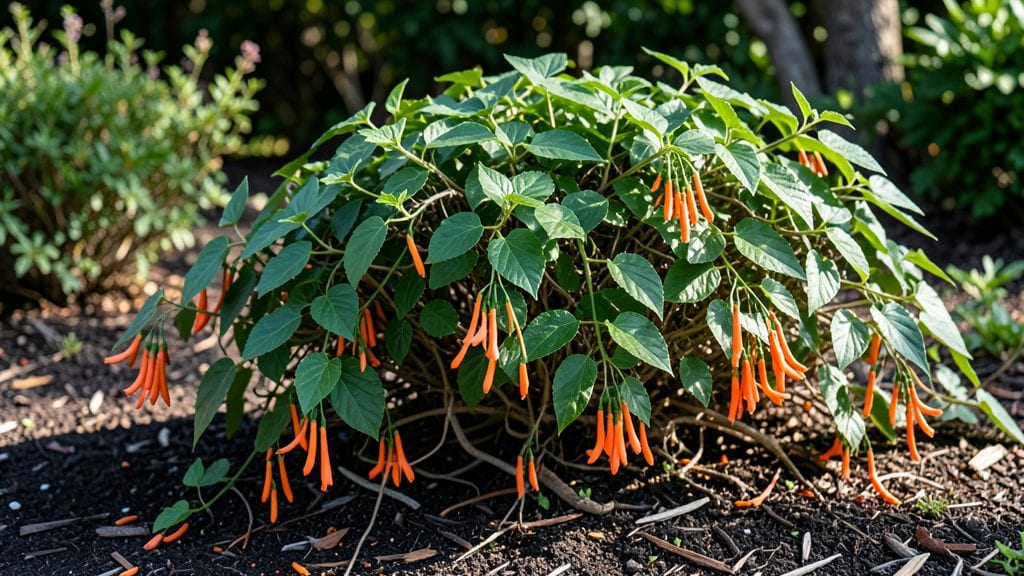
The orange flowered climber transforms bare walls into sun-drenched canvases of bold color and intoxicating fragrance. 🌿 My first encounter with a trumpet vine draped over an old fence still makes me smile—those fiery blooms against green leaves felt like a burst of summer in June.
This isn't just a plant; it's a statement piece that turns blank spaces into living art.
You'll want full sun and sturdy support—think trellises, arbors, or even chain-link fences—because these climbers grow fast and love to show off. Pair them with deep-green foliage like hostas or heucheras to make the orange pop even brighter. The fragrance? Sweet and honey-like, especially when bees visit in the afternoon.
By midsummer, you'll have a wall covered in vibrant blooms that last until frost, with some varieties like passionflower even producing edible fruits. The best part? It thrives with minimal fuss—just regular watering and occasional pruning to keep it in check.
Perfect for cottage gardens, modern courtyards, or even urban balconies with the right support. Once established, it becomes the centerpiece that neighbors notice and envy.
📚 In This Guide
- What you need
- Instructions
- Tips and common mistakes
- Wrapping up and next steps
What you need
- ● Orange flowered climber plant: 1–3 young plants (3–6 feet tall for faster growth) or
- ● Seeds (if starting from scratch; requires patience—germination can take 4–6 weeks)
- ● Support structure: Trellis, arbor, or pergola (8–12 feet tall, sturdy enough to support 10–20 lbs of foliage)
- ○ Optional: Decorative lattice or chain-link fence (if natural wood isn’t preferred)
- ● Soil & amendments: Well-draining potting mix or garden soil (amend with compost for fertility)
- ● Perlite or sand (1 part per 4 parts soil, to improve drainage)
- ○ Optional: Slow-release fertilizer (5–10–5 NPK ratio, 1 tbsp per plant)
- ● Tools: Trowel or hand shovel
- ● Gloves (to protect hands from thorns or rough bark)
- ● Pruning shears (for shaping and maintenance)
- ● Watering can or hose with a gentle spray nozzle
- ● Mulch (2–3 inches of shredded bark or straw to retain moisture)
- ● Epsom salt (1 tbsp dissolved in water, monthly for magnesium boost)
- ● Peat moss or coconut coir (for seed-starting mixes)
- ● Plant ties or soft twine (to guide vines initially)
- ● Decorative pots (if container-growing; ensure drainage holes!)
Step-by-Step guide to planting and training an orange flowered climber
This vibrant climber thrives with the right support and sunlight—here's how to establish it beautifully.
🪴 Step 1: Select the Perfect Planting Location
Choose a spot with full sun exposure (6+ hours daily) and a sturdy trellis, fence, or pergola within 3-4 feet of the planting site. Orange flowered climbers like honeysuckle (Lonicera) or orange trumpet vine (Campsis radicans) need vertical support to thrive. Avoid low-traffic areas—their fragrant blooms attract hummingbirds and butterflies, making them a living centerpiece.
Test the soil by digging a 6-inch deep hole and checking drainage. If water pools after 10 minutes, amend with 2-3 inches of compost to improve aeration. The ideal planting spot balances sun, shelter from harsh winds, and easy access for pruning. I always mark the location with a stake to avoid disturbing roots later.
🌱 Step 2: Plant the Climber with Proper Spacing
Dig a hole twice as wide and just as deep as the root ball of your climber. Gently remove the plant from its container and loosen any circling roots with your fingers. Place it in the hole so the top of the root ball sits 1 inch below soil level—this prevents stem rot while encouraging strong root growth.
Backfill with native soil mixed with 1 part compost to improve fertility. Press firmly around the base to eliminate air pockets, then water deeply until moisture reaches 6 inches down. Space multiple plants 6-8 feet apart to allow branches to spread without overcrowding. A well-planted climber will establish faster and bloom more vigorously in its first season.
☀️ Step 3: Install Support and Train Early Growth
Attach a 5-6 foot tall trellis or arbor immediately after planting to give the climber something to cling to. Use soft garden twine or flexible wire to loosely tie the main stem to the support, leaving 1-2 inches of slack to prevent constriction as it grows. Orange flowered climbers twine naturally, but young stems need gentle guidance to avoid flopping.
Watch for new growth emerging from the base—these are your primary branches. As they reach 12-18 inches tall, weave them through the trellis lattice or wrap them around the support in a spiral. Avoid cutting back new shoots; pruning should wait until after the first flowering cycle. The key is patience—rushing training can stress the plant and delay blooms.
💧 Step 4: Water and Fertilize for Vibrant Blooms
Water deeply 2-3 times per week during the first growing season, ensuring moisture penetrates 12 inches into the soil. After establishment, reduce to 1 inch of water weekly, adjusting for rainfall. Overwatering is the fastest way to invite root rot, so always check soil moisture by pressing your finger 2 inches down—water only when dry.
Apply a balanced, slow-release fertilizer (10-10-10) at planting time and again in early spring. For extra fragrance, side-dress with 1 cup of composted manure around the base in late summer. Avoid high-nitrogen fertilizers—they encourage leafy growth at the expense of flowers. You’ll know you’re on track when your climber produces bright orange trumpet-shaped blooms by mid-summer.
✂️ Step 5: Prune and Maintain for Longevity
Prune immediately after flowering to shape the plant and encourage next year’s blooms. Cut back one-third of the oldest stems to the base and trim any leggy or crossing branches. This opens the center for airflow, reducing disease risk. For vigorous climbers like orange trumpet vine, also remove any suckers growing below the graft union if your plant is grafted.
In late winter, prune again to remove dead or weak growth. I always sterilize my pruners with rubbing alcohol between cuts to prevent bacterial spread. With proper pruning, your climber will develop a dense, flowering canopy within 2-3 years. Mulch annually with 2 inches of wood chips to retain moisture and suppress weeds—just keep mulch 3 inches away from the stem to prevent rot.
Tips & tricks for perfect orange flowered climber establishment
These essential insights will help you transform your sunlit wall into a fragrant paradise with minimal stress.
Soil Test Timing: The 10-minute drainage test in Step 1 is crucial—don't rush this. If water disappears within 5 minutes, your soil drains too quickly and needs 1 part peat moss mixed into the backfill. If it still pools after 15 minutes, you'll need to create raised beds or amend with sand and perlite for better aeration. Proper drainage prevents root rot and ensures vigorous growth.
Support Installation: When attaching your 5-6 foot trellis in Step 3, use galvanized hardware for longevity. I've seen plastic ties degrade within a year, leaving plants vulnerable. Also, position the trellis slightly east of center—this ensures morning sunlight reaches the climbing stems first, promoting even growth. The 1-2 inch slack you leave when tying is perfect for accommodating growth without constriction.
Watering Strategy: The 2-3 times per week guideline in Step 4 works for most climates, but adjust based on rainfall. I've found that in hotter regions (Zone 8+), you might need daily watering during peak summer months. Always water at soil level, not overhead—this prevents fungal diseases that can plague climbing plants. A drip irrigation system is worth the investment for consistent moisture.
Pruning Precision: When cutting back one-third of oldest stems in Step 5, make clean cuts at a 45-degree angle just above a leaf node. This encourages new growth from the right location. I've seen gardeners mistakenly cut too close to the base, which can damage the plant's vascular system. Also, sterilizing your pruners between cuts prevents spreading bacterial infections that can weaken your climber.
Pro Tips for Orange Flowered Climber
- These essential insights will help you transform your sunlit wall into a fragrant paradise with minimal stress.
- Soil Test Timing: The 10-minute drainage test in Step 1 is crucial—don't rush this.
- Support Installation: When attaching your 5-6 foot trellis in Step 3, use galvanized hardware for longevity.
Frequently asked questions
What’s the best time to plant an orange flowered climber?
Plant your climber in early spring or fall when temperatures are mild. This gives roots time to establish before extreme heat or cold. Avoid planting in peak summer—dry soil and heat stress can stunt growth. If you’re in a warm climate, opt for fall planting to beat summer drought.
How fast does an orange flowered climber grow?
Most orange-flowered climbers (like Bignonia or Campsis) grow 1–3 feet per year, depending on conditions. With full sun, rich soil, and regular watering, expect rapid vertical growth. Prune in late winter to control spread and encourage bushier blooms. Patience pays off—full coverage on a trellis can take 3–5 years!
Why aren’t my orange flowers blooming?
No blooms? Check these fixes:
- Sunlight: Ensure 6+ hours of direct sun daily—partial shade can reduce flowering.
- Fertilizer: Use a balanced, phosphorus-rich feed (like 10-10-10) in spring.
- Pruning: Trim back overly leggy growth in late winter to redirect energy to flowers.
- Age: Young plants may take 1–2 years to bloom. Be patient!
What are some low-maintenance alternatives to orange flowered climbers?
If you want colorful, low-fuss climbers with minimal upkeep, try:
- Clematis: Thrives in partial shade; ‘Jackmanii’ offers deep purples.
- Honeysuckle: Fragrant, fast-growing, and drought-tolerant once established.
- Passionflower: Tropical vibes with vibrant orange/yellow blooms and edible fruit.
- Star Jasmine: Trachelospermum jasminoides—sweet-scented white flowers, evergreen foliage.
Are orange flowered climbers good for pollinators?
Absolutely! Climbers like Campsis radicans (trumpet vine) and Bignonia are bee and hummingbird magnets. Their tubular flowers provide nectar-rich meals, while their rapid growth offers shelter for beneficial insects. Plant near native pollinator gardens to create a thriving ecosystem. Just avoid pesticides—chemicals harm these tiny helpers!
Wrapping up and next steps
Transforming your space with an orange flowered climber isn’t just about adding beauty—it’s about creating a fragrant, sunlit haven that brings joy and life to every corner. Whether you’re drawn to the Bignonia’s bold blooms or the Campsis’s delicate charm, these climbers offer year-round appeal with minimal fuss.
Ready to elevate your garden? Start by choosing the perfect spot, gathering your supplies, and letting nature do the rest—your walls (and senses!) will thank you.
🌱 Pro Tip: Snap a photo of your climber’s progress to track its growth—it’s a rewarding reminder of how far you’ve come!