
Flowers
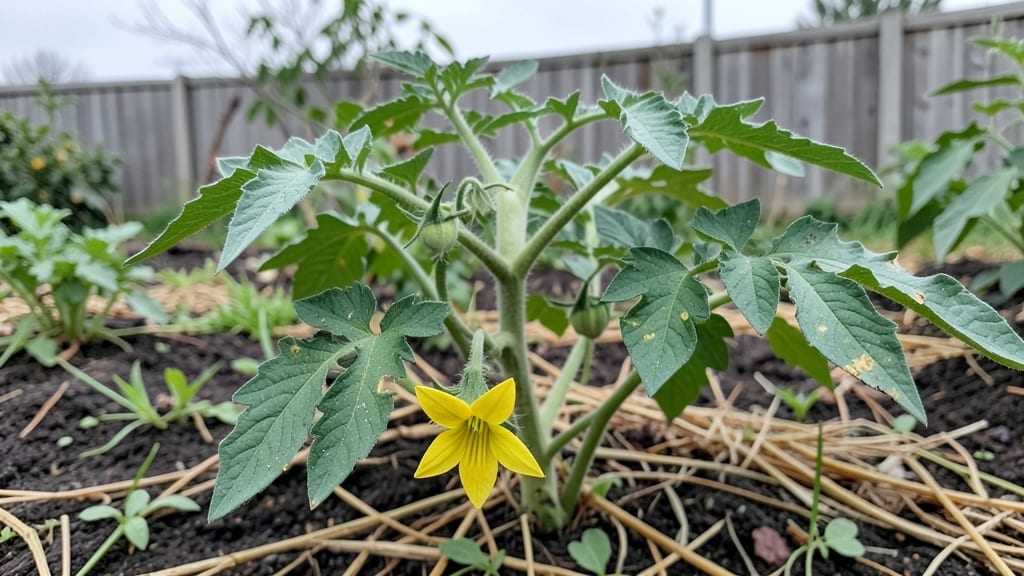
Male tomato flowers fail to produce fruit because they lack the reproductive organs needed to develop tomatoes, unlike female flowers that contain ovaries. These male blooms serve to pollinate female flowers, but their absence or overabundance can disrupt fruit set. Balancing male and female flowers is key for a productive tomato harvest.
Understanding why male tomato flowers don't bear fruit starts with their role in pollination. 🌱 These flowers focus on producing pollen to fertilize female blooms, which is why they lack the ovary needed to develop fruit.
The balance between male and female flowers directly impacts your harvest—too many males can leave female flowers under-pollinated, while too few can reduce overall fruit production. Gardeners often adjust this balance through pruning and nutrient management to maximize yields.
Environmental factors like temperature and light play a huge role too. For example, cooler nights can trigger more female flowers, while stress from overcrowding or inconsistent watering may shift the plant's energy toward male blooms. Recognizing these patterns helps you create ideal growing conditions for a better tomato crop.
💡 In This Article
- How Tomato Plant Sex Expression Works
- Fixing Male-Female Flower Imbalance in Tomato Plants
How tomato plant sex expression works
Tomato plants exhibit a fascinating biological phenomenon called "sex expression," where individual flowers develop as either male or female based on hormonal signals and environmental cues.
The key difference lies in their reproductive structures: female flowers contain an ovary at their base that develops into fruit after pollination, while male flowers lack this ovary and instead produce pollen.
This sex determination is primarily controlled by the plant hormone ethylene, which promotes female flower formation, and gibberellins, which encourage male flowers.
Here's what's actually happening at the cellular level: When ethylene levels rise—often triggered by stress, temperature fluctuations, or maturity—the plant shifts energy toward female flower production.
For example, tomato varieties like Beefsteak typically produce more female flowers when nighttime temperatures stay between 60-70°F, while hotter conditions (85°F+) can skew the plant toward male blooms.
This hormonal balance explains why some plants may suddenly produce clusters of male flowers during heatwaves—it's not a defect, but a survival response to environmental stress. 🌡️
The plant's sex expression also follows a developmental timeline. Young tomato plants often produce more male flowers during early growth stages, conserving energy for root and stem development. As they mature (typically 4-6 weeks after transplanting), ethylene production increases, prompting the shift to female flowers.
This pattern is why early-season harvests might be sparse—your plant is still in its "male-dominant" phase. Gardeners can influence this timing by providing consistent moisture and balanced nutrients, which helps maintain stable hormone levels.
Light exposure plays another critical role. Tomato plants grown under 12-14 hours of daylight tend to produce more female flowers because longer daylight periods correlate with higher ethylene production. In contrast, shorter daylight hours (common in northern climates) can delay female flower formation.
This is why greenhouse growers often supplement light in winter months—it's not just about warmth, but about maintaining the proper photoperiod for optimal sex expression.
What most people don't realize is how stress factors disrupt this delicate balance. Drought conditions, for instance, trigger a surge in abscisic acid, a stress hormone that can override ethylene signals and promote male flower production.
Similarly, overcrowding causes competition for nutrients, forcing the plant to prioritize pollen production over fruit development. Even sudden temperature swings (like 10°F drops overnight) can confuse the plant's hormonal system, leading to flower drop or abnormal sex ratios. 🌱
Consider these key environmental triggers for sex expression:
- Temperature: 60-70°F nights favor female flowers; 85°F+ promotes male blooms
- Light duration: 12-14 hours/day increases ethylene for female flowers
- Nutrient balance: Higher phosphorus (P) encourages female flowers; excess nitrogen (N) favors male growth
- Stress factors: Drought or extreme heat shifts hormone production toward survival (male flowers)
The science behind this involves a complex interplay between genetics and environment. Modern tomato varieties have been selectively bred to optimize this balance—for example, cherry tomato varieties like 'Sweet 100' often produce more female flowers earlier than heirlooms because their genetic makeup prioritizes fruit production over pollen.
Understanding these mechanisms helps gardeners troubleshoot imbalances and create conditions that favor the flower types they want to see. 💫