Pruning
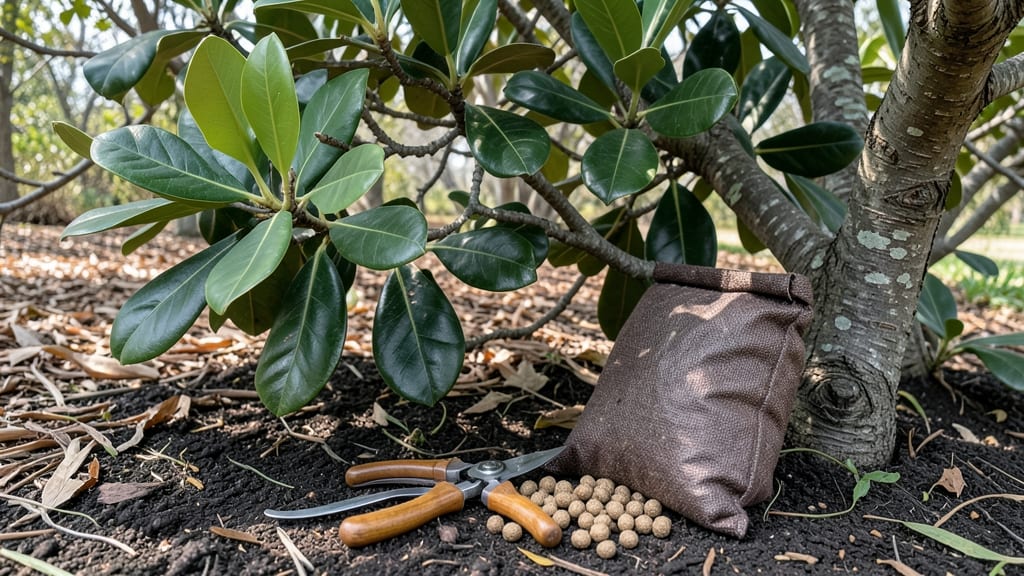
Your magnolia tree refuses to bloom because it’s not getting the right light—this simple fix can revive those showstopping flowers within a single growing season. 🌸 I’ve watched my own magnolia go from bare branches to heavy blooms just by adjusting its light exposure, and it’s easier than you’d think.
The problem usually boils down to two things: too much shade or incorrect pruning that blocks sunlight. Magnolias need 6+ hours of direct sun daily, especially in their prime blooming years (ages 5–15).
If your tree’s in a shady spot or surrounded by taller plants, that’s your first clue. Even a few feet of extra light can trigger buds to form.
Start by thinning out nearby branches that cast shade, then prune any dead or crossing limbs that might be stealing energy from flower production. Within 2–3 months, you’ll see new growth—and if the light’s right, those signature blooms will follow. The key is patience combined with the right conditions.
This works for both large specimen trees and smaller varieties, though younger magnolias may need a year or two to recover from past neglect. Once you’ve got the light dialed in, consistent watering and a light fertilizer boost in early spring will keep those blooms coming back year after year.
Root Causes of Missing Blooms
When your magnolia tree refuses to put on a floral show, it’s usually sending subtle signals that something isn’t quite right. Understanding these triggers can help you address the issue before it becomes permanent.
Here’s why your magnolia might be holding back its flowers—and what’s really going on under the surface.
Magnolias are notoriously slow to mature, and some varieties simply take longer to reach flowering age. **Southern magnolias (Magnolia grandiflora), for example, may not bloom until they’re 10–15 years old, while saucer magnolias (Magnolia × soulangeana) can start as early as 5–7 years.
If your tree is young, patience is key—but if it’s past its prime blooming window, you might be dealing with a non-flowering cultivar** like Magnolia stellata ‘Royal Star,’ which is prized for its foliage over flowers.
Pro Tip: 💡 Check the tag or consult a local nursery to confirm your magnolia’s variety. If it’s a hybrid or ornamental type, it may prioritize lush leaves over showy blooms.
Magnolias are sun-worshippers and need at least 6–8 hours of direct sunlight daily to trigger flowering. If your tree is planted in:
- Deep shade (under tall trees or dense shrubs)
- North-facing spots (limited winter sun)
- Urban areas with pollution (blocking sunlight)
…it may skip flowering entirely. Partial shade (dappled light) can work for some varieties, but full sun is non-negotiable for consistent blooms.
Actionable Fix: ⏳ Relocate young trees to sunnier spots or prune overhanging branches to improve light exposure. If moving isn’t an option, consider reflective surfaces (like white walls or mirrors) to bounce extra light onto the canopy.
Magnolias are temperature-sensitive, and their blooming cycles are tightly linked to chill hours (a specific number of cold hours needed to break dormancy).
If your region experiences: - Too few chill hours (common in warm climates like Florida or Southern California) - Unpredictable late frosts (damaging buds before they open) - Heatwaves during bud formation (disrupting pollination signals)
…your tree may abort flower buds or fail to set them in the first place.
Pro Tip: 🌡️ Track your local USDA Hardiness Zone—some magnolias (like Magnolia kobus) need 500–1,000 chill hours, while others (Magnolia denudata) thrive with fewer. If you’re in a mild climate, opt for tropical or subtropical varieties like Magnolia grandiflora ‘Little Gem.’
Flowering is a metabolic priority, and stress from overwatering, underwatering, or poor soil can divert energy away from blooms.
Common culprits: - Compacted or clay soil (poor drainage → root stress) - Over-fertilizing with nitrogen (promotes leafy growth over flowers) - Drought or inconsistent watering (bud drop or failure to set flowers)
Soil Test Check: 📊 Test your soil’s pH (5.5–6.5 ideal) and nutrient levels. Magnolias prefer well-draining, slightly acidic soil. If your soil is heavy, amend with compost or organic matter to improve aeration.
Magnolias hate aggressive pruning, especially when it removes flower buds (which form on old wood in late summer/fall). Mistakes like:
- Topping the tree (removing the central leader)
- Pruning after bud set (February–March cuts can eliminate next year’s blooms)
- Over-thinning branches (reducing photosynthesis for bud development)
…can stunt flowering for years.
Pruning Rule: ⏰ Only prune in late winter (before buds swell) or immediately after flowering. Avoid heavy cuts—focus on removing dead wood or crossing branches to maintain an open canopy.
A stressed magnolia (due to pests like magnolia scale, borers, or fungal infections) may divert energy to recovery instead of blooming. Watch for:
- Yellowing leaves (sign of scale or nutrient deficiency)
- Holes in bark (borer larvae)
- Black spots or powdery mildew (fungal issues)
Treatment Tip: 🛡️ Apply neem oil for pests or fungicide (like copper-based sprays) early in the season. A healthy tree is a flowering tree!
Some magnolias are naturally sparse bloomers, especially if:
- They’re grafted varieties (the rootstock may dominate growth).
- They’re planted in urban areas with air pollution (stressing the tree).
- They’re too young or too old (beyond 30–40 years, flowering declines).
Last Resort: If all else fails, consider replacing the tree with a more flowering-friendly variety suited to your climate.
Revive Your Magnolia’s Blooms Fast
Now that you know why your magnolia isn’t flowering, it’s time to take action! The good news? Most issues have simple, effective fixes—whether it’s tweaking sunlight, pruning smarter, or giving your tree the right nutrients.
Below, we’ll break down practical solutions for each common cause, plus prevention tips to keep your magnolia blooming year after year.
If your magnolia isn’t getting enough light, it’s likely skipping its flowering phase. Most magnolias thrive in full sun to partial shade (6+ hours of direct sunlight daily).
How to Fix It:
🔥 Relocate or Thin Obstructions
- If nearby trees, buildings, or fences are blocking sunlight, prune them back or trim branches to open up space.
- For container-grown magnolias, move them to a sunnier spot (like near a south- or west-facing wall).
🍳 Gradual Sun Transition
- If your magnolia is used to shade, don’t move it abruptly—this can cause leaf scorch. Instead, slowly increase sunlight exposure over 2–3 weeks.
🌡️ Pro Tip:
- Morning sun is gentler than harsh afternoon rays. If you must choose, position your tree to catch early sunlight first.
Over-pruning or cutting at the wrong time can stress your magnolia, delaying (or stopping) blooms.
How to Fix It:
👨🍳 Prune at the Right Time
- Best time: Late winter or early spring before new growth starts (avoid pruning after buds form—this removes next year’s flowers!).
- Never prune in fall—this encourages tender new growth that can’t survive winter.
🥘 Prune Correctly
- Remove dead, diseased, or crossing branches (use clean, sharp pruners to prevent damage).
- Avoid "topping" (cutting back to a stub)—this harms the tree’s structure.
- Lightly shape to improve airflow, but never remove more than 25% of the canopy in one season.
🎯 Pro Tip:
- Young magnolias (under 5 years old) need minimal pruning—focus on removing only deadwood.
Some magnolias take years to flower, while others (like Magnolia stellata) bloom early but may need patience.
How to Fix It:
⏰ Be Patient
- Southern magnolias (Magnolia grandiflora) can take 5–10 years to flower.
- Saucer magnolias (Magnolia × soulangeana) often bloom in 3–5 years.
- Star magnolias (Magnolia stellata) may flower as early as 2–3 years.
🔪 Choose the Right Variety
- If you’re planting a new magnolia, pick a fast-flowering variety like:
- Magnolia ‘Ann’ (early bloomer)
- Magnolia ‘Black Tulip’ (disease-resistant, reliable)
- Magnolia ‘Jane’ (compact, blooms young)
💡 Pro Tip:
- Dwarf magnolias (like Magnolia ‘Little Gem’) are great for small spaces and often flower sooner than standard varieties.
Too much moisture (or soggy soil) can stress roots, leading to weak growth and fewer blooms.
How to Fix It:
🌧️ Check Soil Moisture
- Stick your finger 2–3 inches deep into the soil. If it’s damp, hold off on watering.
- Water deeply but infrequently (1–2 times per week, depending on climate).
🚰 Improve Drainage
- If your magnolia is in clay soil, amend it with compost or organic matter to help water drain.
- For container-grown magnolias, ensure pots have drainage holes and use a well-draining potting mix.
🌡️ Pro Tip:
- Mulch properly (2–3 inches of organic mulch) to retain moisture without suffocating roots.
Pests (like scale, borers, or spider mites) and diseases (such as powdery mildew or anthracnose) can weaken your magnolia, reducing blooms.
How to Fix It:
🐜 Inspect for Pests
- Look for:
- Sticky residue (aphids/scale)
- Holes in bark (borers)
- Yellowing leaves (spider mites)
- Treat with neem oil or insecticidal soap (follow label instructions).
🍎 Prevent Fungal Issues
- Water at the base (avoid wetting leaves to prevent mildew).
- Remove fallen leaves (they can harbor diseases).
- Apply fungicide (like copper-based sprays) if you spot black spots or white powder.
✨ Pro Tip:
- Healthy soil = fewer pests. Add compost or a balanced fertilizer in early spring to boost immunity.
Magnolias need balanced nutrition to produce flowers. Lack of phosphorus (P) or potassium (K) can stunt blooming.
How to Fix It:
📊 Fertilize Correctly
- Use a balanced, slow-release fertilizer (like 10-10-10 or 8-3-9) in early spring.
- Avoid high-nitrogen fertilizers (they promote leafy growth but fewer flowers).
🥗 Add Organic Matter
- Mix compost or well-rotted manure into the soil around the drip line (where branches extend).
- Avoid fresh manure—it can burn roots.
💪 Pro Tip:
- Epsom salt (magnesium sulfate) can help if leaves look yellow between veins (a sign of deficiency).
Once your magnolia is back on track, keep these habits to ensure years of stunning flowers:
✅ Prune wisely—only in late winter/early spring, and never after buds form. ✅ Monitor sunlight—most magnolias need at least 6 hours of sun. ✅ Water deeply but less often—drought stress is worse than overwatering. ✅ Test soil pH—magnolias prefer slightly acidic soil (pH 5.0–6.5). ✅ Watch for pests early—neem oil sprays can prevent infestations. ✅ Fertilize in spring—phosphorus-rich fertilizers encourage blooms.
Your magnolia’s comeback starts now! With the right care, you’ll be admiring lush, fragrant blooms in no time. 🌸✨
Frequently asked questions about magnolia trees not flowering
Why is my mature magnolia tree suddenly not flowering when it used to?
Mature magnolias often stop flowering due to environmental stress or improper care. Check for too much shade (they need 6+ hours of sun), over-pruning (especially after buds form), or nutrient imbalances. Older trees may also need rejuvenation pruning to stimulate new growth and flowering.
Can I force my magnolia to bloom earlier by pruning it now?
No—pruning at the wrong time can actually prevent blooms. Magnolias form buds on old wood in late summer/fall, so pruning now would remove next year’s flowers. Wait until late winter/early spring (just before buds swell) for safe pruning.
What’s the best fertilizer to encourage flowering in my magnolia?
Use a balanced, slow-release fertilizer (like 10-10-10 or 8-3-9) in early spring. Avoid high-nitrogen fertilizers—they promote leafy growth but fewer flowers. For a phosphorus boost (which encourages blooms), try a bone meal application in late winter.
Is my magnolia too young to flower, or is there a problem?
Most magnolias take 3–10 years to flower, depending on the variety. Star magnolias often bloom by year 3, while Southern magnolias may wait until year 10+. If your tree is past its typical blooming age, check for light, soil, or pest issues that might be blocking flower production.
How do I know if my magnolia has enough sunlight?
Magnolias need 6–8 hours of direct sun daily. Test your tree’s sunlight by observing it for 24 hours: if branches in the center stay shaded for most of the day, it’s not getting enough light. Move it to a sunnier spot or prune nearby obstructions to improve exposure.