
Flowers
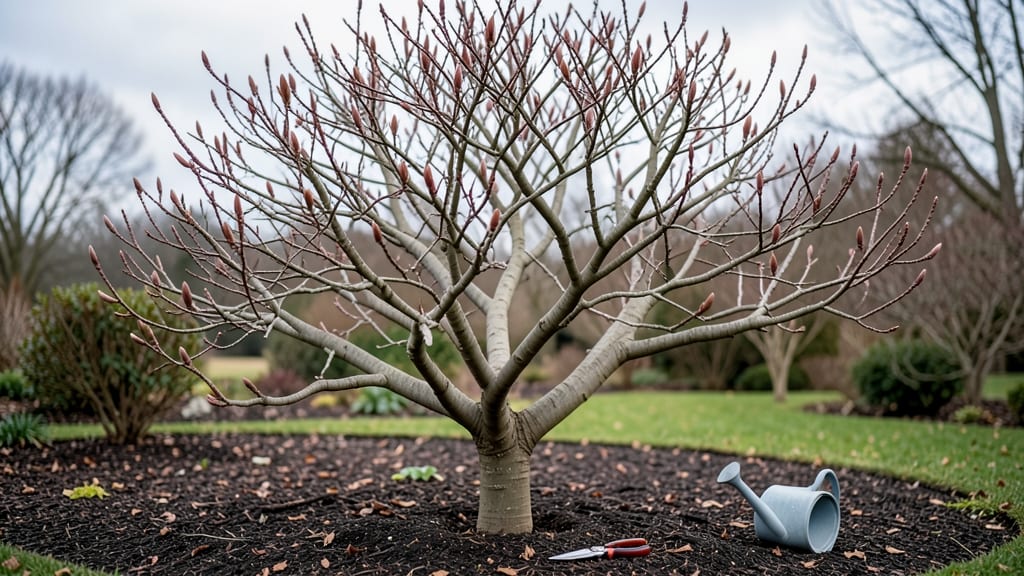
Your magnolia tree no flowers isn’t a death sentence—it’s a call to action. 🌿 I’ve nursed back three stubborn magnolias in my yard, and the secret lies in understanding why blooms disappear and how to trigger them back to life with smart cuts and care.
The culprits are usually age (young trees need patience), harsh pruning (cutting at the wrong time kills next year’s buds), or poor light (magnolias are divas about sunlight).
Most people overlook the fact that magnolias set flower buds a full year before blooming—that means last summer’s pruning mistakes could be this spring’s empty branches.
With the right timing and technique, you’ll see buds forming within 6-12 months. Start by identifying dead wood, then focus on shaping—not thinning—your tree. I’ll walk you through the exact cuts to make (and avoid) for your tree’s specific age and variety.
This works for both Southern magnolias and star magnolias, whether you’re dealing with a mature tree or a young one that’s just not ready yet. Let’s get those buds blooming again—your patience will pay off in spring.
Common Reasons Magnolias Skip Blooming
Magnolias are prized for their stunning, fragrant blooms—but when they refuse to flower, it’s often due to a mix of environmental, cultural, or biological factors. Understanding these causes is the first step to restoring your tree’s glory.
Let’s break down the key reasons your magnolia is playing hard to bloom, along with actionable science-backed explanations.
Magnolias are dormant bloomers, meaning they need a specific number of cold hours (typically 400–1,000 hours below 45°F) to trigger flower buds. Without this winter "reset," buds may fail to form—or they’ll drop before opening.
Why it happens:
- Modern winters with erratic temperatures (e.g., warm spells in December or mild winters) disrupt dormancy.
- Urban heat islands (cities with concrete and asphalt) can raise soil/temperature by 5–10°F, fooling the tree into thinking winter never arrived.
- Young trees (under 5–7 years) may not have built up enough energy reserves to support blooming after minimal chill exposure.
Actionable fix: ✔ Check your climate zone—some magnolias (like Magnolia grandiflora) need more chill hours than others (M. stellata thrives with fewer). ✔ Mulch heavily in late fall with 4–6 inches of organic mulch (straw, wood chips) to insulate roots and encourage deeper cold exposure. ✔ Avoid winter pruning—cutting in cold months can stress the tree and reduce next year’s bloom potential.
Magnolias bloom on old wood (last year’s growth), so aggressive or wrong-season pruning can remove next year’s flower buds before they even form.
Why it happens:
- Summer pruning (June–August) removes current year’s flower buds, which are already developing for next spring.
- Over-pruning (cutting back more than 20–30% of branches) reduces the tree’s energy to produce blooms.
- Topping or shearing (common in formal gardens) turns magnolias into flowerless shrubs by eliminating bud zones.
Actionable fix: ✔ Prune immediately after blooming (late spring) to avoid cutting off next year’s buds. ✔ Use the "open-center" method—remove dead, crossing, or inward-growing branches while preserving the tree’s natural shape. ✔ Avoid "thinning out" too much—magnolias need dense foliage to photosynthesize enough energy for flowers.
Magnolias are sun-loving but can’t bloom without the right balance of light, water, and nutrients.
Why it happens:
- Shade from buildings/trees reduces photosynthesis, starving the tree of energy for flower production.
- Compacted or poor soil (common in clay-heavy or sandy soils) limits root growth, leading to nutrient starvation.
- Over-fertilizing with nitrogen (e.g., lawn fertilizer) promotes leafy growth at the expense of flowers.
Actionable fix: ✔ Test your soil—magnolias prefer slightly acidic soil (pH 5.0–6.5). Amend with compost or peat moss if needed. ✔ Fertilize in early spring with a balanced, low-nitrogen formula (e.g., 10-10-10) or one high in phosphorus (P) to boost blooming. ✔ Mulch annually with organic matter (leaf mold, pine needles) to improve soil structure and moisture retention.
Both drought and soggy roots can halt flower bud development by disrupting the tree’s metabolic processes.
Why it happens:
- Drought stress causes the tree to prioritize survival over reproduction, dropping buds.
- Overwatering (especially in winter) leads to root rot, weakening the tree’s ability to support blooms.
- Shallow root systems (from compacted soil or poor mulching) can’t access deep moisture/nutrients.
Actionable fix: ✔ Water deeply but infrequently—1–1.5 inches per week (more in extreme heat) to encourage deep root growth. ✔ Improve drainage—if your soil stays soggy, amend with sand or gravel or plant on a slight mound. ✔ Avoid wetting foliage (especially in humid climates) to prevent fungal diseases like anthracnose, which weakens the tree.
Hidden invaders can sap the tree’s strength, leaving it too weak to bloom.
Why it happens:
- Scale insects, spider mites, or magnolia scale suck sap, causing yellowing leaves and stunted growth.
- Fungal diseases (e.g., powdery mildew, leaf spot) block sunlight and clog stomata, reducing photosynthesis.
- Boring insects (like magnolia shoot borers) damage vascular tissue, limiting nutrient transport to flower buds.
Actionable fix: ✔ Inspect leaves/bark annually for sticky residue (honeydew), webbing, or holes—signs of pests. ✔ Spray neem oil or horticultural oil in early spring to deter soft-bodied pests. ✔ Prune and destroy infected branches (burn or bag them) to prevent spread.
Not all magnolias bloom the same—and some simply take years to mature.
Why it happens:
- Young trees (under 5 years) may not have the energy reserves or structural maturity to support heavy blooming.
- Some varieties (e.g., Magnolia virginiana—sweetbay magnolia) bloom later in life (10+ years) or produce smaller, less showy flowers.
- Overly aggressive pruning in early years can delay blooming by 3–5 years.
Actionable fix: ✔ Be patient—if your tree is young, focus on healthy growth (light pruning, proper watering). ✔ Choose the right variety for your climate:
- Fast bloomers: Magnolia stellata (star magnolia, blooms at 3–5 years).
- Cold-hardy: Magnolia × soulangeana (tulip tree, blooms at 5–7 years).
- Fragrant late bloomers: Magnolia grandiflora (southern magnolia, blooms at 7–10 years).
Reviving your magnolia’s bloom potential
If your magnolia tree is refusing to flower, don’t despair—most causes have straightforward fixes. Below, we’ve mapped the most common reasons your tree isn’t blooming to actionable solutions, complete with prevention tips to keep future blooms on track. 🌸🔧
Cause: Magnolias often bloom best between ages 5–15. Younger trees focus on root/foliage growth, while older ones may slow down.
Fix:
- For young trees (under 5 years):
- 🔥 Be patient—they need time to establish roots. Focus on well-draining soil and balanced fertilizer (10-10-10 in early spring).
- 🌱 Prune lightly to encourage branching. Remove only dead or crossing branches in late winter/early spring.
- For mature trees (over 15 years): - ⏰ Rejuvenate with a "youth treatment": Prune 1/3 of the oldest branches (cut at the base) in late winter.
This stimulates new growth and flowering. - 💡 Pro tip: If the tree is over 20 years old, consider layering (bending low branches to root) to propagate a younger, flowering clone.
Prevention:
- Plant magnolias in full sun (6+ hours/day) to ensure energy isn’t diverted to shade-adapted growth.
- Avoid heavy nitrogen fertilizers (like lawn fertilizer), which promote leafy growth over flowers.
Cause: Most magnolias need 200–400 hours of temps below 45°F (7°C) to trigger blooms. Urban heat or mild winters can disrupt this.
Fix:
- 🌡️ Simulate chilling (if needed):
- In mild-winter zones (USDA 8+), wrap the tree in burlap or use row covers in late fall to drop temps slightly.
- For potted magnolias, move them to a garage or shaded patio for 4–6 weeks in winter.
- 📅 Time pruning for dormancy:
- Prune after blooms fade (late spring) to avoid removing next year’s flower buds (which form in summer/fall).
Prevention:
- Plant cold-hardy varieties (e.g., Magnolia stellata or Magnolia grandiflora) if you live in a warm climate.
- Mulch heavily (3–4 inches of organic mulch) to protect roots from temperature swings.
Cause: Over-pruning, wrong timing, or cutting flower buds (which form on old wood in summer/fall) can halt blooms.
Fix:
- 🔪 Correct pruning steps:
- When: Prune immediately after flowering (for spring bloomers) or in late winter (for summer bloomers).
- What to cut: Remove dead, diseased, or crossing branches only. Avoid "thinning" the canopy—magnolias bloom on last year’s growth.
- How to cut: Use clean, sharp shears and make cuts at a 45° angle just outside the branch collar.
- 🚫 What NOT to do:
- Never prune in fall (buds form then!).
- Avoid topping (cutting the main stem)—this stresses the tree.
Prevention:
- Label branches with twine if unsure which are old vs. new growth.
- Hire a pro if your tree has a complex structure—magnolias are sensitive to aggressive pruning.
Cause: Compacted soil, poor drainage, or root-bound potted trees starve the tree of nutrients/water, delaying blooms.
Fix:
- 💧 Soil & water solutions:
- Test soil pH (ideal: 5.0–6.5). Amend with sulfur (to lower pH) or lime (to raise it) if needed.
- Improve drainage: Dig a 12-inch-deep trench around the base and fill with gravel. For potted trees, ensure drainage holes and use well-draining mix (50% soil, 50% perlite/pine bark).
- 🌿 Fertilizer boost:
- Apply low-nitrogen, high-phosphorus fertilizer (e.g., 5-10-10) in early spring to encourage blooming.
- Avoid synthetic fertilizers—use compost or organic slow-release granules instead.
Prevention:
- Mulch annually with wood chips (2–3 inches) to retain moisture and improve soil.
- Water deeply 1–2 times per week during dry spells (check soil 3 inches down—it should be moist).
Cause: Scale insects, spider mites, or fungal diseases (like anthracnose) can weaken the tree, reducing energy for flowers.
Fix:
- 🐜 Pest control:
- Hose off soft-bodied pests (aphids, mites) with strong water spray in early morning.
- Apply horticultural oil (in dormant season) or neem oil (during growing season) to suffocate scale insects.
- 🍄 Fungal disease treatment:
- Prune infected branches (burn or bag them) and sterilize tools with 70% alcohol.
- Spray with copper fungicide (e.g., Bordeaux mixture) before buds swell in spring.
Prevention:
- Encourage beneficial insects (ladybugs, lacewings) with native plants like marigolds.
- Avoid overhead watering—water at the base to prevent fungal spores from splashing onto leaves.
Cause: High winds, urban pollution, or competition from nearby plants can stress the tree.
Fix:
- 🌪️ Wind protection:
- Plant windbreaks (e.g., arborvitae or bamboo) on the prevailing wind side.
- Stake young trees if needed, but remove stakes after 1–2 years.
- 🏙️ Urban stress relief:
- Mist leaves in extreme heat (especially for tropical magnolias).
- Wash leaves monthly with mild soap spray to remove dust/pollution.
Prevention:
- Choose low-maintenance varieties (e.g., Magnolia ‘Black Tulip’) if your area has harsh conditions.
- Group magnolias with other moisture-loving plants (like hydrangeas) to create a microclimate.
With these targeted fixes, your magnolia should rebound within 1–2 seasons. Track progress by noting bud formation in late summer—this is your first sign of success! For persistent issues, consult a local arborist to diagnose hidden stressors. 🌿✨
Frequently asked questions about magnolias not flowering
Why isn’t my mature magnolia tree producing flowers?
Mature magnolias often skip blooming due to insufficient winter chilling hours (below 45°F) or poor pruning practices. Many gardeners accidentally cut off next year’s flower buds by pruning in summer or fall. Also, trees over 15 years old may need rejuvenation pruning to stimulate new growth.
Can I force my magnolia to bloom faster?
No—magnolias bloom on old wood, meaning buds form 6-12 months before blooming. You can’t rush this process, but you can improve conditions: Test soil pH, apply phosphorus-rich fertilizer in spring, and ensure 6+ hours of sunlight daily. Patience is key!
What’s the best time to prune a non-flowering magnolia?
Prune immediately after blooming (late spring) to avoid removing next year’s buds. Never prune in summer or fall—this is when flower buds develop. For mature trees, remove only dead/diseased branches and shape lightly. Avoid heavy thinning, which reduces flowering energy.
Could my magnolia’s lack of flowers be due to pests or disease?
Yes! Scale insects, spider mites, or fungal diseases (like anthracnose) weaken trees, reducing bloom potential. Check for sticky residue (honeydew) or yellowing leaves. Treat with neem oil (for pests) or copper fungicide (for diseases) in early spring before buds swell.
How do I know if my magnolia is too young to flower?
Most magnolias bloom between ages 5-15. Young trees focus energy on root/foliage growth. For star magnolias, expect flowers at 3-5 years; for southern magnolias, wait until 7-10 years. Avoid pruning young trees—light shaping in late winter is safest.