Shrubs
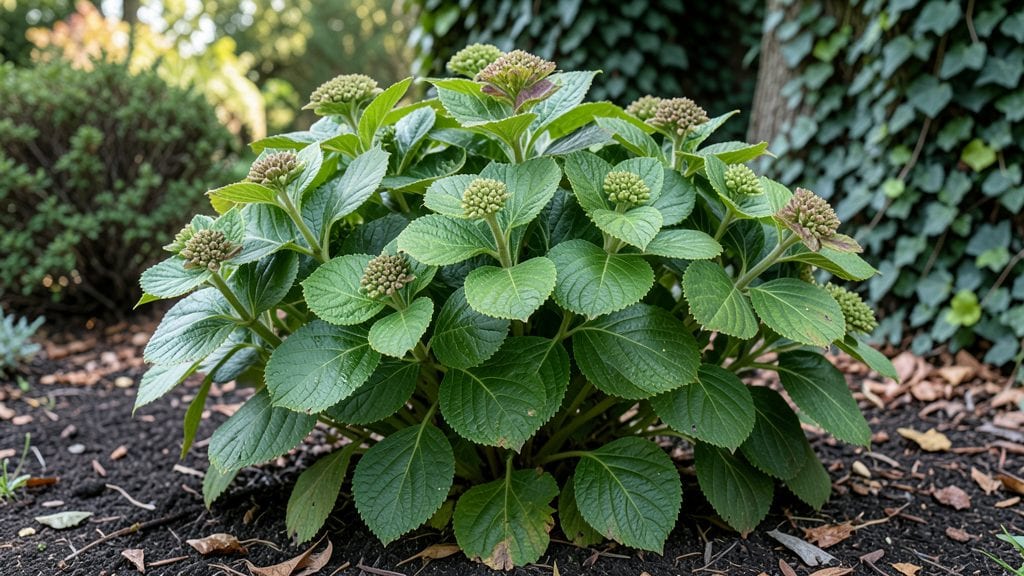
Hydrangeas before flowering look like overgrown shrubs with nothing but leafy stems and tiny buds—no flashy blooms in sight. ✨ I used to panic every spring when my bushes seemed bare, but I learned the secret: those leafless branches are where next year’s biggest blooms are hiding.
The key is understanding exactly when to prune so you don’t accidentally cut off next season’s flower buds.
Here’s the thing—hydrangeas bloom on old wood (last year’s growth) or new wood (this year’s growth), depending on the variety. Bigleaf hydrangeas need their pruning done right after flowering, while panicle and smooth hydrangeas can handle a late-winter haircut.
I pruned mine in the wrong season once, and my blooms were half the size—and took forever to appear.
By pruning at the right time, you’ll end up with larger, longer-lasting blooms next year. The branches will thicken, the buds will swell earlier, and your hydrangeas will become the showstopper of your garden. Think of it as giving your plants a haircut that makes them look—and bloom—even better.
This method works for all hydrangea varieties, whether you’re dealing with a mature bush or a young plant. The timing is the only tricky part, but once you get it right, your hydrangeas will thank you with months of vibrant color instead of a few small clusters.
Let’s get those pruners ready!
Hidden Triggers Behind Early Buds
Before your hydrangeas even think about blooming, a mix of environmental and horticultural factors can push them into premature bud formation. Understanding these triggers helps you control—or even capitalize on—the timing for bigger, showier flowers next season.
Let’s break down the science behind why your hydrangeas might be showing buds too soon.
Hydrangeas (Hydrangea macrophylla and Hydrangea paniculata) are sensitive to temperature fluctuations, especially in late summer and early fall. When a sudden drop in temperatures—often below 50°F (10°C)—hits after a warm spell, the plant interprets this as a signal to start preparing for winter.
This triggers dormancy hormones (abscisic acid) and accelerates bud formation.
- Why it matters: If buds form too early, they may not develop fully before frost, leading to weak or stunted blooms. - Actionable fix: Use frost blankets or row covers in late summer if cold snaps are forecasted.
Mulch heavily (3–4 inches) to insulate roots and stabilize soil temps.
Hydrangeas thrive in consistently moist but well-drained soil. When roots sit in soggy conditions—whether from overwatering, clay soil, or poor drainage—the plant experiences oxygen deprivation (hypoxia). This stress response can trick the plant into thinking it’s entering a dry season, prompting early budding.
- Signs to watch for: - Yellowing leaves (chlorosis) - Mushy stems or roots - Buds forming in clusters but failing to open - Actionable fix: - Test your soil: Stick a screwdriver in the ground after watering—if it comes out clean after 6 inches, you’re overwatering. - Amend soil: Mix in perlite or sand to improve drainage.
For clay-heavy soil, add compost or coconut coir to loosen texture. - Adjust watering: Water deeply 2–3 times per week (not daily) and ensure pots have drainage holes.
While hydrangeas need partial shade (morning sun + afternoon shade), excessive sunlight—especially in hot climates—can cause heat stress. When leaves bake under direct midday sun (especially >85°F/30°C), the plant’s photosynthesis slows, and it may prematurely shift energy toward bud formation to survive.
- Varietal vulnerabilities:
- Hydrangea macrophylla (e.g., Endless Summer) is more sun-sensitive than Hydrangea paniculata (e.g., Limelight).
- Actionable fix:
- Prune nearby trees to filter harsh afternoon light.
- Use shade cloth (30–50%) if relocating isn’t an option.
- Mulch with straw or wood chips to keep roots cool.
Hydrangeas are heavy feeders, but too much (or too little) of certain nutrients can disrupt flowering timing. Specifically: - Excess nitrogen (N): Promotes leafy growth at the expense of buds.
If your fertilizer is high in N (first number on the label), buds may form early but stay small. - Low phosphorus (P): Critical for flower development.
A deficiency (purple-tinged leaves) can delay blooming—but too much P can also trigger premature budding as the plant scrambles to use it. - Potassium (K) deficiency: Weakens stems, making buds vulnerable to frost damage.
- Actionable fix:
- Soil test first: Use a home test kit or send a sample to a local extension service.
- Adjust fertilizer: Switch to a balanced formula (e.g., 10-10-10) or a low-N, high-P option (e.g., 5-10-5) in early spring.
- Avoid synthetic fertilizers in fall: Use compost or bone meal for a slow-release P boost.
Pruning hydrangeas after mid-summer (especially for Hydrangea macrophylla) can stimulate new growth, which the plant may interpret as a signal to set buds early.
This is because: - New stems = potential blooms: The plant assumes these will have time to mature. - Hormonal response: Cutting triggers cytokinins (growth hormones) that accelerate bud formation.
- Critical timing rules:
- Old wood bloomers (e.g., H. macrophylla): Prune right after flowering (late summer/early fall).
- New wood bloomers (e.g., H. paniculata): Prune late winter/early spring before buds swell.
- Actionable fix:
- Deadhead spent blooms in fall to redirect energy to roots.
- Avoid heavy pruning in late summer—stick to light shaping.
Pests like aphids, spider mites, or hydrangea gall mites and diseases (e.g., powdery mildew, leaf spot) weaken the plant, forcing it into a defensive growth mode.
This can lead to: - Stunted buds: The plant prioritizes survival over flower development. - Early bud drop: Buds form but abort due to stress.
- Common culprits:
- Aphids: Curled leaves, sticky residue (honeydew).
- Gall mites: Hard, woody growths on stems.
- Fungal diseases: White powder on leaves (mildew) or brown spots (leaf spot).
- Actionable fix:
- Inspect leaves weekly: Check undersides for pests.
- Spray with neem oil (for pests) or baking soda solution (1 tsp/L water for mildew).
- Remove infected leaves immediately to prevent spread.
If your hydrangea is root-bound (circling roots in a pot) or recently transplanted, its energy is focused on establishing new roots rather than blooming.
This can cause: - Delayed or stunted buds: The plant “holds off” on flowering until roots stabilize. - Early bud formation: A desperate attempt to reproduce before stress kills it.
- Signs to watch for:
- Roots circling the pot’s bottom.
- Wilting despite regular watering.
- Buds forming but failing to open.
- Actionable fix:
- Repot every 2–3 years in spring, using a container 2–3 inches larger.
- Loosen roots before repotting to prevent girdling.
- Water deeply after transplanting to reduce shock.
Revitalize Your Hydrangeas Now
If your hydrangeas aren’t blooming as expected, don’t panic—there’s still time to turn things around! The key is identifying the root cause (from the previous section) and taking targeted action.
Below, we break down practical, step-by-step solutions tailored to common issues, plus prevention tips to keep your shrubs thriving for years.
Cause: Cutting back too late, too early, or too aggressively removes next year’s flower buds.
How to Fix It: 🍳 Assess the damage – Check your hydrangea’s growth habit. If it’s a mophead or lacecap, last year’s buds form on old wood (stems from the previous season). If it’s a panicle or smooth hydrangea, new buds form on current season’s growth. 👨🍳 Prune strategically – For old-wood bloomers, wait until early spring (just as new shoots emerge) to trim dead or weak stems. For new-wood bloomers, prune in late winter or early spring to encourage fresh growth. ⏰ Time it right – Avoid pruning in fall or winter unless removing dead wood. If you’ve already pruned too late, don’t worry—just focus on fertilizing and watering to support new growth.
Prevention Tips: ✨ Mark pruning seasons on your calendar (early spring for most types). 🌡️ Use sharp, clean shears to avoid tearing stems. 🎯 Leave 2-3 strong stems if unsure—better safe than sorry!
Cause: Poor soil, lack of nutrients, or root stress stunts blooms.
How to Fix It: 📊 Test your soil – Hydrangeas thrive in slightly acidic soil (pH 5.5–6.2). If your soil is alkaline, amend it with sulfur or peat moss. 💪 Fertilize smartly – Use a balanced, slow-release fertilizer (10-10-10) in early spring. For extra blooms, add a high-phosphorus fertilizer (like 5-10-5) in late spring. 🥗 Improve drainage – If soil is compacted, mix in compost or organic matter to aerate roots.
Prevention Tips: 🔥 Mulch annually with 2–3 inches of organic mulch (like pine bark) to retain moisture and nutrients. 🌿 Water deeply but infrequently—hydrangeas hate soggy roots but need 1–1.5 inches of water per week. 💡 Avoid over-fertilizing—too much nitrogen = leafy growth, fewer flowers.
Cause: Too much shade or harsh sun stressing the plant.
How to Fix It: 🌳 Find the sweet spot – Most hydrangeas need partial shade (morning sun + afternoon shade). If yours is in full sun, provide dappled shade with a sheer curtain or lattice. 🌞 Gradual sun exposure – If moving from shade to sun, acclimate slowly over 2–3 weeks to avoid leaf scorch.
Prevention Tips: ✨ Plant near trees with filtered light (like birch or maple). 🎯 Use reflective mulch (like white gravel) to bounce light onto shaded areas. 🔪 Trim overgrown branches blocking sunlight.
Cause: Underwatering, pests, or disease damaging buds.
How to Fix It: 💦 Check moisture levels – Stick your finger 1–2 inches into the soil. If dry, water deeply 2–3 times per week (more in extreme heat). 🐜 Inspect for pests – Look for aphids, spider mites, or scale on stems/leaves. Treat with neem oil or insecticidal soap. 🍄 Fight fungal issues – If leaves have spots or powdery mildew, prune affected areas and apply baking soda spray (1 tsp baking soda + 1 quart water + drop of soap).
Prevention Tips: 🌡️ Water at the base (not leaves) to prevent fungal growth. 💡 Encourage beneficial insects (like ladybugs) by planting marigolds or basil nearby. 🔥 Remove fallen leaves in autumn to reduce disease overwintering.
Final Pro Tip: 🌟 Deadhead spent blooms in late summer to redirect energy into next year’s buds—but leave some seed heads for winter interest!
By addressing these issues now, you’ll give your hydrangeas the best shot at vibrant, long-lasting blooms next season. Happy gardening! 🌸
Frequently asked questions about hydrangeas before flowering
How do I know if my hydrangea will bloom this year?
Look for swollen buds along the stems in late winter or early spring. For old-wood varieties (like mophead hydrangeas), these buds form on last year’s growth, while new-wood types (like panicle hydrangeas) develop buds on current season’s stems. If you see no buds by mid-March, your plant may need more sunlight or fertilizer.
Why do my hydrangea leaves look healthy, but there are no buds?
This usually means your plant isn’t getting enough phosphorus or is stressed from over-pruning or poor drainage. Try applying a high-phosphorus fertilizer (5-10-5) in early spring and avoid heavy pruning until after flowering. Root-bound plants also delay blooming—check for circling roots if potted.
Can I prune my hydrangea before it flowers to encourage bigger blooms?
Timing is critical! For old-wood bloomers (like bigleaf hydrangeas), prune right after flowering to avoid cutting off next year’s buds. For new-wood bloomers (like panicle hydrangeas), prune in late winter before buds swell. Never prune in fall—this triggers early bud formation that may freeze.
What should I do if my hydrangea buds formed too early and froze?
Don’t panic! Prune off any blackened or mushy buds in early spring, and focus on fertilizing and watering to encourage new growth. Use mulch (3-4 inches) next winter to protect roots. Some varieties (like Endless Summer) may still produce blooms from remaining buds or new stems.
How can I tell the difference between flower buds and leaf buds on hydrangeas?
Flower buds are larger, rounder, and fatter than leaf buds, which are pointier and thinner. On old-wood types, flower buds appear in clusters along last year’s stems, while leaf buds form at the tips of new growth. If unsure, wait until buds swell—flower buds will look plump and ready to open!