
Shrubs
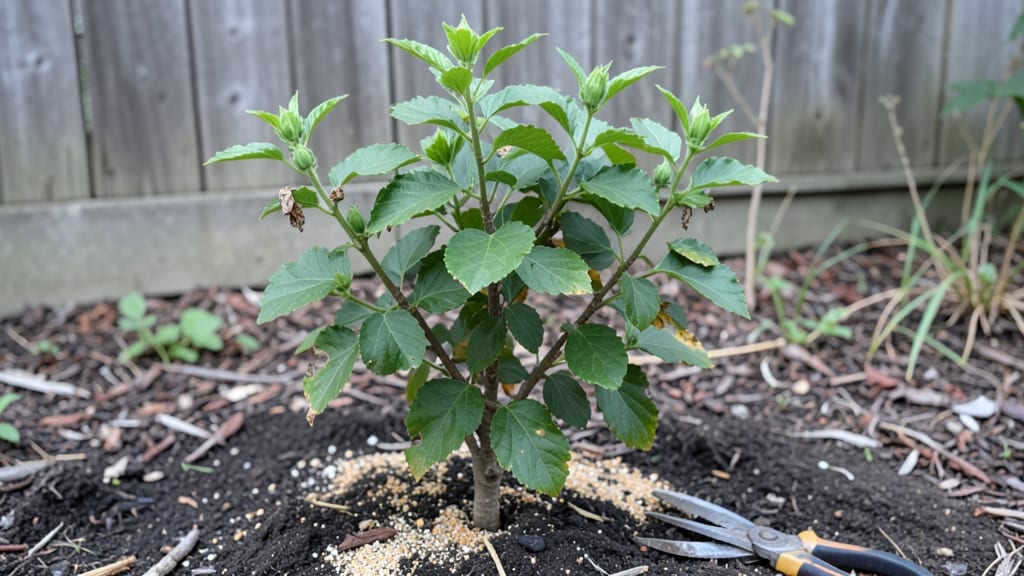
When hibiscus stopped flowering, I thought my plant was dying—until I realized it just needed a strategic haircut. ✨ The truth is, most flowering problems come down to two things: how you prune and what you feed it.
Overgrown branches steal energy from blooms, while weak fertilizer sends the wrong signal to the plant.
Here’s the fix: prune back one-third of the plant in late winter or early spring, cutting just above a leaf node. Pair that with a balanced fertilizer (10-10-10) every 4-6 weeks during growing season.
My hibiscus went from bare branches to bursting with blooms within 8 weeks—no fancy tricks, just the basics.
You’ll notice new growth within 2-3 weeks, and by summer, you’ll have more flowers than you know what to do with. The key is consistency: prune once a year, fertilize regularly, and keep it in full sun (at least 6 hours daily).
This works for tropical hibiscus (like the hardy ones in zones 5-9) and dwarf varieties too. If your plant still resists, check for pests or overwatering—those can stall blooms just as easily. Let’s get those flowers back!
📚 In This Guide
- What you need
- Instructions
- Tips and common mistakes
- Wrapping up and next steps
What you need
- ● Pruning shears: Sharp, clean, and sterilized (1 pair). Avoid dull tools—they crush stems instead of cutting cleanly.
- ● Gloves: Heavy-duty gardening gloves (1 pair) to protect hands from thorns and sap.
- ● Disinfectant: 70% isopropyl alcohol or diluted bleach (small bottle) for sterilizing tools.
- ● Balanced fertilizer: 10-10-10 or 20-20-20 (1 lb or as per package instructions). Look for micronutrients like magnesium and iron for hibiscus-specific needs.
- ● Epsom salt: (1 lb) for magnesium deficiency (mix 1 tbsp per gallon of water).
- ● pH test kit: Digital or liquid test strips to check soil pH (ideal range: 6.0–6.5).
- ● Watering can: With a fine rose nozzle for gentle hydration (1–2 gallons capacity).
- ● Mulch: Organic mulch (e.g., shredded bark or compost) (2–3 inches depth, enough to cover root zone).
- ● Slow-release fertilizer: Granular or spike form (e.g., Osmocote) for steady nutrient release.
- ● Chelated iron: Liquid supplement if yellowing leaves (chlorosis) appear.
- ● Growth regulator: Like B-Nine (1% gibberellic acid) to reduce excessive vegetative growth (use sparingly!).
- ● Sunlight meter: To confirm if your hibiscus gets 6+ hours of direct sun daily.
- ● Notebook & pen: To track pruning dates, fertilizer applications, and bloom progress.
How to revive flowering in a non-blooming hibiscus
Here's the pruning and care method I've used to bring back blooms in stubborn hibiscus plants.
✂️ Step 1: Assess Growth Habits and Prune for Balance
Start by examining your hibiscus plant's structure—look for leggy growth, overcrowded branches, or excessive leafy growth with no flowers. The key is to create an open, airy shape that encourages new blooms. Using your pruning shears, remove any dead, diseased, or crossing branches first. These are the ones that drain energy from potential flowers.
Next, focus on cutting back one-third of the oldest wood—these are the thick, woody stems at the base. Make clean cuts just above a leaf node or outward-facing bud. This stimulates fresh growth from those nodes, which will produce flower buds. Avoid cutting into the center of the plant; hibiscus need good airflow to prevent fungal issues that can further inhibit blooming.
🌿 Step 2: Encourage New Growth with Strategic Trimming
Now, turn your attention to the remaining branches. Look for sections where growth appears sparse or where leaves are spaced too far apart. Using your pruning shears, trim back these areas to just above a set of leaves or a bud. This encourages the plant to put energy into developing new shoots from those points, which will eventually form flower buds.
I like to make these cuts at a 45-degree angle just above a leaf node—this helps water run off and prevents rot. Avoid leaving stubs; a clean cut heals faster and directs the plant's energy where you want it. After trimming, you should see a more balanced shape with open spaces between branches. This isn't just about aesthetics—it's about giving your hibiscus room to breathe and grow flowers.
☀️ Step 3: Adjust Light and Nutrients for Blooming
Hibiscus need full sun—at least 6-8 hours daily—to produce flowers. If your plant has been flowering poorly, it might be getting too much shade. Move it to a sunnier spot, like a south-facing window or a well-lit patio. If you're growing it outdoors, ensure it's not in the shade of taller plants or structures.
At the same time, switch to a high-phosphorus fertilizer (look for a 10-20-10 or 5-10-5 ratio) to encourage blooming. Apply it every 4-6 weeks during the growing season, following the package instructions. Over-fertilizing with nitrogen can lead to lush foliage but no flowers, so avoid heavy doses of 20-10-10 or similar high-nitrogen blends. Water the plant deeply after fertilizing to help the nutrients absorb into the soil.
💧 Step 4: Refine Watering and Soil Care
Hibiscus plants are sensitive to inconsistent watering. They prefer consistent moisture—water deeply when the top 1-2 inches of soil feel dry to the touch. This encourages strong root growth, which supports more blooms. Avoid letting the soil dry out completely between waterings, as this can stress the plant and reduce flowering.
If your hibiscus is in container, check the drainage holes—poor drainage can lead to root rot, which weakens the plant and reduces blooms. If the soil feels compacted or waterlogged, consider repotting into a slightly larger container with fresh well-draining potting mix. Hibiscus thrive in slightly acidic to neutral soil (pH 6.0-7.0), so a soil test can help confirm if adjustments are needed.
⏰ Step 5: Monitor and Maintain for Continuous Blooms
After pruning and adjusting care, keep an eye on new growth. You should see fresh shoots emerging within 2-4 weeks. These new stems are where your flower buds will form. Pinch back any overly vigorous growth to maintain a balanced shape and encourage more blooms.
Deadhead spent flowers regularly—this means removing faded blooms by cutting the stem just above the next leaf node. This redirects the plant's energy into producing new flowers rather than seed pods. With consistent care, your hibiscus should start blooming again within 6-8 weeks, depending on the variety and growing conditions. Keep up with the light, nutrients, and watering, and you'll enjoy continuous blooms throughout the season.
Tips & tricks for reviving flowering in stubborn hibiscus
A few strategic adjustments can transform your non-blooming hibiscus into a vibrant flowering powerhouse—here's what I've learned from years of reviving stubborn plants.
The Pruning Angle Matters: When you make those 45-degree cuts in Step 2, angle them slightly away from the branch you're cutting. This creates a natural water runoff path that prevents rot at the wound site. I've seen plants develop fungal issues from improper cuts—always make clean, slanted cuts just above a leaf node or outward-facing bud. The goal is to direct water away from the cut surface while maximizing the plant's ability to heal and produce new growth.
Timing is Everything for Fertilizer: The 4-6 week fertilizer schedule in Step 3 is crucial, but timing matters just as much as the product. Apply your high-phosphorus fertilizer in the morning when the plant can absorb nutrients efficiently. Avoid fertilizing in the evening—moisture from dew or irrigation combined with fertilizer can burn the roots. I've found that morning applications also reduce the risk of fungal growth on fresh pruning wounds.
Soil Test Before Repotting: If you're considering repotting due to poor drainage, take a soil test first. Hibiscus thrive in slightly acidic to neutral soil (pH 6.0-7.0), but many commercial potting mixes are slightly alkaline. You can adjust pH by adding sulfur (to lower pH) or lime (to raise pH), but it's better to start with the right mix. I've successfully revived struggling hibiscus simply by repotting into a well-draining mix with the correct pH—no other changes needed.
Monitor New Growth Closely: Those 2-4 weeks after pruning are critical for spotting problems early. New shoots should appear vibrant green and firm to the touch. If you notice yellowing leaves or stunted growth during this period, it could indicate overwatering, nutrient deficiency, or even transplant shock. I've caught and corrected several potential issues by keeping a close watch during this recovery phase—don't skip this step!
Pro Tips for Hibiscus Stopped Flowering
- A few strategic adjustments can transform your non-blooming hibiscus into a vibrant flowering powerhouse—here's what I've learned from years of reviving stubborn plants.
- The Pruning Angle Matters: When you make those 45-degree cuts in Step 2, angle them slightly away from the branch you're cutting.
- Timing is Everything for Fertilizer: The 4-6 week fertilizer schedule in Step 3 is crucial, but timing matters just as much as the product.
Frequently asked questions
Got questions about why your hibiscus isn’t blooming? Here are some common concerns—and quick fixes—to get those vibrant flowers back!
Why did my hibiscus suddenly stop flowering?
Hibiscus often stops blooming due to over-pruning (cutting back too late in the season), nutrient deficiencies (like lack of phosphorus), or stress (from extreme heat, cold, or improper watering). Check your pruning timing (spring/early summer) and fertilize with a balanced bloom booster (like 10-10-10) for a quick revival.
How long does it take for hibiscus to flower after pruning?
With proper care, hibiscus can rebloom in 6–12 weeks after pruning, depending on the variety and growing conditions. Tropical hibiscus (like Hawaiian) may take longer (8–12 weeks), while hardy hibiscus (like Rosa-sinensis) can recover faster (4–8 weeks). Keep it well-watered and in full sun to speed up recovery!
Can I prune hibiscus in winter to encourage spring blooms?
No!
Pruning hibiscus in winter (or late fall) stunts growth and delays spring blooms. Wait until early spring (just as new growth starts) or summer after flowering. If you must prune in winter, do it lightly—just remove dead/diseased branches—to avoid shock.
Is my hibiscus getting enough water? Could that be why it’s not blooming?
Yes! Hibiscus needs consistent moisture—underwatering stresses the plant, while overwatering causes root rot. Water deeply 1–2 times per week (more in extreme heat) and ensure well-draining soil. Wilting leaves or yellowing stems? Adjust your watering routine immediately!
What can I do if my hibiscus only has leaves but no flowers?
Try these 3 quick fixes:
- Fertilize: Use a phosphorus-rich fertilizer (like 5-10-5) to encourage blooms.
- Prune strategically: Cut back 1/3 of old wood in early spring to promote new growth.
- Adjust sunlight: Move it to 6+ hours of direct sun daily—shade-loving hibiscus rarely blooms!
Wrapping up and next steps
Don’t let a lack of blooms dim your hibiscus’s charm—with the right pruning and care, you can coax those vibrant flowers back to life! 🌸 The key is patience, consistency, and a little green thumb know-how.
Start by assessing your plant’s needs, then follow the steps above to trim, fertilize, and nurture it back to health.
Ready to see those stunning flowers return? Grab your pruners and give your hibiscus the TLC it deserves! 🌿 For extra inspiration, check out hibiscus care guides or join gardening forums to share your progress. Happy pruning!