
Shrubs
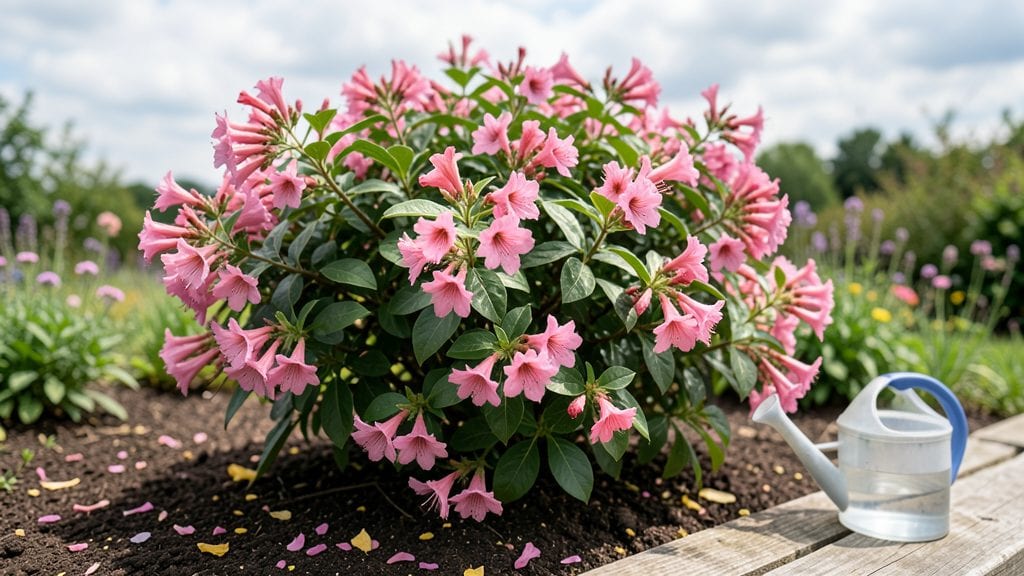
My Weigela shrubs burst with color every spring, and the secret lies in pruning them just right—flowering shrubs Weigela reward patience with cascades of trumpet-shaped blooms that last from late spring through summer.
I learned the hard way that cutting back at the wrong time turns vibrant blooms into bare branches, but once I mastered the timing, my plants became the showstopper of my garden border.
The key isn’t just when to prune but how to shape the plant so it keeps producing flowers instead of just leaves.
Weigela thrives in full sun to partial shade and handles most soil types as long as it drains well—my plants do great in average garden soil with a little compost mixed in.
They’re tough enough to handle urban pollution and deer tend to leave them alone, making them perfect for low-maintenance landscapes. The real magic happens in late winter or early spring before new growth starts, when you trim back about a third of the oldest stems to encourage fresh, flowering wood.
It’s a 15-minute job that pays off with nonstop blooms all season.
What you’ll end up with is a shrub that looks like it belongs in a botanical garden, not your backyard—think clusters of pink, red, or white flowers against deep green foliage that turns brilliant shades of orange and red in fall. The best part?
Hummingbirds and butterflies can’t resist the nectar, turning your yard into a living pollinator hotel. If you’ve ever struggled with Weigela looking leggy or sparse, this method transforms it into a lush, flowering powerhouse that keeps giving year after year.
Works equally well in foundation plantings, mixed borders, or even as a standalone specimen. Once you see the difference pruning makes, you’ll never let your Weigela go untended again—promise. Let’s get those shears ready!
📚 In This Guide
- What you need
- Instructions
- Tips and common mistakes
- Wrapping up and next steps
What you need
- ● Bypass pruners: Sharp, clean, and well-oiled (1 pair, 6–8" blades for medium stems).
- ● Loppers: For thicker branches (½"–1½") (1 pair, 18–24" handles).
- ● Hand pruners: For fine-tuning small stems (1 pair, 5–6" blades).
- ● Garden gloves: Cut-resistant, breathable fabric (1 pair, medium/large).
- ● Disinfectant (70% isopropyl alcohol or bleach solution): 1 part bleach to 9 parts water (small spray bottle or cloth).
- ● Pruning saw: For stubborn, woody branches (1, 8–10" blade).
- ● Rubbing alcohol (70% or higher): For sterilizing tools between cuts (small bottle).
- ● Twine or zip ties: For temporary support if needed (5–10 ft roll).
- ● Pruning sealant: For large cuts (¼" or wider) (small tube).
- ● Garden kneeler/pad: For comfort during low pruning.
- ● Plant marker or tags: To label pruned sections if testing techniques.
- ● Sharpie or chalk: For marking branches to remove.
- ● Compost bin or bag: For collecting pruned debris.
- ● Weather check: Choose a dry, calm day (avoid rain or wind).
- ● Tool prep: Sterilize and sharpen all blades before starting.
- ● Safety gear: Sunglasses and long sleeves if working in bright sun.
- ● Plant health assessment: Inspect Weigela for pests/disease before pruning.
Step-by-step instructions for pruning Weigela shrubs
Here's the method I've used for years to keep my weigela blooming from spring until fall.
Time Your Pruning for Maximum Blooms
Prune weigela immediately after flowering ends—typically in late spring or early summer. This timing ensures next year's buds form properly on new wood. If you prune too early, you risk cutting off next season's flowers. Wait until you notice spent blooms dropping naturally, then act within a week.
For established shrubs, you can do a second light pruning in late winter to shape the plant before new growth begins. This helps maintain the shrub's natural form without sacrificing too many flower buds. Just avoid heavy cuts during dormancy, as this can stimulate weak growth that won't survive winter.
Remove Dead or Damaged Wood First
Start by identifying and cutting out any dead, diseased, or crossing branches. Use clean, sharp pruning shears to make clean cuts at a 45-degree angle just outside the branch collar. This prevents water from pooling and reduces the risk of infection. Remove any branches that are rubbing against others, as these will eventually create wounds that invite pests.
Look for branches that are completely brown or hollow—they're dead and need removal. Also cut back any branches that have been damaged by frost, storms, or pests. You'll know a branch is dead if it doesn't bend when you try to move it, and the inside is hollow or crumbly. This step keeps your shrub healthy and encourages stronger growth.
Thin Out Overcrowded Branches
Next, focus on thinning the center of the shrub to improve airflow and light penetration. Remove about one-third of the oldest stems at the base, cutting them back to the ground. This rejuvenates the plant and promotes new growth from the base. You'll see thicker, more vigorous stems emerge in the following season.
For each branch you remove, look for a younger, healthier branch nearby to replace it. Weigela responds well to this type of selective pruning, as it encourages a bushier, more compact form. Avoid cutting back more than one-third of the plant in a single season, or you'll shock the shrub and reduce next year's blooms.
Shape the Shrub for Even Growth
Now it's time to shape the shrub by trimming back the remaining branches. Cut back the tips of the longest branches by about one-third to encourage a fuller, more balanced shape. Make your cuts just above a leaf node or bud, angled slightly away from the bud to prevent water from sitting on it.
Step back frequently to check your progress. The goal is to create a naturally rounded form that allows light to reach all parts of the shrub. Avoid heavy pruning on one side, as this can create an uneven appearance. If you're unsure about a cut, hold your hand where you plan to trim—if it looks balanced, go ahead.
Clean Up and Monitor Recovery
After pruning, remove all clippings from the area to prevent disease from spreading. Dispose of diseased branches separately, away from your garden. Sterilize your pruning tools with rubbing alcohol or a 10% bleach solution to kill any lingering pathogens. This step is crucial for keeping your weigela—and other plants—healthy.
Water the shrub deeply after pruning to help it recover. Keep an eye on new growth over the next few weeks. You should see fresh, vibrant shoots emerging from the base and along the branches. If you notice any signs of stress, like yellowing leaves or wilting, reduce watering slightly and provide some afternoon shade until the plant stabilizes.
Tips & tricks for pruning Weigela shrubs
These simple yet essential tips will help you prune your weigela like a pro and keep those vibrant blooms coming all season long.
Timing is Everything: The window for pruning weigela after flowering is narrow but crucial. If you prune too early, you risk cutting off next year's flower buds, which form on new wood. Look for the first signs of spent blooms dropping naturally—that's your cue to act within a week. For established shrubs, that late winter shaping prune should be light and focused on maintaining form rather than heavy cutting.
Tool Prep Matters: Never skip sterilizing your pruning shears between cuts, especially when dealing with diseased branches. A quick wipe with rubbing alcohol or 10% bleach solution prevents spreading pathogens to healthy parts of the plant. I keep a small bottle of rubbing alcohol in my gardening toolkit specifically for this purpose—it's faster than bleach and won't damage metal tools over time.
Visual Cues for Healthy Cuts: When making your cuts at a 45-degree angle, imagine you're shaving the outside of an apple. The cut should be just outside the branch collar (that swollen area where the branch meets the stem) to promote proper healing. For shaping cuts in Step 4, look for the leaf node or bud just above where you want to cut—this ensures new growth will emerge in the right direction.
Recovery Watch: After pruning, pay close attention to new growth patterns over the next few weeks. You should see fresh, vibrant shoots emerging from the base and along the branches within 2-3 weeks. If you notice yellowing leaves or wilting, it's a sign of stress—reduce watering slightly and provide afternoon shade until the plant stabilizes. This monitoring period is just as important as the pruning itself.
Pro Tips for Flowering Shrubs Weigela
- These simple yet essential tips will help you prune your weigela like a pro and keep those vibrant blooms coming all season long.
- Timing is Everything: The window for pruning weigela after flowering is narrow but crucial.
- Tool Prep Matters: Never skip sterilizing your pruning shears between cuts, especially when dealing with diseased branches.
Frequently asked questions
Got questions about Weigela care?
You’re not alone! Here are some of the most common questions—and answers—to help your flowering shrubs thrive all season long.
When is the best time to prune Weigela for maximum blooms?
Prune Weigela right after flowering (late spring to early summer) to encourage new growth and next year’s blooms. Avoid heavy pruning in fall or winter, as it can remove next year’s flower buds. A light trim to shape the shrub in late winter (before buds swell) is also safe.
How much can I prune Weigela without harming it?
Weigela is resilient, but avoid cutting back more than one-third of the plant’s height in a single season. For rejuvenation, you can prune older stems to the ground, but do this gradually over 2–3 years. Always use clean, sharp pruners to prevent disease.
Why aren’t my Weigela shrubs blooming as much as they used to?
Poor blooming often stems from over-pruning in late summer/fall (removing next year’s buds) or lack of sunlight (Weigela needs 6+ hours of sun). Check for pests like spider mites or aphids too—they can stress the plant. Fertilize lightly in early spring if growth seems weak.
Can I grow Weigela in containers, and what’s the best soil mix?
Yes! Weigela thrives in containers with well-draining soil mixed with compost. Use a fast-draining potting mix (like 60% potting soil, 30% perlite, and 10% compost) and ensure the pot has drainage holes. Repot every 2–3 years and fertilize monthly during growing season.
How cold-hardy is Weigela, and do I need to protect it in winter?
Most Weigela varieties are USDA Zones 4–8 hardy, but young plants or tender varieties (like Weigela florida ‘Wine & Roses’) may need mulch or burlap wraps in harsh winters. Avoid heavy snow buildup—gently brush it off to prevent stem damage.
Wrapping up and next steps
Transforming your garden with Weigela is easier than you think! These vibrant flowering shrubs reward you with stunning blooms and lush foliage—once you master the art of pruning. Whether you’re a beginner or a seasoned gardener, the right techniques will keep your Weigela thriving for years to come.
Ready to take action? Grab your pruners and get started! Plant a Weigela today and enjoy a garden bursting with color 🌸✨.