
Shrubs
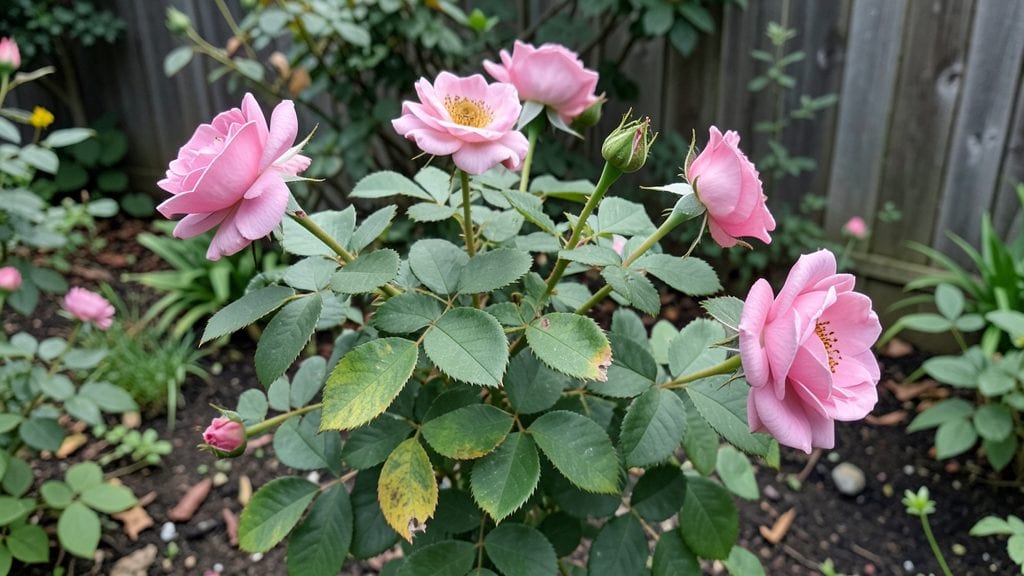
Flowering rose bushes transform any yard into a fragrant, colorful paradise—but only if you master the deadheading trick that keeps them blooming all season. 🌹 I’ve watched roses go from sparse, leggy bushes to nonstop bloomers just by changing how I cut back spent flowers, and the difference is night and day.
Start with the right variety for your climate: hybrid teas for dramatic blooms, floribundas for clusters, or shrub roses for low-maintenance beauty. Plant in full sun with well-draining soil, and water deeply once a week—more in extreme heat—to encourage strong root growth.
The key to year-round blooms isn’t just pruning; it’s deadheading right after flowers fade to redirect energy into new buds.
By summer’s end, you’ll have roses that look like they belong in a botanical garden, not your backyard. The secret’s in the timing: cut just above a five-leaflet stem, and you’ll trigger a cascade of fresh blooms. Even black-thumb gardeners can nail this—it’s all about the cuts, not the complexity.
Works for climbing roses too—just adjust pruning heights and support structures. Whether you’re shaping a trellis or a shrub, these techniques guarantee blooms from spring to frost. Let’s get those shears sharp and those bushes thriving!
📚 In This Guide
- What you need
- Instructions
- Tips and common mistakes
- Wrapping up and next steps
What you need
- ● Flowering rose bushes: Choose disease-resistant varieties like 'Knock Out', 'David Austin', or 'Earth-Kind' roses (3–5 plants for a small garden, 6+ for larger spaces).
- ● Well-draining soil: 50% native soil + 50% organic matter (compost or aged manure). Aim for pH 6.0–6.5 (test kits available at garden centers).
- ● Fertilizer: Balanced 10-10-10 fertilizer (spring/fall) or rose-specific formula.
- ● Epsom salt (1 tbsp per plant monthly for magnesium).
- ● Mulch: 2–3 inches of organic mulch (wood chips or straw) to retain moisture and regulate temperature.
- ● Watering system: Drip irrigation or soaker hose (roses need 1–2 inches of water weekly).
- ● Pruning shears: Bypass pruners (sharp, clean, and disinfected with rubbing alcohol).
- ● Gloves: Heavy-duty garden gloves (roses have thorns!).
- ● Trowel & spade: For planting and soil amendments.
- ○ Deadheading scissors: Optional but handy for clean cuts (just above a 5-leaflet leaf).
- ● Stakes & ties: If planting in windy areas (3–4 ft bamboo stakes per bush).
- ● Rose food: Liquid or granular (e.g., 'Miracle-Gro' for Roses).
- ● Fungicide: Copper-based or neem oil spray (preventative care).
- ● Plant supports: Trellises or arches for climbing roses.
- ● Soil test kit: To monitor nutrient levels year-round.
How to cultivate flowering rose bushes for continuous blooms
Here’s the straightforward approach I’ve used to keep roses flowering nonstop—no fancy tricks, just smart care.
🌱 Step 1: Choose the Right Location and Soil
Roses thrive in 6+ hours of direct sun daily, so pick a spot with full sun exposure (south or west-facing works best). If your yard has afternoon shade, go for disease-resistant varieties like Knock Out roses—they tolerate less sun better than others.
Loosen the soil to a depth of 12-18 inches and mix in 3-4 inches of compost (from your materials list) to improve drainage. Roses hate soggy roots, so if your soil drains poorly, add sand or perlite to lighten it. Amend the soil within a 2-foot radius of where you’ll plant to ensure consistent growing conditions.
☀️ Step 2: Plant at the Correct Depth and Spacing
Dig a hole twice as wide as the root ball but no deeper—this prevents soil from settling and burying the graft union (the swollen area near the base of the stem). Gently tease the roots outward if they’re circling, then place the rose so the graft union sits 2-3 inches above soil level. This keeps the plant from sending up unwanted suckers later.
Space bushes 3-4 feet apart (closer for compact varieties like Knock Outs). Backfill with soil, pressing lightly to remove air pockets, then water deeply to settle everything. Mulch with 2-3 inches of organic mulch (like shredded bark) to retain moisture and regulate soil temperature—just keep it 6 inches away from the stem to prevent rot.
💧 Step 3: Water Deeply and Consistently
Water once a week for the first month, soaking the soil to a depth of 12 inches. After that, water deeply every 5-7 days, depending on rainfall—dry soil is better than soggy. You’ll know it’s time when the top 2 inches of soil feel dry to the touch. Avoid wetting the leaves to prevent fungal diseases like black spot.
Use a soaker hose or drip irrigation for targeted watering at the base. Early morning is the best time to water, giving leaves time to dry before evening humidity sets in. Overwatering is the #1 killer of roses, so let the soil dry slightly between waterings—especially in winter.
✂️ Step 4: Master Deadheading for Nonstop Blooms
Deadheading—removing spent blooms—is the secret to year-round flowers. Use clean pruners to snip off faded blooms just above a set of healthy leaves (usually where 5 leaflets meet). This encourages the bush to redirect energy into new growth instead of seed production.
For hybrid teas and floribundas, cut back to the first outward-facing leaf below the bloom. For shrub roses, trim spent stems to a strong bud pointing outward. Do this every 2-3 weeks during the growing season, and you’ll see fresh buds forming within 7-10 days. Skip deadheading in late summer if you want hips for winter interest.
🌿 Step 5: Prune for Shape and Health Twice a Year
Prune once in late winter (before buds swell) and again lightly in summer after flowering. Start by removing dead, diseased, or crossing branches first—they’re the easiest to spot. Then cut back 1/3 of the oldest canes to encourage new growth. Angle cuts just above an outward-facing bud to promote proper growth direction.
Shape the bush by thinning out crowded stems to improve airflow. Aim for an open center with branches spaced evenly. Avoid heavy pruning in fall—it stimulates tender new growth that won’t survive winter. After pruning, apply a balanced rose fertilizer (like 10-10-10) to support regrowth.
Tips & tricks for perfect flowering rose bushes
Here’s what I’ve learned from years of growing roses—that extra attention to detail makes all the difference between occasional blooms and year-round beauty.
Soil Preparation Secret: In Step 1, when you’re loosening the soil to 12-18 inches, don’t just scratch the surface—really break up the compacted layers. I use a garden fork to create channels for water and roots. This is especially important if your yard has clay soil, which can suffocate roots. The 3-4 inches of compost we’re adding should be worked in thoroughly, not just sprinkled on top. Think of it like creating a fluffy pillow for your rose’s roots to settle into.
Graft Union Protection: The 2-3 inches above soil level for the graft union in Step 2 is non-negotiable. I’ve seen too many roses develop suckers from buried graft unions. After planting, I always mound a small ring of soil around the base to create a natural barrier. This keeps the graft union exposed while protecting the stem from soil-borne diseases. If you notice any shoots growing below the graft, remove them immediately—they’ll drain energy from your blooms.
Watering Wisdom: The deep watering schedule in Step 3 is crucial, but timing matters just as much. I’ve found that watering in the early morning (before 9 AM) gives the plant all day to dry out, reducing fungal risks. When checking soil moisture, stick your finger in about 2 inches deep—if it feels dry, that’s your cue. I also recommend using a moisture meter for the first few waterings to get a feel for your soil’s needs. Remember, roses are tough—they’d rather be slightly dry than soggy.
Deadheading Timing: The every 2-3 weeks schedule in Step 4 works beautifully, but here’s the real trick: do it in the morning. Freshly cut stems are more resilient against afternoon heat stress. When you see those new buds forming within 7-10 days, you’ll know you’re on the right track. I keep a small pair of pruners by my garden hose so I never skip this essential step. And pro tip: if you’re growing climbers, deadhead differently—cut back to an outward-facing bud on the main stem to encourage upward growth.
Pro Tips for Flowering Rose Bushes
- Here’s what I’ve learned from years of growing roses—that extra attention to detail makes all the difference between occasional blooms and year-round beauty.
- Soil Preparation Secret: In Step 1, when you’re loosening the soil to 12-18 inches, don’t just scratch the surface—really break up the compacted layers.
- Graft Union Protection: The 2-3 inches above soil level for the graft union in Step 2 is non-negotiable.
Frequently asked questions
Got questions about keeping your flowering rose bushes in top shape? You’re not alone! Here are some of the most common queries—and their easy-to-follow answers to help you grow stunning blooms year after year.
When is the best time to plant flowering rose bushes?
The ideal times are early spring (after the last frost) or fall (4-6 weeks before the first frost). Planting in these seasons gives roots time to establish before extreme temperatures. Avoid summer heat or winter cold, which can stress young plants. Pro tip: Soak the roots in water for 1-2 hours before planting to reduce transplant shock!
How often should I deadhead my roses for continuous blooms?
Deadhead spent blooms every 1-2 weeks during the growing season (spring to fall) to encourage more flowers. Use clean pruners and cut just above a healthy leaf node (a small bump where leaves grow). For hybrid teas and grandifloras, repeat this process throughout the season—they’re heavy bloomers!
What are the most common pests for flowering rose bushes, and how do I treat them?
Watch for aphids, rose slugs (sawfly larvae), and Japanese beetles. For mild infestations, spray with a soapy water solution (1 tsp mild soap per quart of water). For severe cases, use neem oil or insecticidal soap. Prune heavily infested leaves and dispose of them far from your garden to prevent spread.
Why aren’t my flowering rose bushes blooming this year?
Common culprits include over-pruning (cutting back too late in the season), poor sunlight (6+ hours of direct sun is key), or nutrient deficiencies (especially nitrogen and phosphorus). Check your pruning timing (prune after blooming for repeat-flowering varieties) and fertilize with a rose-specific feed in early spring and mid-summer.
Can I grow flowering rose bushes in containers? What’s the best setup?
Choose compact or dwarf varieties like ‘The Fairy’ or ‘Playboy.’ Use a large pot (at least 15 gallons) with drainage holes and fill it with well-draining potting mix. Place in a sunny spot and water when the top 1-2 inches of soil are dry. Feed monthly with a balanced liquid fertilizer during the growing season.
How do I protect my flowering rose bushes in winter?
Mulch the base with 3-4 inches of organic mulch (straw or shredded leaves) after the ground freezes. For tender varieties, wrap the canes with burlap or rose cones and secure with twine. Avoid heavy snow buildup—gently brush it off to prevent stem breakage. Most roses are hardy, but hybrid teas and grandifloras may need extra care in harsh climates.
Wrapping up and next steps
Growing flowering rose bushes to their full, vibrant potential is a rewarding journey that combines patience, care, and a little deadheading mastery! 🌹 With the right soil, sunlight, and seasonal pruning, your roses can burst into year-round blooms that brighten any garden.
Remember, every expert gardener started with a single cutting—so don’t hesitate to roll up your sleeves and experiment.
Ready to take the next step? Start small—whether it’s pruning a single bush, experimenting with fertilizer blends, or even sharing tips with fellow gardeners. Your blooming success will inspire others, and before you know it, you’ll be the go-to rose guru in your neighborhood! 🌱