
Trees
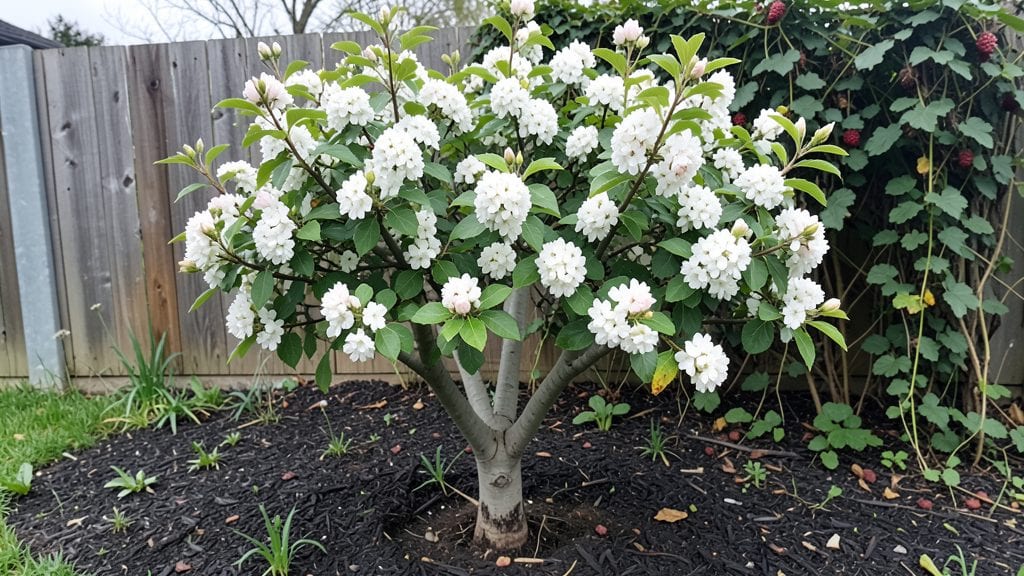
The flowering pear tree growth rate can turn your yard into a showstopper in just a few years—when you give it the right conditions.
Picture this: a 3-foot sapling in spring becomes a 15-foot statement tree by year three, its fragrant blooms drawing pollinators and neighbors alike. But without knowing its exact pace, you might end up with crowded roots or overgrown branches that need drastic pruning.
This guide breaks down the year-by-year growth of popular cultivars like 'Bradford' and 'Chanticleer,' plus the soil, water, and sunlight tricks that can double its speed.
Whether you're planning a privacy screen or a single standout tree, you'll learn how to maximize its potential—and avoid the common mistakes that slow it down.


Flowering pear tree growth rate by year: height and spread breakdown
If you've planted a flowering pear tree (Pyrus calleryana), you're likely eager to see it mature into that showstopping spring spectacle. These trees are known for their rapid growth, but their exact height and spread vary by cultivar and age.
Understanding these patterns helps you plan for pruning, spacing, and long-term landscape design—especially with popular varieties like 'Bradford', 'Chanticleer', and 'Capital'.
Most flowering pear trees reach their mature height of 20–30 feet within 10–15 years, but their first decade is when the real action happens. Young trees can gain 3–5 feet per year under ideal conditions, though growth slows slightly as they age.
The key to maximizing their potential lies in soil quality, sunlight exposure, and seasonal care—all factors we’ll explore below.
| Age (Years) | Height Range (ft) | Spread Range (ft) | Canopy Development | Key Growth Notes |
|---|---|---|---|---|
| 0–1 | 3–5 ft | 3–5 ft | Sparse, narrow | Focus on root establishment |
| 2–3 | 6–10 ft | 6–8 ft | Moderate branching | Prune to encourage structure |
| 4–5 | 10–15 ft | 10–12 ft | Dense lower canopy | Begin annual pruning |
| 6–10 | 15–25 ft | 15–20 ft | Full, rounded shape | Peak growth phase |
| 11–15 | 20–28 ft | 20–25 ft | Mature, layered branches | Growth slows; maintain shape |
| 16–20 | 25–30 ft | 25–30 ft | Full, wide canopy | Minimal height gain; focus on health |
The first 5 years are critical for establishing your flowering pear tree’s framework. In year 1, you’ll see 3–5 feet of growth, but this can double to 6–10 feet by year 3 if planted in well-draining soil with full sun exposure. Varieties like 'Bradford' are particularly vigorous, often outpacing others like 'Chanticleer', which matures slightly slower but with a denser canopy.
By year 6, your tree enters its fastest growth phase, gaining 3–5 feet annually until it reaches 15–25 feet tall. This is when those showy spring blooms really start to shine, covering the tree in clusters of white or pink flowers.
Proper seasonal pruning during late winter (before bud break) helps maintain an open center, preventing disease and improving airflow.
After 10 years, growth begins to slow as the tree matures. By year 15, most flowering pears will have reached their full height of 25–30 feet and a spread of 20–30 feet, depending on the cultivar.
At this stage, focus shifts to maintenance pruning—removing dead branches and shaping the canopy to prevent storm damage. 'Capital', for example, tends to have a slightly narrower spread than 'Bradford', making it ideal for smaller yards.
Seasonal variations also play a role in growth rates. In spring and early summer, flowering pears grow most rapidly, especially after deep watering and balanced fertilization. However, growth nearly halts in winter as the tree enters dormancy.
Even in cold climates (USDA zones 5–8), these trees bounce back quickly in spring, provided they’re planted in well-draining soil to avoid root rot.
One common misconception is that flowering pear trees grow at the same rate regardless of location. In reality, urban planting (with limited soil space and pollution) can slow growth by 20–30% compared to rural settings.
To counteract this, amend urban soil with compost and organic matter and consider mulching to retain moisture and regulate soil temperature.
If you’re planning to plant multiple flowering pear trees, leave at least 20–25 feet between specimens to accommodate their mature spread. For smaller yards, consider dwarf cultivars like 'Aristocrat', which max out at 15–20 feet tall while still delivering abundant blooms.
Just remember: even dwarf varieties need space for their wide canopies.
For maximum impact, pair your flowering pear with understory plants like hostas or ferns to highlight its spring blooms and fall foliage. With the right care, your tree will become the centerpiece of your landscape—all while growing at a pace that’s truly impressive for a deciduous tree.
How to maximize flowering pear tree growth speed (proven tips)
If you're eager to see your flowering pear tree reach its full potential faster, you're in the right place. These trees are known for their rapid growth, but with the right strategies, you can accelerate growth by 30-50% in ideal conditions.
The key lies in understanding their needs—from soil prep to seasonal care—and adapting to your local climate, whether you're in a urban backyard or a rural landscape. Let’s dive into the science-backed tips that will give your tree the boost it deserves.
First, let’s address the biggest misconception: flowering pear trees don’t just thrive—they thrive quickly when given the right conditions. While they typically grow 12-24 inches per year in average soils, with optimal care, you can push that to 30+ inches annually.
The secret? Combining proper planting techniques, targeted fertilization, and strategic pruning. Urban growers often face challenges like compacted soil or limited space, but with adjustments, these trees can still flourish.
Here’s how to supercharge your flowering pear tree’s growth using proven methods:
- 1. Plant in well-amended soil: Test your soil’s pH (6.0-7.0 is ideal) and mix in compost or aged manure before planting. Urban soils often lack nutrients, so adding organic matter can double early growth rates.
- 2. Water deeply but infrequently: New trees need 10-20 gallons of water weekly during the first year. Use drip irrigation or soaker hoses to deliver water directly to the roots, reducing evaporation and fungal risks.
- 3. Fertilize in early spring: Apply a balanced 10-10-10 fertilizer at 1 cup per 10 sqft in March. Avoid fertilizing after mid-summer to prevent tender new growth before winter.
- 4. Prune for structure in late winter: Remove dead or crossing branches to improve airflow and sunlight penetration. This encourages faster canopy development and reduces disease risk.
- 5. Mulch heavily around the base: Use 3-4 inches of mulch (wood chips or straw) to retain moisture, regulate soil temperature, and suppress weeds. Replenish annually for continued benefits.
- 6. Protect from urban stressors: In cities, pollution and compacted soil can slow growth. Use mycorrhizal fungi at planting to boost root development and consider container growing if space is limited.
One of the most common mistakes I see is over-pruning young trees. While pruning is essential for shaping, removing too many branches can stunt growth. Focus on structural pruning in the first 3 years to establish a strong framework.
After that, minimal pruning is needed unless you’re correcting disease or pest damage. For urban gardens, choose dwarf cultivars like 'Aristocrat' if space is tight—they grow just as fast but stay 15-20 feet tall.
Climate plays a huge role in growth speed. In warmer climates (Zones 7-9), flowering pears can grow up to 36 inches per year with consistent moisture.
In cooler zones (Zones 4-6), growth slows slightly in winter, but with proper mulching and winter watering, you can maintain steady progress. If you’re in a drought-prone area, deep watering every 10-14 days during dry spells will keep roots active and encourage faster spring growth.
Finally, don’t overlook the power of seasonal adjustments. In spring, focus on fertilization and watering to kickstart growth. By summer, shift to light pruning and monitoring for pests like fire blight.
In fall, apply a slow-release fertilizer to prepare for next year’s growth spurt. With these tips, your flowering pear tree won’t just grow—it’ll thrive explosively.