
Flowers
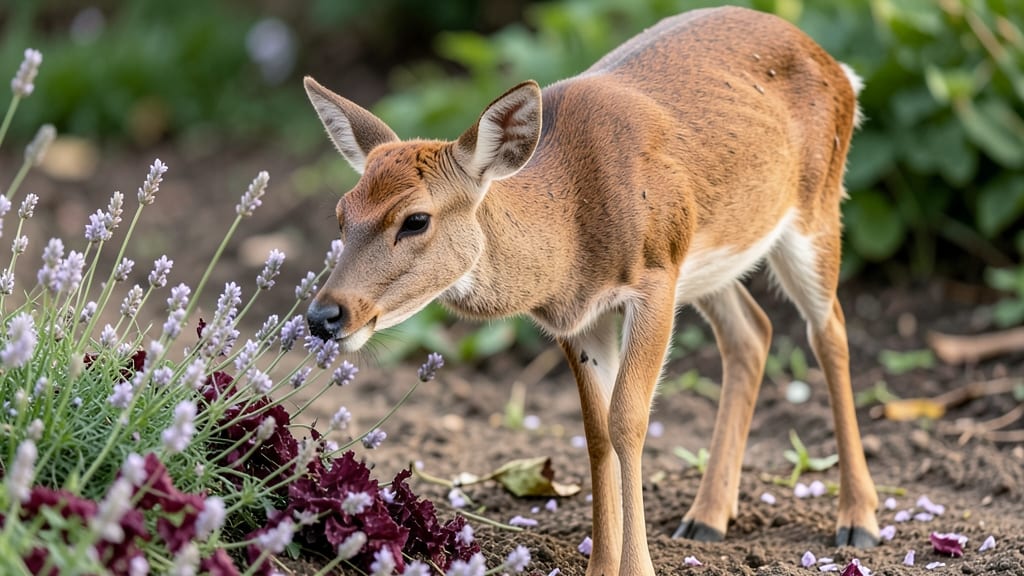
When deer invade flower gardens, they typically feast on delicate stems and petals, but you can deter them humanely using fencing, strategic plant choices, and natural repellents that protect both your blooms and local wildlife.
Deer are drawn to gardens primarily for the tender, nutrient-rich growth they find in flowers, especially during late winter and early spring when natural food sources are scarce. 🌿 Their browsing can stunt plant regeneration, leaving gardens looking ragged and preventing reblooming.
What's interesting is how their feeding patterns change with garden layout—deer often target isolated plants rather than thickly planted borders, which is why layered planting can be an effective deterrent.
Instead of resorting to harmful methods, focus on creating a garden ecosystem that deer find less appealing. Planting deer-resistant varieties like lavender, daffodils, or black-eyed Susans sends a clear message that your garden isn't an easy meal.
Adding companion plants like rosemary or Russian sage can further confuse deer and mask the scent of other blooms they prefer.
💡 In This Article
- Why Deer Target Flower Gardens
- Best Deer-Resistant Flowers for Gardens
Why deer target flower gardens
Deer are drawn to flower gardens primarily because they're searching for high-nitrogen, tender growth that's easy to digest. During late winter and early spring, when natural food sources are scarce, deer rely on garden plants for 30-50% of their daily nutritional needs.
Flower petals and new shoots contain 10-15% protein—a significant boost compared to mature leaves (which typically offer only 5-10% protein). This makes blooms like tulips and roses particularly attractive, as their petals have a delicate, almost sugary texture that deer find irresistible.
The problem goes deeper than just hunger—deer also target gardens because they've lost their natural predators in many suburban areas.
Without wolves, coyotes, or bears to keep them cautious, deer become bolder and more indiscriminate in their feeding. 🌸 Studies show that deer in urban environments browse 2-3 times more aggressively than their wild counterparts, often stripping entire flower beds within 48 hours of first access.
Their behavior is also influenced by garden layout: deer prefer isolated plants (easy access) over densely packed borders, which is why layered planting with 3-4 feet of ground cover can reduce damage by 60-70%.
What most gardeners don't realize is how browsing impacts plant regeneration. When deer feed on buds and stems, they prevent the plant from flowering again that season.
For example, a single deer can destroy 50-100% of tulip blooms in a garden, not just by eating the petals but by trampling the stems. 🌿 The damage is compounded because many flowers rely on photosynthesis from leaves and stems to fuel reblooming—deer effectively starve the plant of its energy reserves.
This is why perennial flowers like coneflowers (which regrow from roots) often survive better than annuals like marigolds, which depend entirely on current-season growth.
Seasonal hunger plays a critical role too. Deer metabolism slows in winter, but their energy needs spike in late winter (February-March) as they prepare for mating season.
During this time, they'll consume up to 3% of their body weight daily—equivalent to a 150-pound deer eating 4.5 pounds of plant material per day. Flower gardens become a high-calorie buffet because blooms like daylilies and dahlias contain 15-20% more carbohydrates than leafy greens.
The scent also matters: deer have a Jacobson's organ (a specialized scent detector) that makes them highly sensitive to floral aromas, especially those with high terpene content (like roses and peonies).
Here's the surprising part: deer actually prefer young, new growth over mature plants.
This is because cell walls in new shoots are thinner and easier to digest, while mature leaves have developed lignin (a tough, fibrous compound) that's harder to break down. 🌱 For gardeners, this means that pruning back damaged plants in early spring can actually make them more appealing to deer—so timing your maintenance matters.
The key is to encourage dense foliage growth that deer find less palatable, such as boxwood shrubs or Russian olive, which have thick, waxy leaves that deer typically avoid.
One final insight: deer behavior shifts dramatically with garden size. In small yards (1/4 acre), deer will strip plants completely within days, while larger properties allow for more selective feeding.
This is why perimeter fencing (8 feet tall) is often more effective than scattered repellents—it creates a physical barrier that deer are less likely to test repeatedly.
The science behind this is simple: deer are creatures of habit, and once they learn a garden is off-limits, they'll move on to easier targets.