
Pruning
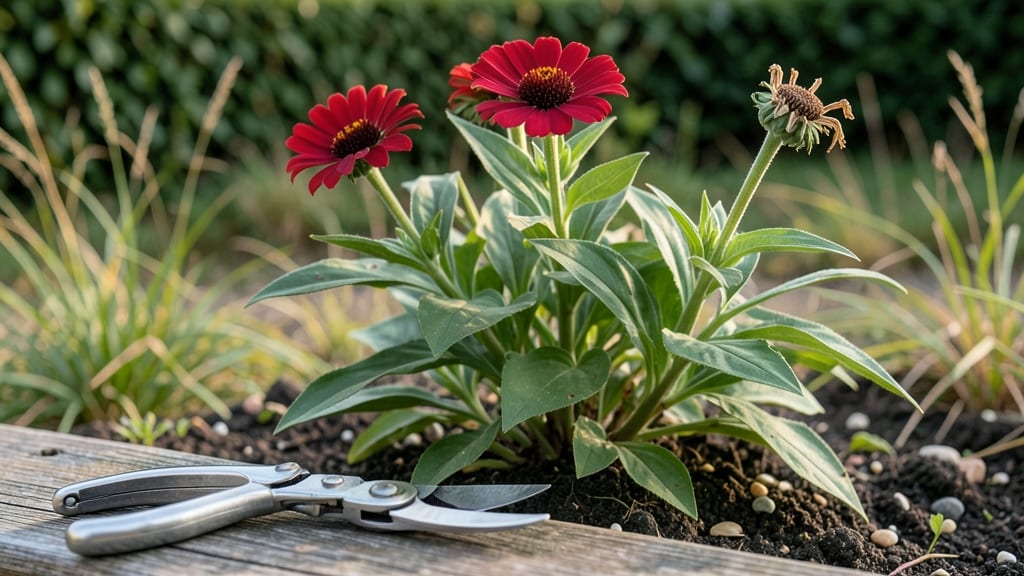
Deadheading zinnia flowers might sound like a fancy term, but it’s really just giving your plants a little haircut to keep them blooming all summer long. ✨ The moment you see those spent blooms drooping, snip them off at the base—it’s the secret to bushier plants and flowers that never quit.
My zinnias used to fade after two weeks, but now they keep going until frost.
You don’t need fancy tools—just a clean pair of pruners or even your fingers for small blooms. Wear gloves if you’re dealing with thorns or dusty plants, and always sanitize your tools with rubbing alcohol before and after pruning to avoid spreading disease.
The key is timing: deadhead right after the flower fades but before the seed pod forms, or you’ll trigger a new bloom instead of letting the plant waste energy on seeds.
What you’ll get is a zinnia plant that looks like it’s on steroids—thicker stems, more branches, and flowers that keep coming like clockwork.
My red ‘Benary’s Giant’ zinnias now produce enough blooms to fill vases for weeks, and the plants stay compact enough to fit in containers or borders without sprawling everywhere. The best part? You’ll save money by not having to buy new plants every few weeks.
This trick works for all zinnia varieties, whether you’re growing them in full sun gardens, containers, or even as cut flowers. Just remember: consistency is everything.
Spend five minutes a week deadheading, and your zinnias will reward you with color until the first frost. Here’s how to do it right every time.
📚 In This Guide
- What you need
- Instructions
- Tips and common mistakes
- Wrapping up and next steps
What you need
- ● Sharp pruning shears or bypass pruners – Look for clean, sterilized blades (1-2 pairs) to avoid damaging stems or spreading disease.
- ○ Gloves (optional but recommended) – Garden or work gloves (1 pair) to protect hands from thorns and dirt.
- ● Disinfectant (70% isopropyl alcohol or bleach solution) – Small spray bottle or wipe for sterilizing tools between cuts.
- ○ Garden twine or rubber bands (optional) – For securing leggy stems if staking is needed.
- ● Watering can or hose with gentle nozzle – To hydrate plants post-pruning.
- ● Compost bin or bucket – For collecting spent blooms and stems.
- ● Plant markers or labels – If you’re tracking varieties or pruning schedules.
- ● Knee pads or stool – For comfort if working in large gardens.
- ● Floral preservative (if saving cuttings) – For extending the life of harvested zinnias.
- ● Sunhat and sunscreen – Because summer pruning = sunshine + sweat!
Instructions for deadheading zinnia flowers
Here's how to keep your zinnias blooming like crazy all summer—no fancy tools needed.
✂️ Step 1: Wait for the Right Time to Prune
Deadhead zinnias when the center flower starts to brown and the petals look tired—usually 2-3 days after full bloom. You'll notice the petals begin to curl slightly at the edges, and the center turns from bright yellow to dull brown. This signals the plant is redirecting energy to seed production instead of new blooms.
Don't wait until the entire flower head wilts completely. The moment you see that first sign of browning, grab your pruners or clean scissors. Cut the stem ½ inch above the next set of leaves or the next healthy bud. This ensures you're not leaving a stub that could rot and encourages new growth from that node.
✂️ Step 2: Use the Right Technique for Clean Cuts
Make your cut at a 45-degree angle just above a leaf node or bud. This angled cut prevents water from pooling on the stem, which reduces the risk of disease. Hold the stem firmly and cut quickly—don't saw back and forth. A clean cut heals faster and looks better.
I like to pinch off smaller zinnias with my fingers instead of cutting. Just grip the stem about ½ inch below the wilting bloom and give a sharp twist. This works well for single-stem zinnias or when you're in a hurry. For larger clusters, though, pruners give you more control and a cleaner finish.
☀️ Step 3: Encourage More Blooms with Proper Light and Water
After deadheading, give your zinnias a little boost by ensuring they get 6-8 hours of full sun daily. Zinnias love basking in the sun, and proper light triggers more blooms. If you notice the stems growing leggy or the leaves looking pale, your plants might be stretching for more light.
Water zinnias at the base of the plant in the morning to keep the foliage dry. Wet leaves can lead to fungal issues, especially in humid summers. Water deeply once a week unless your area is experiencing a heatwave—then increase to every 3-4 days. The soil should feel dry 1-2 inches down before watering again.
🌿 Step 4: Fertilize Lightly for Long-Lasting Blooms
Feed zinnias with a balanced, water-soluble fertilizer every 4-6 weeks during the growing season. Too much fertilizer can lead to lush foliage but fewer blooms, so follow the package instructions and dilute it to half strength. You'll see the difference in just a few weeks—healthier plants with more vibrant flowers.
I also like to add a handful of compost or aged manure around the base of the plant in early summer. This gives the soil a slow-release boost without overloading the plant. Just scratch it into the top inch of soil and water it in. Your zinnias will reward you with bigger, brighter blooms all season long.
⏰ Step 5: Repeat Regularly for Continuous Blooms
Deadheading zinnias isn't a one-time task—it's an ongoing process. Check your plants every 2-3 days during peak bloom season (late spring through summer) and remove any spent flowers immediately. The more you stay on top of it, the more blooms you'll get.
Here's the thing—zinnias are heavy producers, and they'll keep blooming as long as you keep up with deadheading. If you notice some stems getting woody or the plant looking tired by late summer, it's time to give it a little break. Cut back the entire plant by ⅓ to encourage a fresh flush of growth before the first frost.
Tips & tricks for perfect zinnia pruning
These simple tricks will help you keep your zinnias blooming nonstop all summer long with minimal effort.
Timing is Everything: The 2-3 day window after full bloom is critical—this is when the plant starts redirecting energy to seed production. I check my zinnias every morning and evening during peak bloom season. If you miss this window, the plant will focus on producing seeds instead of new flowers. Look for the center turning from bright yellow to dull brown as your cue to act.
Cutting Technique Matters: That 45-degree angle in Step 2 isn't just for looks—it prevents water from pooling on the stem, which reduces disease risk. I've found that using clean, sharp pruners makes all the difference. If you're using scissors, sterilize them with rubbing alcohol between cuts to prevent spreading any potential plant diseases. For stubborn stems, a quick twist works just as well as cutting.
Sunlight Strategy: The 6-8 hours of full sun zinnias need is non-negotiable for continuous blooming. If your zinnias start looking leggy or the leaves turn pale, they're stretching for more light. I've noticed that zinnias in partial shade produce fewer blooms and have longer stems between flowers. Position your zinnias where they'll get morning sun and afternoon shade if your climate is particularly hot.
Fertilizer Frequency: The 4-6 week feeding schedule is perfect for zinnias—they don't need constant feeding like some other flowers. I've learned that too much fertilizer actually reduces blooming! Stick to half-strength balanced fertilizer and supplement with compost in early summer. This gives your zinnias the nutrients they need without overloading them, resulting in bigger, brighter blooms.
Pro Tips for Deadhead Zinnia Flowers
- These simple tricks will help you keep your zinnias blooming nonstop all summer long with minimal effort.
- Timing is Everything: The 2-3 day window after full bloom is critical—this is when the plant starts redirecting energ...
- Cutting Technique Matters: That 45-degree angle in Step 2 isn't just for looks—it prevents water from pooling on the ...
Frequently asked questions
Got questions about deadheading zinnias? You’re not alone!
Here are the most common queries—and their simple, actionable answers—to keep your zinnias blooming all summer long.
Why do zinnias need deadheading?
Deadheading (removing spent blooms) redirects the plant’s energy from seed production to growing more flowers. Without it, zinnias can become leggy or stop blooming entirely. Think of it as giving your plants a little "reset button" for nonstop color!
How often should I deadhead zinnias?
Check your zinnias every 2–3 days during peak bloom (late spring to fall). If you’re busy, aim for at least 2–3 times per week. The key is consistency—don’t let blooms turn brown or form seed heads!
What’s the best way to deadhead zinnias?
Use clean pruners or pinch off faded blooms just above a set of leaves or side bud. Avoid cutting into the main stem unless it’s leggy. Pro tip: Morning deadheading prevents pests like aphids from hiding in damp flowers.
Can I skip deadheading and still get flowers?
Yes, but expect fewer blooms and a shorter season. Zinnias will still produce flowers, but they’ll focus on seed production instead. If you’re growing zinnias for cut flowers, deadheading ensures longer stems and more bouquets!
What if my zinnias stop blooming after deadheading?
Check for these issues:
- Overcrowding: Thin plants if they’re competing for sunlight.
- Underwatering: Zinnias need 1–1.5 inches of water per week.
- Pests: Inspect for spider mites or aphids (spray with neem oil if needed).
- Low nutrients: Fertilize lightly with a balanced 10-10-10 formula every 4–6 weeks.
What if I don’t have time to deadhead daily?
Try these time-saving tricks:
- Grow self-cleaning varieties like ‘Benary’s Giant’ or ‘Crystal’—they drop spent blooms naturally.
- Use shears for quick trims (cut just above a leaf node).
- Let a few blooms go to seed—this attracts pollinators and can prolong the season.
Wrapping up and next steps
Deadheading zinnia flowers isn’t just a gardening task—it’s your secret weapon for nonstop summer blooms! 🌸 By removing spent blooms regularly, you’ll encourage lush, vibrant growth and keep your garden looking fresh all season.
Whether you’re a beginner or a seasoned gardener, these simple pruning tricks make the process effortless and rewarding.
Now that you’re armed with the know-how, grab those shears and get pruning! Start with just a few plants to build your confidence, and soon, your garden will be bursting with color. Happy gardening—your zinnias are waiting for their glow-up! 🌻