
Flowers
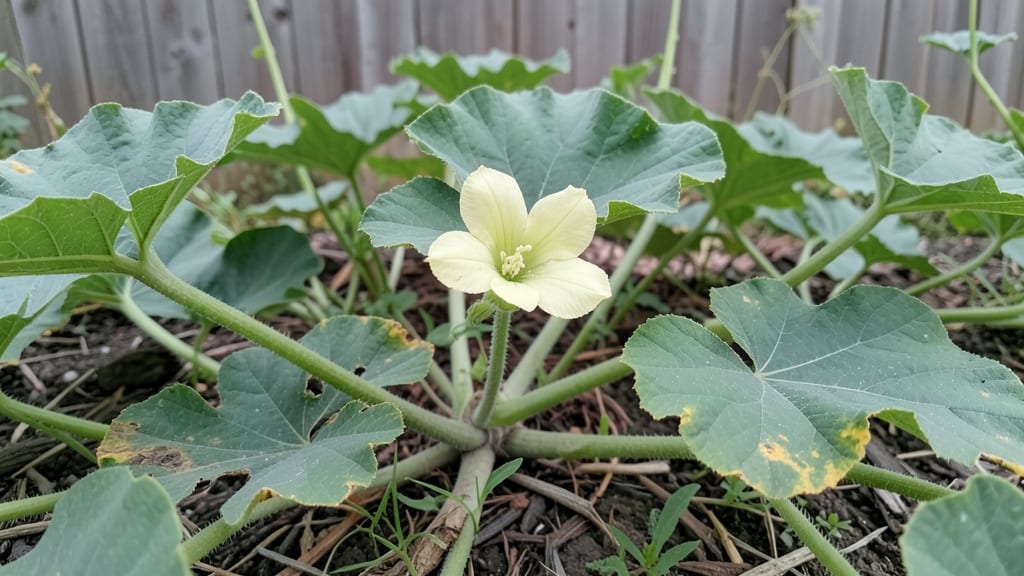
Male squash flowers are edible and prized for their delicate flavor, often used in Italian and Mediterranean cuisine like frittatas or tempura. Harvest them early in the morning before they open fully, twisting gently to avoid damaging the plant. Identify them by their single stem and undeveloped ovary at the base, unlike female flowers with small squash bulges.
These blossoms pack a subtle, slightly sweet flavor that brightens dishes without overpowering them. 🌿 In Mediterranean cooking, they're often battered and fried as tempura or lightly sautéed with garlic and herbs to preserve their delicate texture. The best part?
Their culinary potential extends beyond frying—think stuffed flowers with cheese or herbs, or even blended into soups for an elegant touch. What makes them special is their short window for harvesting: once fully open, their flavor intensifies but becomes less tender.
For gardeners, recognizing male flowers early prevents accidental harvesting of female blooms, which contain developing squash. The key visual clue is the small, bulbous ovary at the base of female flowers—male flowers lack this feature entirely.
This distinction matters because removing female flowers can reduce your squash yield, so always double-check before picking. I recommend harvesting on cool mornings when the flowers are still tightly closed for maximum tenderness.
💡 In This Article
- How to Identify and Differentiate Male Squash Blooms
- Culinary Uses and Recipes for Male Squash Flowers
How to identify and differentiate male squash blooms
Male squash flowers have a distinct botanical structure that sets them apart from their female counterparts.
The most obvious difference is the ovary at the base: male flowers feature a smooth, slender stem without any swelling, while female flowers develop a small, rounded ovary that will eventually grow into a squash.
This ovary appears as a tiny bulbous bump, roughly the size of a pea, positioned where the flower meets the vine. 🌸 The absence of this bump is your first visual clue when identifying male blooms.
Another key characteristic is the flower's positioning on the vine. Male flowers typically grow on long, slender stems that can extend up to 12 inches from the main plant, while female flowers appear closer to the main stem with their developing fruit.
The petals of male flowers are also slightly larger—about 2-3 inches in diameter—with a more delicate, almost translucent quality when harvested early. Their color is usually a vibrant yellow, though some varieties may have hints of green or orange.
The timing of harvest plays a crucial role in both flavor and plant health. Male flowers are best picked in the early morning when they're still tightly closed, as this is when their delicate petals are most tender and flavorful.
Harvesting at this stage also prevents bees from pollinating them, which would turn them into female flowers.
The ideal method is to gently twist the stem while holding the flower—this clean break minimizes damage to the plant. 🌿 What most gardeners don't realize is that removing male flowers actually benefits the plant by redirecting its energy toward fruit production rather than seed development.
Female flowers, by contrast, have that distinctive ovary swelling that makes them immediately recognizable. This ovary contains the potential for fruit development, so harvesting female flowers would reduce your squash yield.
The positioning difference alone can help you avoid mistakes: male flowers often grow on secondary vines while female flowers appear more centrally on the main stem. A helpful tip is to examine the flower's base—if you see any swelling at all, it's female and should be left alone.
Here's a quick visual checklist to confirm you're picking males:
- Stem: Single, slender stem without any swelling at the base
- Ovary: Completely smooth with no bulbous growth
- Position: Often found on secondary vines rather than main stem
- Size: Petals typically 2-3 inches wide when fully open
- Timing: Harvest when still tightly closed in early morning
The reason early morning harvesting matters goes beyond tenderness—it's about preserving the flower's natural sugars. When exposed to sunlight, the flower's starches begin converting to sugars, which intensifies the flavor but also makes the petals more fibrous.
This is why freshly harvested male flowers have that prized delicate, almost nutty flavor that's so coveted in Mediterranean cuisine. 🌞 The science here involves photosynthesis and respiration rates, which are highest during daylight hours and lowest in the cool morning air.