
Pruning
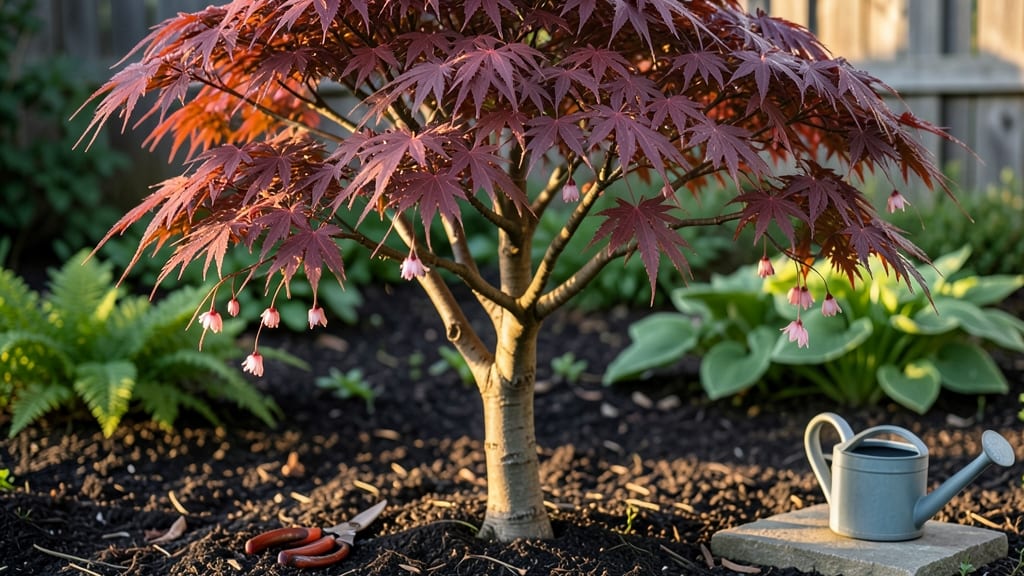
The Japanese flowering maple tree transforms any yard into a living watercolor—when you prune it right. 🌿 The secret lies in shaping it to highlight its delicate foliage and vibrant blooms, not just hacking away branches.
I’ve learned that strategic cuts in late winter or early spring encourage lush, colorful growth all season long, while avoiding the mistakes that turn your tree into a tangled mess.
You’ll need sharp pruning shears, a ladder (for taller varieties), and a clear vision of the shape you want—whether that’s a graceful weeping form or a bushy, rounded silhouette. Most pruning happens in two sessions: one for structural shaping and another for tidying up after blooms fade.
The key is removing no more than 25% of the foliage at once to avoid stressing the tree.
What you’ll get is a tree that bursts with color from spring blossoms through fiery fall foliage, with minimal effort. The branches will fill in evenly, and you’ll avoid those unsightly bare spots that ruin the delicate lace-like leaves.
Plus, the right cuts make it easier to spot pests or diseases early—before they take hold.
This works for both dwarf varieties in containers and mature specimens in the ground. Whether you’re dealing with a bloodgood’s deep red or a dissectum’s fine lace foliage, the same principles apply. Let’s get those shears ready—your tree’s next masterpiece starts with a single cut.
📚 In This Guide
- What you need
- Instructions
- Tips and common mistakes
- Wrapping up and next steps
What you need
- ● Bypass pruners: Sharp, clean pair (for branches up to ½ inch thick). Pro tip: 💡 Choose high-quality, stainless steel blades to prevent rust and ensure clean cuts.
- ○ Loppers: For thicker branches (½ to 1½ inches). Optional: Get a ratchet-style for extra leverage.
- ● Pruning saw: For branches over 1½ inches (hand saw or folding pruning saw).
- ● Disinfectant (70% isopropyl alcohol or pruning sealant): 1 small bottle to sterilize tools between cuts and prevent disease.
- ● Garden gloves: 1 pair (cut-resistant for safety).
- ○ Extension pole (optional): For high branches (6–10 ft, telescopic preferred).
- ○ Ladder (optional): Sturdy, stable ladder (if tree exceeds 10 ft). Safety first: 🔥 Always have a spotter!
- ● Weather check: Prune on a dry, cloudy day (avoid rain for 24 hours before/after).
- ● Tree knowledge: Identify dead, diseased, or crossing branches before you start.
- ● Cleanup supplies: Heavy-duty trash bags (2–3)
- ● Rake or leaf blower (for debris)
- ○ First aid kit (optional but smart): For minor scrapes or tool mishaps.
- ● 🔥 Mark your cuts: Use chalk or tape to outline branch collars before pruning.
- ● ✨ Timing matters: Late winter/early spring (just before buds swell) is ideal for Japanese maples.
- ● 🌡️ Hydration hack: Water the tree 24 hours before pruning to reduce stress.
Step-by-step guide to pruning your Japanese flowering maple
Here’s how to keep your tree vibrant, encourage lush blooms, and maintain its stunning shape—without stressing the plant.
✂️ Step 1: Time Your Pruning for Peak Health
Prune your Japanese flowering maple in late winter or early spring—just before new growth begins. This timing ensures you remove dead wood while the tree focuses energy on fresh foliage and blooms. Avoid pruning in fall, as late cuts can leave wounds vulnerable to disease before winter dormancy.
Look for dormant buds along branches—these signal the tree is ready. If your tree is young or recently planted, wait 2-3 years before pruning to let its structure develop naturally. Never prune during frost or extreme heat, as stress weakens the tree’s defenses.
✂️ Step 2: Remove Dead, Diseased, or Crossing Branches
Start by identifying dead branches—they’ll be dry, brittle, and snap easily when bent. Cut these back to the main trunk or a healthy lateral branch, making clean cuts at a 45-degree angle just outside the branch collar (the swollen area where the branch meets the trunk).
Next, remove any branches that cross or rub against each other. These create wounds and weak points. Use sharp, sterilized pruners to avoid tearing bark. If a branch is larger than ½ inch in diameter, use a pruning saw for a smooth cut. Always cut just outside the branch collar to promote faster healing.
✂️ Step 3: Shape for Balance and Airflow
Step back and assess your tree’s natural shape. Japanese flowering maples thrive with an open, airy canopy, so thin out crowded branches to improve airflow. Focus on removing overlapping branches and those growing inward—this reduces disease risk and lets sunlight reach the center.
For a more structured look, prune to preserve the tree’s natural tiers (layers of branches). Avoid cutting back more than ⅓ of the tree’s foliage in one season, or you’ll shock the plant. Use your fingers to gently bend branches—if they snap easily, they’re overgrown and need thinning.
✂️ Step 4: Encourage New Growth and Color
To enhance vibrant foliage and blooms, lightly trim back some of the oldest branches—these often produce fewer flowers. Cut just above a bud or side branch to stimulate new growth. Avoid heavy pruning on branches with colorful fall foliage, as this can reduce next year’s display.
If your tree has long, leggy branches, shorten them by ⅓ to encourage bushier growth. Always make cuts at a bud or lateral branch—never leave a stub. Seal larger cuts (over 1 inch in diameter) with pruning sealant to prevent disease entry, but skip it on small cuts, as it can trap moisture.
⏰ Step 5: Clean Up and Monitor Progress
After pruning, sterilize your tools with rubbing alcohol to prevent spreading disease. Remove all clippings from the area—leaving them can attract pests or fungal spores. Water the tree deeply to help it recover, especially if you’ve made significant cuts.
Watch for new buds forming within 2-4 weeks—this confirms the tree is responding well. If you notice yellowing leaves or stunted growth, you may have pruned too aggressively. Next year, adjust your cuts to be lighter and more selective. With patience, your Japanese flowering maple will reward you with year-round color and lush blooms.
Tips & tricks for perfect Japanese flowering maple pruning
Avoid these common mistakes—and watch your tree thrive with vibrant blooms and lush foliage for years to come.
The Right Time Matters: Late winter or early spring is non-negotiable for Japanese flowering maples. I learned this the hard way after pruning in fall—my tree struggled with disease the following spring. The key is to prune just as you see those first dormant buds swelling, signaling the tree's readiness to regrow. If your winter extends into late March, don't wait past early April.
Cutting Technique is Everything: That 45-degree angle isn't just for looks—it helps water run off cleanly and prevents rot. I always use sterilized pruners to avoid spreading disease between cuts. For branches thicker than ½ inch, switch to a pruning saw and make your cut just outside the branch collar. This small detail makes all the difference in how quickly your tree heals.
Shape with Purpose: Japanese flowering maples naturally grow in tiers, so work with that shape rather than against it. When thinning branches, aim to remove no more than ⅓ of the foliage in one season—this prevents shock. I like to visualize the tree's "skeleton" first by removing dead wood, then fill in the gaps with selective pruning to maintain that airy canopy.
Monitor Aftercare: Those new buds appearing within 2-4 weeks are your best indicator of success. If you don't see them, you may have pruned too aggressively. I always keep a pruning journal to track which cuts produced the best regrowth. Deep watering after pruning helps the tree recover, especially if you've made significant cuts—think of it as giving your tree a drink after surgery.
Pro Tips for Japanese Flowering Maple Tree
- Avoid these common mistakes—and watch your tree thrive with vibrant blooms and lush foliage for years to come.
- The Right Time Matters: Late winter or early spring is non-negotiable for Japanese flowering maples.
- Cutting Technique is Everything: That 45-degree angle isn't just for looks—it helps water run off cleanly and prevents rot.
Frequently asked questions
Got questions about keeping your Japanese flowering maple tree vibrant and healthy? Here are some of the most common queries—plus expert tips to tackle them with ease!
When is the best time to prune a Japanese flowering maple?
The ideal time to prune is late winter or early spring, just before new growth begins (typically February–March in most U.S. zones). Avoid pruning in fall or during flowering season—this can stress the tree and reduce next year’s blooms. For minor maintenance (like deadwood removal), you can trim lightly in summer, but keep it to <10% of the canopy.
How much can I trim without harming the tree?
Stick to the 10% rule: Never remove more than 10% of the tree’s foliage in a single pruning session. Japanese flowering maples are sensitive to over-pruning, which can weaken growth or even kill the tree. If you’re unsure, err on the side of caution—smaller cuts now preserve long-term health and color.
Why are my maple leaves turning brown or yellow after pruning?
Brown/yellow leaves post-pruning usually mean over-trimming or improper cuts. Check for:
- Clean cuts: Use sharp tools to avoid tearing bark.
- No large branch removal: Big cuts (over 2” diameter) should be sealed with pruning sealant.
- Watering: Deep water the tree after pruning to reduce stress.
Can I prune a Japanese flowering maple to encourage more blooms?
Yes! To boost flowers, focus on open-center pruning:
- Remove old, woody branches from the center to improve airflow.
- Thin out crossing or rubbing branches to prevent disease.
- Avoid “topping” (cutting the main stem)—this reduces flowering.
Are there smaller alternatives to full-sized Japanese flowering maples?
If space is limited, consider these stunning cultivars:
Variety
Mature Height
Color Highlights
'Bloodgood'
15–20 ft
Deep red foliage, burgundy flowers
'Emperor I'
10–15 ft
Purple-black leaves, pinkish blooms
'Shishigashira' (dwarf)
6–8 ft
Bright pink flowers, compact habit
Wrapping up and next steps
The Japanese flowering maple tree is a stunning addition to any garden, offering vibrant colors and year-round beauty—but its magic depends on strategic pruning. By mastering the right techniques (like thinning, shaping, and seasonal trims), you’ll encourage lush foliage, bold blooms, and a healthy structure.
Remember, patience and precision pay off in spectacular results!
Ready to transform your tree into a showstopper? Grab your tools, dust off your gardening gloves, and start small. Try one trim this season, observe the changes, and build confidence—your maple’s future brilliance is just a cut away! 🌸✂️