
Shrubs
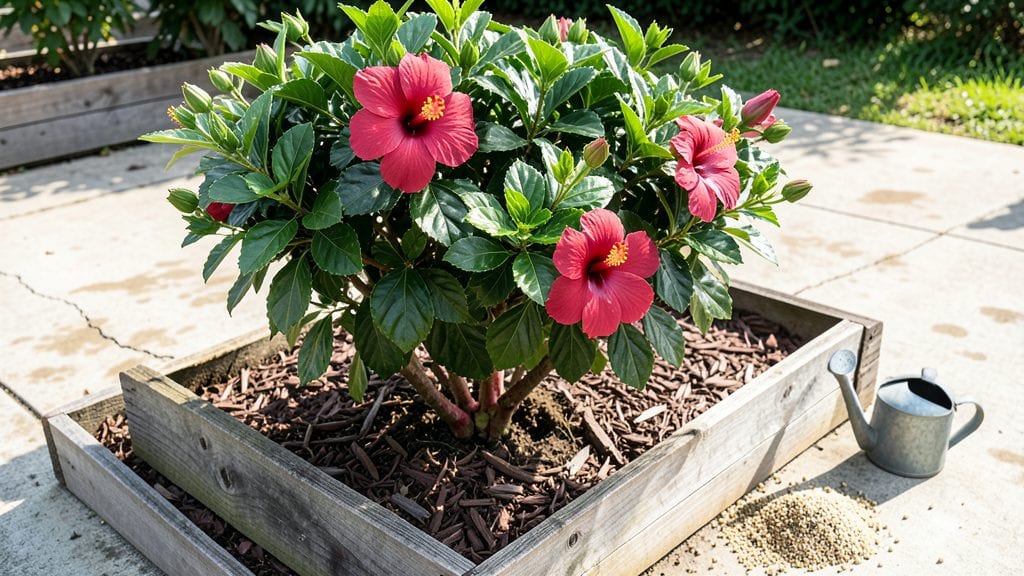
Promoting flowering in hibiscus starts with sunlight—these tropical beauties demand 6 to 8 hours of direct sun daily, or they’ll focus on leaves instead of blooms. 🌿 I learned this the hard way when my first hibiscus spent summer producing lush foliage but zero flowers.
The fix? Moving it to a sunnier spot and watching those buds appear within weeks.
Pruning is your secret weapon—cut back leggy growth in late winter or early spring to encourage bushier growth and more flower sites. Feed with a balanced fertilizer (10-10-10) every 4-6 weeks during growing season, but cut back in fall to let the plant rest.
Overfeeding in winter actually reduces blooms, so timing matters more than you’d think.
You’ll know you’re doing it right when your hibiscus bursts into color by mid-summer, with blooms lasting until frost. The key is consistency: sun, pruning, and feeding work together like a well-oiled machine. Even a small pot hibiscus can produce 50+ blooms per season with this approach.
For tropical climates, winter care shifts to protecting from cold snaps—mulch helps roots stay warm. In cooler zones, treat hibiscus as an annual or overwinter indoors with reduced light. The payoff? Year after year of dramatic, show-stopping flowers that turn heads at every garden party.
📚 In This Guide
- What you need
- Instructions
- Tips and common mistakes
- Wrapping up and next steps
What you need
- ● Hibiscus plant: A healthy, mature hibiscus (preferably Hibiscus rosa-sinensis or tropical varieties) with at least 1–2 years of growth.
- ● Balanced fertilizer: A 10-10-10 or 20-20-20 NPK fertilizer (or a high-phosphorus option like 5-10-10) for blooming. ~1 tbsp per gallon of water for liquid feeds.
- ● Pruning shears: Sharp, clean bypass pruners (sterilize with rubbing alcohol between cuts).
- ● Watering can or hose: With a gentle spray nozzle for hydration (hibiscus hates soggy roots!).
- ● Mulch: Organic mulch (e.g., pine bark or cocoa hulls) to retain moisture and regulate soil temp. ~2–3 inches around the base.
- ● pH test kit: To check soil acidity (ideal range: 6.0–6.5). Adjust with sulfur (for alkaline soil) or lime (for acidic soil).
- ● Flowering booster: Epsom salt (magnesium sulfate) or a calcium nitrate supplement for extra blooms. ~1 tbsp per gallon monthly.
- ● Slow-release granules: Osmocote or Miracle-Gro Shake ‘n Feed for steady nutrient release.
- ● Grow lights: If indoors, a full-spectrum LED grow light (12–14 hours/day) to mimic sunlight.
- ● Copper fungicide: (e.g., Copper Soap) to prevent leaf spot or rust diseases.
- ● Support stakes: For tall varieties (e.g., Hibiscus syriacus) to prevent flopping.
Step-by-Step guide to encourage hibiscus blooms
Hibiscus flowers thrive when you mimic their tropical roots—let’s focus on the key moves that trigger those bold blooms.
☀️ Step 1: Position for Maximum Sunlight
Hibiscus crave 6-8 hours of direct sunlight daily—no exceptions. Place your plant where it gets morning sun and afternoon shade in hot climates, or full sun all day in cooler areas. You’ll know it’s happy when leaves stay deep green and stems grow sturdy.
If indoors, position near a south-facing window or use a grow light for 14 hours daily. Watch for leggy growth—this means your hibiscus is stretching for light. Move it closer if stems look thin or leaves space out too far apart.
💧 Step 2: Water Deeply and Consistently
Hibiscus roots need moist but never soggy soil. Water when the top 1-2 inches feel dry—stick your finger in to check. Overwatering causes root rot, while underwatering stresses the plant and halts blooms. I use the "soak-and-drain" method: water until it runs out the drainage holes, then wait.
In hot weather, mulch around the base with 2-3 inches of organic mulch to retain moisture. Yellowing leaves or drooping stems signal thirst—adjust your watering schedule immediately. Hibiscus hate sitting in wet feet, so ensure pots have drainage holes.
✂️ Step 3: Prune Strategically for More Blooms
Prune in early spring or after flowering to encourage bushier growth. Cut back 1/3 of the plant’s height to stimulate new branches where buds form. Always prune just above a leaf node—this is where new growth sprouts. Avoid cutting into old wood; hibiscus bloom best on fresh, green growth.
Deadhead spent blooms regularly to redirect energy into new flowers. Pinch off flowers that don’t open fully—they’re energy drains. Here’s the thing: hibiscus respond well to a little stress, so pruning might look harsh at first, but you’ll see thicker growth and more blooms within weeks.
🌿 Step 4: Feed for Vibrant Blooms
Use a balanced, water-soluble fertilizer (like 10-10-10) every 4-6 weeks during growing season. Hibiscus are heavy feeders, but too much nitrogen makes them grow leaves instead of flowers. Switch to a high-phosphorus fertilizer (like 5-10-5) when buds form to boost blooming.
I also mix in 1 tablespoon of Epsom salt per gallon of water monthly—it provides magnesium, which prevents yellowing leaves and keeps flowers vibrant. Stop fertilizing in fall and winter; hibiscus rest then and need less support.
⏰ Step 5: Adjust for Seasonal Needs
In winter, hibiscus slow down. Move potted plants indoors near a bright window or reduce watering by half. If grown outdoors in cold climates, mulch heavily and protect from frost. You’ll see new growth in spring—this is your cue to resume regular care.
Watch for pests like aphids or spider mites, which suck plant sap and weaken blooms. Spray with neem oil if you spot them. Real talk: hibiscus are tough, but they reward consistency. Stick with these steps, and you’ll see those dramatic blooms year after year.
Tips & tricks for promoting hibiscus blooms
Took me years to figure out why my hibiscus would bloom sporadically—turns out, it's all about the details. Here's what nobody tells you about getting those vibrant flowers reliably.
The Light Factor: In Step 1, when positioning your hibiscus, pay attention to leaf color—bright green means it's getting enough sun, but if leaves start turning yellow or brown, you're either overwatering or not meeting the 6-8 hours of sunlight requirement. For indoor plants, rotate your pot every few weeks so all sides get equal light exposure from that south-facing window or grow light. Uneven growth is a dead giveaway your plant's stretching for more light.
Pruning Precision: When you're cutting back that 1/3 of the plant's height in Step 3, always use clean, sharp pruners to avoid crushing stems. The key is to cut just above a leaf node—this is where new growth will emerge. I like to make my cuts at a 45-degree angle to prevent water from pooling on the cut surface. And here's the thing: don't be afraid to prune aggressively in early spring—hibiscus are surprisingly resilient and will reward you with bushier growth and more blooms.
Fertilizer Timing: The 4-6 week feeding schedule in Step 4 is crucial, but timing matters just as much as what you use. Always fertilize in the morning so the plant has time to absorb nutrients before evening. I've found that mixing my Epsom salt solution first thing in the morning gives the magnesium time to work its magic throughout the day. And when you switch to that high-phosphorus fertilizer for bud formation, apply it consistently—missed feedings can delay blooming by weeks.
Seasonal Transition Strategy: That winter slowdown in Step 5 is your hibiscus's natural rest period—don't try to force growth. I've learned to move my potted hibiscus to a bright indoor spot by mid-October, and reduce watering immediately. The plant will thank you with vigorous new growth in spring, and you'll see more blooms than ever. Just remember: hibiscus are tropical plants at heart, so they need that winter break to recharge.
Pro Tips for Promote Flowering In Hibiscus
- Took me years to figure out why my hibiscus would bloom sporadically—turns out, it's all about the details.
- For indoor plants, rotate your pot every few weeks so all sides get equal light exposure from that south-facing window or grow light.
- Pruning Precision: When you're cutting back that 1/3 of the plant's height in Step 3, always use clean, sharp pruners to avoid crushing stems.
Frequently asked questions
Got questions about getting your hibiscus to bloom like a pro?
You’re not alone! Here are some of the most common queries—plus quick, actionable answers to keep those gorgeous flowers coming.
When is the best time to prune hibiscus for more flowers?
Prune your hibiscus right after flowering (late spring to early summer) to encourage new growth and blooms. Avoid heavy pruning in fall or winter, as this can stress the plant. Light trimming to shape is fine, but save major cuts for the growing season! Pro tip: Use clean, sharp shears to prevent disease.
How long does it take for hibiscus to flower after pruning?
With proper care, you’ll see new buds forming in 6–8 weeks after pruning. Factors like sunlight, soil health, and fertilizer (especially phosphorus) speed this up. If blooms don’t appear, check for pests, overwatering, or nutrient deficiencies—adjust and give it time!
Can I use coffee grounds or eggshells to boost hibiscus flowers?
Both are natural, low-cost tricks to enhance blooms. Coffee grounds add nitrogen (for foliage) and acidity, while crushed eggshells provide calcium. Mix them into the soil sparingly—too much can harm roots. For best results, combine with a balanced fertilizer (like 10-10-10) every 4–6 weeks.
Why isn’t my hibiscus flowering, even with full sun?
Lack of blooms often stems from imbalance. Check these quick fixes:
- Nutrients: Hibiscus crave phosphorus (the middle number in fertilizer). Switch to a bloom-boosting formula like 5-10-5.
- Watering: Overwatering stresses roots. Let soil dry slightly between waterings.
- Variety: Some hibiscus (like Hibiscus rosa-sinensis) bloom year-round in warm climates, while others need cooler seasons to rest.
What’s the easiest way to revive a non-flowering hibiscus?
Start with a reset routine:
- Trim back 1/3 of leggy growth to encourage bushier, flower-heavy regrowth.
- Fertilize with a high-phosphorus feed (like bone meal) and repot if roots are crowded.
- Move to a sunnier spot (6+ hours of direct light daily).
- Reduce water if soil stays soggy—hibiscus hate "wet feet."
Wrapping up and next steps
Promoting vibrant blooms in your hibiscus is all about consistent care—sunlight, balanced feeding, and smart pruning are your best allies! 🌸 With patience and the right techniques, you’ll soon be rewarded with stunning, colorful flowers that’ll make your garden the talk of the neighborhood.
Ready to see those petals pop? Start small: pick one tip from this guide—like adjusting sunlight or fertilizing—and watch your hibiscus transform before your eyes!