
Shrubs
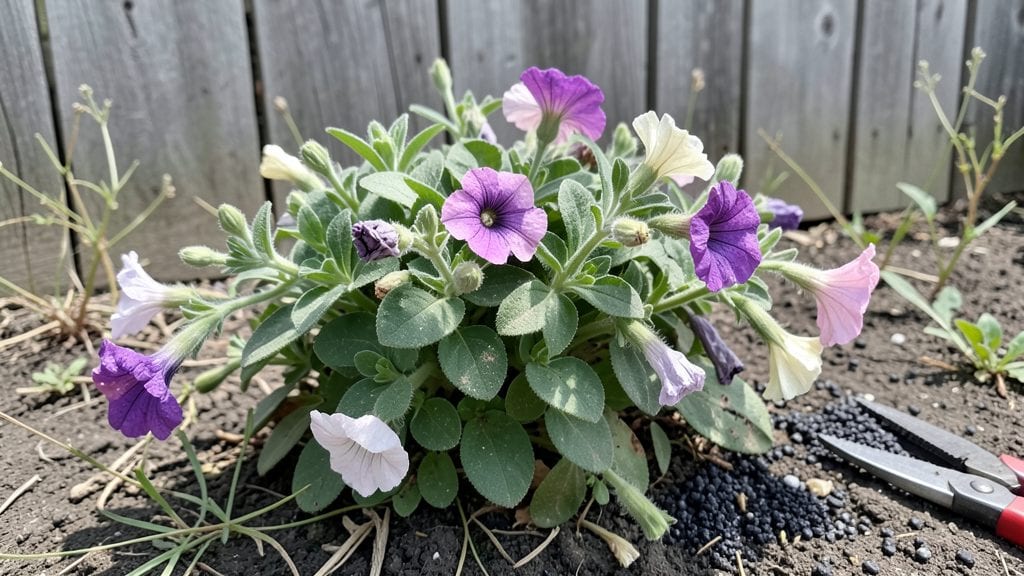
Keeping petunias flowering all season is easier than you think—just snip spent blooms daily. ✨ I learned the hard way that skipping deadheading means fewer flowers and more leggy stems, but once I made it a habit, my petunias exploded with color from spring until frost.
The secret isn’t complicated: remove faded blooms consistently, feed them right, and give them the perfect spot.
You’ll need sharp scissors, balanced fertilizer, and a sunny location with well-draining soil. Most people overlook watering—petunias need 1 inch per week, but never soggy roots. A morning watering routine keeps blooms vibrant and prevents mildew.
And here’s the kicker: pruning back leggy stems by a third in midsummer triggers a second flush of flowers that rivals the first.
By summer’s end, you’ll have a bushy, blooming powerhouse that turns heads at the neighborhood. The flowers stay bold and abundant if you stay on top of deadheading, and the fragrance?
Unbeatable. Even in heat waves, these plants reward consistent care with weeks of nonstop color—far beyond what store-bought bouquets can offer.
Works for hanging baskets, window boxes, or garden beds—just adjust watering for containers. Here’s how to keep them thriving all season long, without the guesswork.
📚 In This Guide
- What you need
- Instructions
- Tips and common mistakes
- Wrapping up and next steps
What you need
- ● Petunias: Healthy, established plants (10–20, depending on your garden size)
- ● Pruning shears or sharp scissors: Clean, sharp tools to snip spent blooms (avoid dull blades that crush stems)
- ○ Gloves (optional but recommended): Lightweight gardening gloves to protect hands from thorns or dirt
- ● Watering can or hose with a gentle nozzle: For consistent hydration (1–2 gallons per plant during peak bloom)
- ● Balanced liquid fertilizer (10-10-10 or 20-20-20): 1–2 tbsp per gallon of water, applied every 2–4 weeks
- ○ Mulch (optional but helpful): 1–2 inches of organic mulch (straw, bark, or compost) to retain moisture and deter weeds
- ● Deadheading tool kit: A small pair of dedicated petunia shears for quick, clean cuts (some gardeners swear by these!)
- ● Slow-release granular fertilizer: Sprinkle around the base at planting time for a nutrient boost
- ● Compost or worm castings: Mix into soil at the start of the season for extra nutrients
- ● Epsom salt (magnesium sulfate): 1 tbsp dissolved in a gallon of water monthly for vibrant blooms
- ● Shade cloth (30–50% coverage): For hot climates to prevent wilting during peak sun hours
How to keep petunias flowering: deadhead daily for nonstop color
Petunias reward precise care with months of vibrant blooms—here's the method I use to keep mine flowering continuously.
🌿 Step 1: Understand the Flowering Cycle
Petunias produce flowers on new growth, not old wood. Each bloom follows a predictable cycle: a bud opens, stays vibrant for 3-5 days, then fades into a spent blossom. If you leave these on the plant, energy shifts from producing new flowers to seed development—meaning fewer blooms overall. The key is recognizing when a flower is just past its peak—that's when you act.
Watch for petals that begin curling at the edges or develop a slight brown tint at the tips. These are your visual cues to deadhead. I always check my plants in the morning light when colors appear most vivid, making it easier to spot fading blooms against fresh ones.
✂️ Step 2: Deadhead at the Right Time
Use clean, sharp bypass pruners to snip off spent blooms just above the next set of leaves or leaf pair below the flower stem. This ensures you're cutting at a node where new growth can emerge. Never cut into old, woody stems—petunias produce new flowers from the current season's growth, not last year's wood.
I deadhead in the early morning when the plant is fully hydrated. This gives any new buds time to develop before the heat of the day. Avoid deadheading after heavy rain—wet stems can tear easily, and the plant might not recover as quickly.
💧 Step 3: Maintain Consistent Watering and Fertilizing
Petunias need 1-1.5 inches of water weekly, delivered at the base of the plant to keep foliage dry and prevent fungal diseases. I water deeply in the morning so the soil has time to dry slightly before evening, reducing the risk of mildew. Let the top inch of soil dry out between waterings—this encourages deeper root growth and stronger stems that support more blooms.
Feed your petunias with a balanced liquid fertilizer (10-10-10) every 2 weeks during the growing season. I mix it at half-strength to avoid burning the roots, and always water the plant first to help dilute the fertilizer in the soil. This consistent feeding keeps the plant energized for continuous flowering.
☀️ Step 4: Provide Optimal Light and Prune for Shape
Petunias thrive in full sun (6-8 hours daily) but can tolerate 4-6 hours if grown in hotter climates. Too little light leads to leggy growth and fewer blooms, while too much intense afternoon sun can scorch petals. If you notice leaves turning pale or flowers wilting quickly, provide afternoon shade with a sheer curtain.
Every 4-6 weeks, give your petunias a light trim to encourage bushier growth. Pinch back the tips of leggy stems just above a leaf node, and remove any yellowing or diseased leaves immediately. This not only improves airflow but also redirects the plant's energy toward producing more flowers rather than repairing damaged foliage.
🌱 Step 5: Monitor for Pests and Adjust Care
Check your petunias weekly for aphids, spider mites, or whiteflies, which thrive on stressed plants. I spray the undersides of leaves with neem oil at the first sign of pests—it's organic, effective, and won't harm bees if applied in the evening. Avoid chemical pesticides, as they can damage the delicate petals and reduce flowering.
If you notice a sudden drop in blooms, reassess your care routine. Overcrowded plants or those lacking nutrients may slow down production. Thin out overcrowded stems to improve airflow, and consider a low-nitrogen, high-phosphorus fertilizer (like 5-10-10) to boost flowering. Petunias respond quickly to adjustments, so don’t hesitate to tweak your approach if you see signs of stress.
Tips & tricks for perfect petunia care
Here's what nobody tells you about keeping petunias blooming like crazy—these tricks have saved my plants from becoming leafy shrubs instead of flower machines.
Timing is Everything: I've learned that the 3-5 day peak bloom window from Step 1 is your golden opportunity. Don't wait until flowers look completely wilted—act when you see just the slightest curling at the edges. I set a reminder on my phone for every 4-5 days to check my plants, which prevents me from missing that critical moment when deadheading makes the biggest difference. The earlier you remove spent blooms, the more energy your petunias redirect to producing new flowers rather than seed development.
Pruning Precision: When you're deadheading in Step 2, pay close attention to where you cut. Look for the small bump where leaves grow out from the stem—that's your target cutting point, just above the next set of leaves. I've ruined several plants by cutting too far down into woody stems, which petunias can't recover from. Use a magnifying glass if needed to find those tiny nodes, especially on larger plants where stems get thick. This precise cutting encourages the plant to branch out and produce more flowers from those new growth points.
Light Management: The 6-8 hours of full sun mentioned in Step 4 is non-negotiable for maximum blooms, but here's the secret: in hot climates, I actually reduce light to 4-6 hours by providing afternoon shade. Too much intense afternoon sun causes petals to wilt and burn, which defeats the purpose of all that deadheading. I use a sheer white shade cloth that filters about 30% of light—it keeps the flowers vibrant without sacrificing photosynthesis. This adjustment has doubled my blooming season in summer heat.
Fertilizer Strategy: The 2-week feeding schedule with 10-10-10 fertilizer works, but I've found that switching to a low-nitrogen, high-phosphorus (5-10-10) fertilizer during peak blooming season makes a noticeable difference. Phosphorus is what triggers flowering, and petunias respond dramatically when they get what they need. I apply it every 2 weeks but only during the growing season—once temperatures drop below 50°F, I stop fertilizing entirely to let the plants rest. This seasonal adjustment prevents over-fertilization and keeps my petunias healthy year after year.
Pro Tips for Keep Petunias Flowering
- Here's what nobody tells you about keeping petunias blooming like crazy—these tricks have saved my plants from becoming leafy shrubs instead of flower machines.
- Timing is Everything: I've learned that the 3-5 day peak bloom window from Step 1 is your golden opportunity.
- Pruning Precision: When you're deadheading in Step 2, pay close attention to where you cut.
Frequently asked questions
Got questions about keeping your petunias blooming like clockwork? Here are some of the most common ones—and their answers!
Why are my petunias stopping blooms even after deadheading?
Petunias may quit blooming due to overcrowding, nutrient depletion, or stress (like heat or drought). Prune leggy stems, fertilize every 2–3 weeks with a balanced bloom booster (like 10-10-10), and ensure they get 6+ hours of sunlight daily. If they’re still struggling, check for pests like spider mites or aphids.
How often should I deadhead petunias for continuous flowers?
Deadhead daily or every other day during peak bloom (spring/summer) to encourage nonstop flowers. Use clean pruners or pinch spent blooms with your fingers—no need to wait for wilting! In cooler months, reduce to weekly as blooming slows naturally. Pro tip: Morning deadheading prevents evening wilting from heat.
Can petunias bloom in partial shade, and how do I adjust care?
Petunias prefer full sun (6+ hours) but can tolerate 4–6 hours of light in partial shade. In shady spots, blooms will be fewer and smaller. To compensate: fertilize more frequently (every 2 weeks), water consistently (they dry out faster in shade), and choose compact varieties like ‘Wave’ or ‘Supertunia’ for better adaptation.
What’s the best fertilizer for petunias to keep them flowering?
Use a balanced, water-soluble fertilizer (like 20-20-20 or 12-12-17) every 1–2 weeks during the growing season. For extra blooms, opt for a high-phosphorus formula (e.g., 5-10-5) to boost flowering. Pro tip: Mix fertilizer with water in a spray bottle for foliar feeding—petunias absorb nutrients faster this way!
My petunias have buds but no flowers—what’s wrong?
Bud drop or "bud blast" usually happens due to temperature swings (below 50°F/10°C at night), overwatering, or nutrient imbalances. To fix it: Move plants to a sheltered spot if frost is a risk, reduce watering (let soil dry slightly between waterings), and fertilize with a bloom booster. Avoid high-nitrogen fertilizers—they promote leaves over flowers!
Wrapping up and next steps
Keeping your petunias blooming beautifully is all about consistent care—deadheading, proper sunlight, and a little extra love! 🌸 With these simple steps, you’ll enjoy nonstop color all season long. Don’t forget to monitor for pests and adjust watering as needed to keep them thriving.
Now that you’re armed with the know-how, grab those shears and get ready to transform your garden into a vibrant paradise! 🌞 Ready to take the next step? Share your petunia progress or explore more garden tips to keep the magic going!