
Shrubs
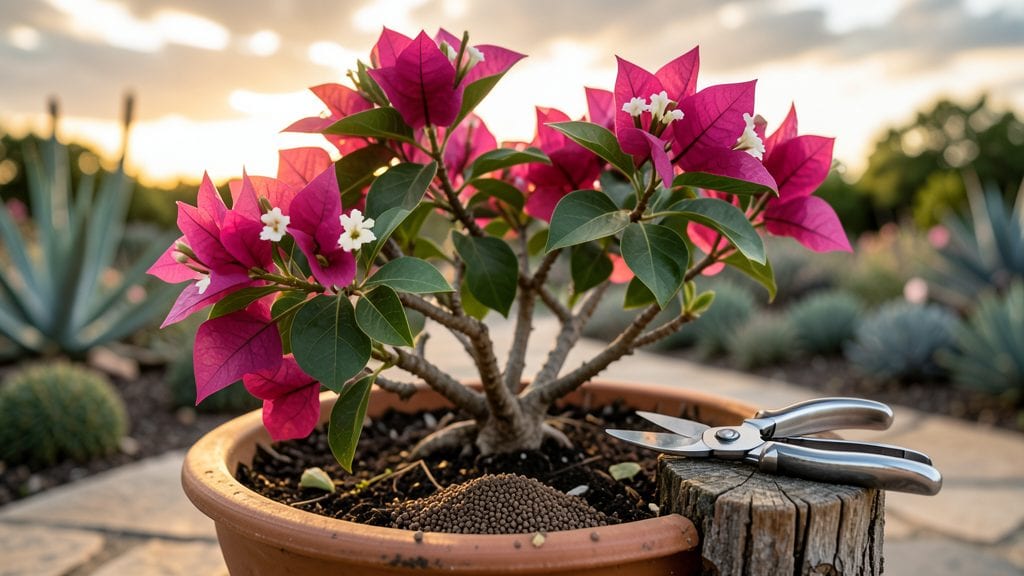
Keeping bougainvillea flowering nonstop turns your patio into a riot of color year after year. I’ve learned the hard way that most gardeners overwater and under-prune, which kills the blooms faster than you’d think.
The secret lies in mimicking its natural dry-climate habits—sharp pruning cuts, sparse watering, and feeding it just enough to keep growing.
You’ll need sharp pruning shears, a balanced fertilizer (half-strength), and well-draining soil—no soggy roots allowed. Bougainvillea thrives in full sun, but in scorching summers, afternoon shade prevents leaf scorch.
Water only when the top inch of soil feels bone-dry, and never let it sit in wet soil. That’s when root rot sneaks in and steals your flowers.
With the right cuts—just above leaf nodes—you’ll trigger fresh growth and more blooms in 4-6 weeks. Feed every 4-6 weeks during growing season, and cut back 25-30% in late winter to shape the plant.
The payoff? A bush bursting with color that lasts from spring through fall, even in hot, dry climates.
Works for both container plants and in-ground shrubs, whether you’re in Zone 9-11 or growing in pots on a balcony. The key is patience—bougainvillea rewards consistency over quick fixes. Let’s get those blooms going strong!
📚 In This Guide
- What you need
- Instructions
- Tips and common mistakes
- Wrapping up and next steps
What you need
- ● Pruning shears – Sharp, sterilized (bypass or anvil type, 6–8" blades). 1 pair (invest in quality to avoid jagged cuts!).
- ● Gloves – Garden or work gloves (thorn-resistant if your bougainvillea has spiky stems). 1 pair.
- ● Fertilizer – Balanced (10-10-10) or high-phosphorus (5-10-10) granular or liquid fertilizer. 1 bag (20–40 lbs) or 1 gallon liquid.
- ● Watering can or hose with nozzle – Even water distribution is key! 1 unit.
- ● Mulch – Organic (pine bark, straw) or inorganic (gravel). 2–3 inches (spread around the base).
- ○ pH test kit – Soil pH should be 6.0–7.0. 1 kit (optional but helpful if soil is unknown).
- ● Epsom salt – For magnesium boost (1 tbsp per gallon of water). Small container.
- ● Slow-release fertilizer spikes – For convenience (follow package instructions). 1–2 spikes.
- ● Plant support (cage or trellis) – If training bougainvillea vertically. 1 unit.
- ● Fungicide spray – Preventative for powdery mildew. 1 bottle.
Step-by-step guide to maintaining bougainvillea blooms year-round
Here's how to transform your bougainvillea into a vibrant, continuous-flowering powerhouse.
Understand the Pruning Cycle for Maximum Blooms
Bougainvillea flowers on new growth, so strategic pruning triggers fresh shoots and nonstop color. Prune twice yearly: late winter (just before new growth starts) and mid-summer (after the first major bloom flush). Always cut back to a leaf node—never to bare wood—so the plant has energy to produce new stems.
Focus on shaping rather than aggressive cutting. Remove only 1/3 of the plant's total volume per pruning session to avoid shocking it. Use sharp, sterilized pruners to make clean cuts at a 45-degree angle just above a leaf node. This encourages lateral branching where the flowers form.
Feed with the Right Fertilizer Schedule
Bougainvillea responds best to a low-nitrogen, high-phosphorus fertilizer (like a 5-10-10 blend) to promote flowering over leafy growth. Apply every 4-6 weeks during the growing season (spring through fall), but never fertilize in winter—this encourages tender new growth that won't survive cold snaps.
Incorporate 1 tablespoon of Epsom salt per gallon of water monthly during bloom season to boost magnesium, which prevents yellowing leaves and supports robust flower production. Always water thoroughly before and after fertilizing to prevent root burn.
Master Watering for Consistent Blooms
Bougainvillea thrives on drought-like conditions—overwatering is the fastest way to kill blooms. Water deeply once a week (or when the top 2-3 inches of soil feel dry) during hot months, but reduce to every 2-3 weeks in winter. The plant stores water in its thick stems, so brief wilting is normal and actually stimulates flowering.
Mulch around the base with 2-3 inches of organic mulch to retain moisture and regulate soil temperature. Avoid wetting the leaves when watering—this can lead to fungal issues. If you notice the tips of new growth turning brown, you're likely overwatering.
Position for Optimal Sunlight and Airflow
Bougainvillea demands full sun (6+ hours daily) to produce vibrant blooms. If grown in containers, rotate the pot quarter-turn weekly so all sides receive even light. In cooler climates, move pots to a sheltered spot before temperatures drop below 40°F—the plant is frost-sensitive.
Ensure good airflow by spacing plants 3-4 feet apart to prevent humidity-related diseases. Prune back any crowded or leggy growth that blocks sunlight from reaching the center of the plant. You'll see the most intense color and longest bloom season when the plant gets unobstructed sun.
Encourage Year-Round Blooming with Seasonal Adjustments
To keep bougainvillea flowering in cooler months, provide supplemental grow lights (12-14 hours daily) if natural light drops below 6 hours. Reduce watering by half in winter and avoid fertilizing entirely. The plant enters a natural dormancy period, but maintaining minimal care prevents dieback.
Watch for bud drop—a sign of stress from overwatering, sudden temperature changes, or insufficient light. If you see buds forming but not opening, increase sunlight exposure immediately. With consistent care, your bougainvillea can produce blooms nearly year-round in ideal conditions.
Tips & tricks for perfect bougainvillea blooms year-round
Transforming your bougainvillea into a nonstop flowering powerhouse requires precision in timing and technique—here’s how to elevate your care routine beyond the basics.
Pruning Precision: When you prune in late winter and mid-summer, focus on cutting just above a leaf node at a 45-degree angle to encourage lateral branching. This isn’t just about shaping—it’s about stimulating the exact growth points where flowers will form. I’ve found that using sterilized pruners prevents disease transmission between cuts, which is especially important if you’re working with multiple plants. The goal is to remove only one-third of the plant’s volume per session; anything more risks shocking the plant and halting bloom production.
Fertilizer Timing is Everything: The 4-6 week interval for low-nitrogen, high-phosphorus fertilizer applications is non-negotiable for flowering, but the real secret lies in the when. Apply it in the morning so the plant has the entire day to absorb nutrients before evening. And while you’re at it, that monthly Epsom salt treatment? Mix it into a gallon of water and apply it after watering thoroughly—this prevents root burn by giving the plant time to absorb moisture first. I’ve seen bougainvilleas with yellowing leaves recover completely within weeks of this adjustment.
Watering Wisdom: The once-a-week watering guideline works best when you check soil moisture first—those top 2-3 inches should be dry before you water again. Here’s the trick: water deeply until it runs out the drainage holes, then let the excess drain completely. Overwatering is the silent bloom-killer, and brief wilting actually triggers more vibrant flowers. In winter, when you reduce to every 2-3 weeks, let the soil dry out more between waterings; this mimics the plant’s natural dormancy period and prevents bud drop.
Lighting Strategy for Winter: When natural light drops below 6 hours daily, supplement with grow lights for 12-14 hours. Position the lights about 6 inches above the plant and use cool-white bulbs—these mimic sunlight without overheating the foliage. I’ve kept bougainvilleas flowering through winter this way, even in northern climates. Just remember to turn them off at night to allow the plant its natural rest period.
Pro Tips for Keep Bougainvillea Flowering
- Transforming your bougainvillea into a nonstop flowering powerhouse requires precision in timing and technique—here’s how to elevate your care routine beyond the basics.
- Pruning Precision: When you prune in late winter and mid-summer, focus on cutting just above a leaf node at a 45-degree angle to encourage lateral branching.
- Fertilizer Timing is Everything: The 4-6 week interval for low-nitrogen, high-phosphorus fertilizer applications is non-negotiable for flowering, but the real secret lies in the when.
Frequently asked questions
Got questions about keeping your bougainvillea in full bloom? You’re not alone! Here are some of the most common concerns—and their solutions—to help you maintain that vibrant, flower-filled display year-round.
Why isn’t my bougainvillea flowering, even though I’m following all the care tips?
Bougainvilleas often skip flowering if they’re not getting enough sunlight (at least 6–8 hours daily) or if they’re overwatered. They also need a dormancy period in cooler months—prune back in late winter to encourage new growth and blooms. Check for pests too; spider mites or aphids can stress the plant.
How long does it take for bougainvillea to flower after pruning?
With proper care, you’ll see new blooms in 6–8 weeks after pruning. The key is to trim just after flowering season (late winter/early spring) to promote fresh, vigorous growth. Avoid heavy pruning in summer—it can delay blooms until fall.
Can I use regular garden soil for bougainvillea, or does it need something special?
Bougainvilleas thrive in well-draining soil—regular garden soil can lead to root rot. Mix in cactus/succulent mix or add perlite/sand (20–30%) to improve drainage. They’re drought-tolerant once established, so avoid soggy soil at all costs!
What’s the best way to revive a bougainvillea that’s stopped flowering and looks leggy?
Leggy bougainvilleas need a hard prune (cut back by ⅓ to ½) in late winter. Pair this with balanced fertilizer (10-10-10) every 4–6 weeks during growing season. Move it to a sunnier spot if possible—shade is a top culprit for weak growth.
Can I grow bougainvillea in containers, and how does that affect flowering?
Container-grown bougainvilleas often flower more prolifically because you control water and nutrients. Use a large pot (15+ gallons) with drainage holes, and repot every 2–3 years. Pro tip: Root prune (trim roots by 10%) when repotting to encourage bushier growth and more blooms!
Wrapping up and next steps
Keeping your bougainvillea in full bloom is all about balance—pruning to encourage growth, feeding it the right nutrients, and watering just enough to keep it thriving without overdoing it. With these simple yet effective steps, you’ll enjoy vibrant, nonstop color that brightens up any space. 🌸
Ready to transform your bougainvillea into a flowering superstar? Start by auditing your care routine—adjust pruning, feeding, and watering based on what you’ve learned, and watch those blooms multiply! 🌟