
Container Gardens
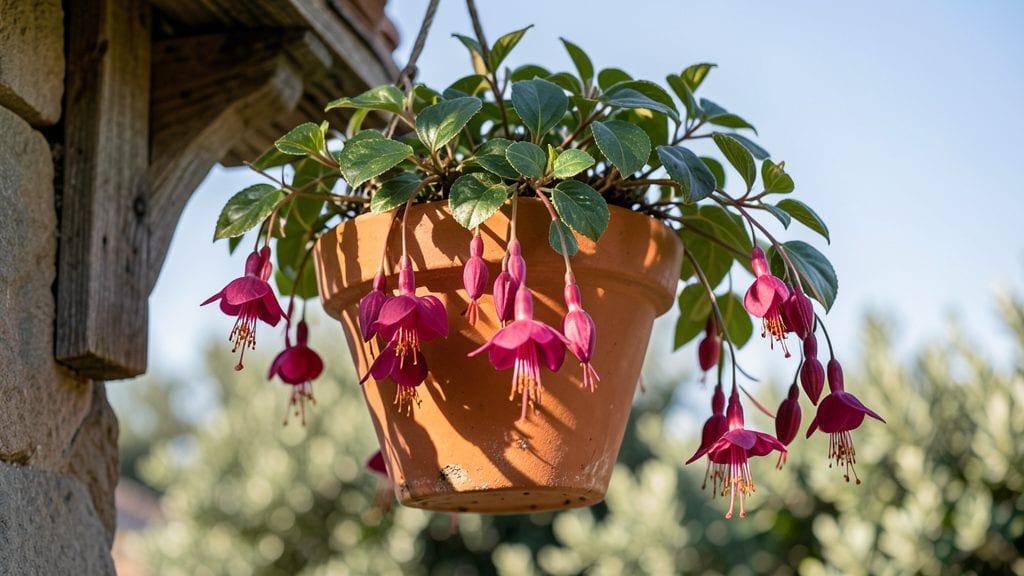
Fuchsia hanging basket flowers bring cascading color to any sunlit corner. ✨ I’ve filled my porch with these dramatic blooms, and the way they spill over the edges creates a living waterfall of pink, purple, and red.
The key isn’t just picking fuchsias—it’s layering them with trailing plants like sweet potato vine to fill gaps and extend the show.
Start with a 14-inch basket and a mix of fuchsia varieties—some with long, pendulous blooms and others with bushier growth. Add a slow-release fertilizer at planting to keep flowers blooming all season long.
Most garden centers carry pre-mixed hanging basket soil, but I swear by adding a handful of perlite to improve drainage.
By mid-summer, your basket will be a burst of velvety petals that draws hummingbirds and neighbors alike. The trick is keeping it hydrated without soggy roots—water deeply every morning, and pinch off spent blooms to encourage more flowers. A little maintenance turns a pretty basket into a showstopper.
Perfect for patios, balconies, or even a tree-shaded corner. The same principles work for fuchsias in window boxes or wall planters—just adjust the container size to fit your space. Let’s make your outdoor space pop!
📚 In This Guide
- What you need
- Instructions
- Tips and common mistakes
- Wrapping up and next steps
What you need
- ● Fuchsia plants: 3–5 healthy Fuchsia varieties (e.g., 'Giant Marble,' 'Lady Boothby,' or 'Appleton’s Ruby'). Choose trailing types for maximum hanging drama!
- ● Hanging basket: 1 12–16-inch diameter basket with pre-drilled drainage holes (plastic, coconut fiber, or metal for durability).
- ● Potting mix: 1 bag well-draining, peat-free mix (e.g., 60% coco coir, 30% perlite, 10% worm castings). Avoid heavy garden soil!
- ● Drainage layer: 1–2 inches of gravel, hydroponic clay pebbles, or broken terracotta pots (for root aeration).
- ● Slow-release fertilizer: 1 packet balanced, organic fertilizer (e.g., 10-10-10 or fish emulsion) mixed into the soil.
- ○ Moss or liner (optional):strong> A layer of sphagnum moss or coconut fiber liner to retain moisture and prevent root circling.
- ● Gloves: 1 pair gardening gloves (nitrile or leather for grip).
- ● Trowel or small shovel: 1 hand trowel (3–4 inches wide) for planting.
- ● Scissors or pruners: 1 pair clean, sharp pruners (for trimming roots or spent blooms).
- ● Watering can: 1 spray or drip nozzle can (to avoid disturbing soil).
- ● Measuring tape or ruler: 1 (to ensure even spacing between plants).
- ○ Support stakes (optional): 2–3 bamboo or plastic stakes (if fuchsias need extra support as they grow).
- ● Sunlight: A location with morning sun + afternoon shade (fuchsias hate scorching midday rays!).
- ● Watering routine: Commit to daily watering (or misting) in hot weather—fuchsias thrive on consistency!
- ○ Humidity boost (optional): A humidity tray or pebble tray under the basket (especially for dry climates).
- ● Deadheading: Pinch or snip spent blooms weekly to encourage nonstop flowering.
Step-by-Step instructions for creating fuchsia hanging basket flowers
Transform your sunlit patio or balcony into a cascading floral display with these fuss-free steps.
🪴 Step 1: Choose and Prepare the Right Hanging Basket
Select a 12-14 inch diameter hanging basket with sturdy wire or plastic construction—fuchsias get heavy when lush. I like baskets with multiple drainage holes at the bottom, as fuchsias hate soggy roots. Line the basket with 1-2 inches of sphagnum moss (not plastic liners) to help retain moisture while still allowing drainage.
Fill the basket ¾ full with a lightweight potting mix designed for hanging baskets. This mix should contain pearlite or vermiculite for aeration. Gently press the soil down so it's firm but not compacted—this gives roots room to spread without falling through the holes.
🌱 Step 2: Plant Fuchsia Starts at the Right Depth
Dig a hole in the center of the basket twice as wide as the root ball of your fuchsia plant. Place the plant in so the top of the root ball sits just below the basket's rim—this ensures the plant sits securely and won't tip over as it grows. Fill the hole with soil and press gently around the roots to eliminate air pockets.
Here's the thing—fuchsias grow best when planted deeply enough that their stems can trail freely. If your plant has multiple stems, space them evenly around the basket's edge. Water thoroughly after planting until water runs out the drainage holes—this settles the soil and helps roots establish contact.
☀️ Step 3: Position for Bright, Indirect Light
Fuchsias thrive in morning sun with afternoon shade—they'll scorch in direct afternoon sunlight. Place your basket where it gets 4-6 hours of gentle sunlight daily. A south-facing window or porch with afternoon shade works perfectly. If you only have full sun, position it where it gets bright but diffused light all day.
Watch for yellowing leaves or drooping flowers—these are signs of too much sun. If leaves crisp at the edges, move the basket to a shadier spot. Fuchsias also appreciate good air circulation, so avoid cramming baskets too close together. A gentle breeze helps prevent fungal diseases.
💧 Step 4: Water and Fertilize for Continuous Blooms
Water your fuchsia basket daily in hot weather, ensuring the soil stays evenly moist but not soggy. The best way to check is to stick your finger 1 inch into the soil—if it feels dry, it's time to water. I use a watering can with a long spout to direct water to the soil without disturbing the delicate flowers.
Feed your fuchsias every 2 weeks during the growing season with a balanced liquid fertilizer (10-10-10 or 20-20-20). Follow the package instructions for dilution—over-fertilizing burns roots and causes leaf drop. You'll know you're doing it right when you see new growth and abundant blooms within a few weeks.
✂️ Step 5: Prune and Maintain for Year-Long Color
Pinch back the tips of new growth when stems reach 4-6 inches to encourage bushier plants. This simple step prevents leggy growth and produces more flowers. Deadhead spent blooms weekly by snipping the stem just above the next set of leaves—this redirects the plant's energy to new flowers instead of seed production.
In late summer, when growth slows, reduce watering slightly and stop fertilizing to prep for dormancy. If your fuchsias stay outdoors year-round, move them to a protected spot before frost hits. With proper care, your baskets will keep blooming until first frost, then you can bring them indoors to overwinter.
Tips & tricks for perfect fuchsia hanging basket flowers
Here's what I learned after years of trial and error to keep your fuchsias thriving and blooming abundantly.
Basket Stability: In Step 1, when choosing your basket, opt for one with a wide base or add a small weight (like a decorative stone) to the bottom. Fuchsias get top-heavy as they grow, and I've seen too many baskets tip over when filled with soil and plants. A sturdy basket with a diameter of 12-14 inches is perfect for this reason—it provides enough stability while still looking elegant.
Root Ball Placement: The key in Step 2 is getting that root ball positioned just right. I've found that placing the top of the root ball just below the basket's rim creates a natural anchor point that prevents tipping. This also allows stems to trail freely, which is essential for that cascading look. If your plant has multiple stems, space them evenly around the basket's edge to create a balanced, lush display.
Lighting Strategy: For Step 3, the 4-6 hours of morning sun is crucial, but don't overlook the importance of afternoon shade. If you notice yellowing leaves or drooping flowers, it's a clear sign of too much direct sunlight. I recommend placing your basket near a window or porch where it gets morning sun but is shaded by trees, awnings, or even a sheer curtain in the afternoon. A gentle breeze also helps prevent fungal diseases, so avoid cramming baskets too close together.
Watering Wisdom: In Step 4, the daily watering in hot weather can't be emphasized enough, but it's all about finding that balance. Stick your finger 1 inch into the soil—if it feels dry, it's time to water. Overwatering is just as harmful as underwatering, as fuchsias hate soggy roots. Using a watering can with a long spout helps direct water to the soil without disturbing the delicate flowers, which is a game-changer for keeping them looking their best.
Pro Tips for Fuchsia Hanging Basket Flowers
- Here's what I learned after years of trial and error to keep your fuchsias thriving and blooming abundantly.
- Basket Stability: In Step 1, when choosing your basket, opt for one with a wide base or add a small weight (like a decorative stone) to the bottom.
- Root Ball Placement: The key in Step 2 is getting that root ball positioned just right.
Frequently asked questions
Got questions about adding fuchsia hanging basket flowers to your space? You’re not alone! Here are some common queries—and their solutions—to help you create stunning vertical displays with confidence.
How often should I water fuchsias in hanging baskets?
Fuchsias in baskets dry out faster than in-ground plants. Water every 1–2 days in hot weather, or when the top inch of soil feels dry. Morning watering prevents fungal issues, and a self-watering basket can ease maintenance. Pro tip: Use well-draining soil and elevate baskets to avoid root rot!
When is the best time to plant fuchsias in hanging baskets?
Plant after the last frost (spring) for best results, but you can also start indoors in late winter for an earlier show. If you love fall color, try tender varieties in late summer—just bring them indoors before temperatures drop below 50°F (10°C).
Can fuchsias grow in full sun or do they need shade?
Most fuchsias thrive in partial shade (3–6 hours of sun daily), especially in hot climates. Hardy varieties (like F. magellanica) tolerate morning sun, but avoid harsh afternoon rays to prevent leaf scorch. For full-sun spots, choose heat-tolerant cultivars or provide afternoon shade with a sheer curtain.
What pests commonly attack fuchsias, and how do I treat them?
Watch for aphids, spider mites, and whiteflies—they love fuchsias! Prevent pests with neem oil sprays or insecticidal soap. For severe infestations, blast plants with water to dislodge pests, then treat with horticultural oil. Pro tip: Encourage ladybugs by planting nearby herbs like dill or fennel!
What can I plant with fuchsias in a hanging basket for year-round color?
Pair fuchsias with trailing plants like calibrachoa (million bells), lobelia, or ivy for texture. For winter interest, add heuchera (coral bells) or hebe. Color contrast works best: Try purple fuchsias with white lobelia or red calibrachoa for a pop!
Wrapping up and next steps
Transforming your sunlit spaces with fuchsia hanging basket flowers is easier—and more rewarding—than you think! 🌸 These cascading beauties bring color, life, and a touch of whimsy to patios, balconies, and porches, proving that even small spaces can shine bright.
Whether you’re a seasoned gardener or just starting out, the key is patience, the right mix of sunlight and care, and a little creativity.
Ready to dive in? Start small—pick a sunny spot, gather your supplies, and let those fuchsias work their magic. Before you know it, your vertical garden will be the envy of the neighborhood! 🌿✨