
Pruning
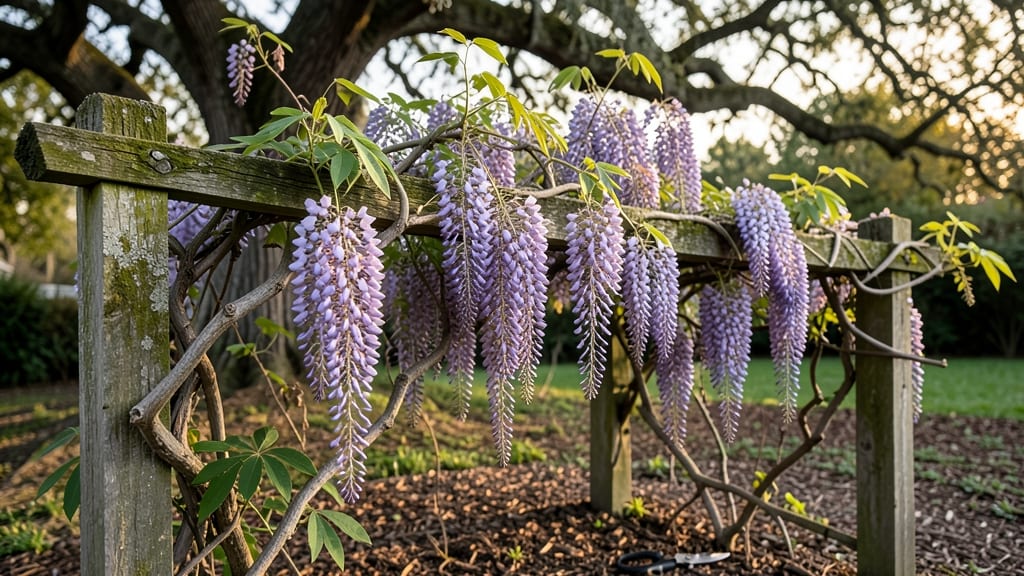
Planting a flowering wisteria tree means inviting cascades of lavender-blue blooms that smell like springtime in a jar. 🌸 I’ve wrestled with these bold vines for years, and the key to their dramatic displays isn’t just patience—it’s knowing exactly when and how to prune.
The first year, I nearly strangled mine with overzealous cuts, but now they drape my pergola like a living waterfall every April.
You’ll need a sturdy trellis or arbor (wisteria can grow 20-30 feet if unchecked), full sun, and soil that drains well but stays moist. The vines are aggressive climbers, so choose a spot where they can spread without crowding other plants.
Most beginners struggle with timing—pruning at the wrong season kills next year’s flowers—but once you master it, you’ll have blooms for decades.
By summer’s end, you’ll be shaping those vines into a showstopping display, with flowers arriving earlier and lasting longer each year. The scent alone makes it worth the effort, but the sight? Pure magic when purple clouds burst open in spring. Let’s get those shears ready—your wisteria’s transformation starts now.
Works in zones 5-9, though cooler climates need extra winter protection. Whether you’re training a young vine or reviving an overgrown mess, this method keeps them healthy and productive. Here’s how to turn your pruning game into a blooming masterpiece.
📚 In This Guide
- What you need
- Instructions
- Tips and common mistakes
- Wrapping up and next steps
What you need
- ● Pruning shears: Bypass pruners (sharp, 6–8" blades) for clean cuts on small branches.
- ● Loppers: Long-handled (24–36") for thicker branches (½"–1.5" diameter).
- ● Pruning saw: Curved-tooth for branches over 1.5" in diameter.
- ● Gloves: Heavy-duty, cut-resistant (wisteria thorns are no joke!).
- ● Safety glasses: Protect your eyes from flying debris.
- ● Disinfectant (70% isopropyl alcohol or bleach solution): Clean tools between cuts to prevent disease.
- ● Rope or twine: 3/8"–½" thick for securing heavy vines during training.
- ● Pole pruners: For high branches (extendable, 6–10' reach).
- ● Tree ties: Soft fabric strips to support young branches.
- ● Ladder: Sturdy, extendable (if your wisteria is towering!).
- ● Hose or spray bottle: Rinse tools and cuts to reduce sap buildup.
- ○ Pruning sealant: Optional for large cuts (controversial—skip if unsure!).
- ● Know your wisteria’s age and variety (e.g., Japanese vs. Chinese wisteria—pruning needs vary!).
- ● Check the best pruning time for your climate (late winter/early spring for most regions).
- ● Have a clear plan: Sketch your desired shape or consult a pruning guide.
- ● Work on a dry, sunny day to minimize sap and improve visibility.
Instructions for pruning a flowering wisteria tree
Here’s how I keep my wisteria blooming abundantly while controlling its wild growth—no guesswork involved.
✂️ Step 1: Time Your Pruning for Maximum Blooms
Prune wisteria immediately after flowering, usually in late spring or early summer when flowers have faded but before new buds form. This timing ensures you remove spent blooms while preserving next year’s flowers, which develop on old wood. If you prune at the wrong time, you risk cutting off next season’s blossoms entirely.
I mark my calendar with a reminder—missing this window means fewer flowers the following year. Look for clusters of dried-up blooms as your cue. Avoid heavy pruning in fall or winter, as wisteria needs its energy reserves for spring growth.
✂️ Step 2: Remove Dead, Weak, or Crossing Branches
Start by cutting out any dead, diseased, or damaged branches with clean, sharp pruners. These branches drain energy from the plant and can spread disease. Next, remove any branches that cross or rub against each other—they’ll eventually create wounds and weaken the vine.
I also thin out overly dense growth to improve air circulation. Aim to keep the strongest, healthiest stems. If a branch is thinner than a pencil, it’s likely too weak to support new blooms and should be pruned back. Make cuts just above a outward-facing bud or leaf node.
✂️ Step 3: Shape the Vine for Balance and Growth
Wisteria grows aggressively, so I focus on shaping it into a manageable form. For trellises or arbors, I prune side shoots back to 2-3 buds from the main stem. This encourages stronger growth along the primary branches while controlling wild sprawl.
If your wisteria is climbing a tree or fence, trim back the longest vines by one-third to redirect energy toward thicker, more productive growth. Avoid cutting into old wood—new growth emerges from the current year’s shoots. Step back often to check balance; uneven pruning leads to lopsided blooms.
✂️ Step 4: Lightly Prune for Airflow and Flower Production
After major cuts, I give the vine a final light pruning to open up the center. Remove any shoots growing inward or downward—they’ll compete with upward-growing blooms. This step boosts airflow, reducing humidity-related diseases like powdery mildew.
I never cut more than one-third of the vine’s total growth in a single season. Over-pruning stresses wisteria and can lead to fewer flowers. Instead, I spread pruning over 2-3 years if needed, focusing on gradual shaping. Watch for new shoots emerging from the base—these are future leaders for next year’s blooms.
🌿 Step 5: Clean Up and Monitor Growth
After pruning, rake up and dispose of all clippings to prevent pests or diseases from overwintering. I sterilize my pruners with rubbing alcohol between cuts to avoid spreading pathogens. Finally, fertilize lightly with a balanced 10-10-10 formula to support new growth.
Keep an eye on the vine over the next few weeks. If new shoots appear leggy or sparse, it may need more sunlight or a second round of light pruning in early fall. Wisteria responds well to patience—consistent, thoughtful pruning pays off with dramatic, fragrant blooms year after year.
Tips & tricks for pruning a flowering wisteria tree
Here's what I've learned after years of pruning wisteria—these tricks will help you avoid common mistakes and keep your vines thriving.
Timing is Everything: The late spring to early summer window is critical because wisteria blooms on old wood. If you prune too early, you risk cutting off next year's flower buds. I always check for dried-up bloom clusters as my visual cue—this means the flowers are spent and new buds have already formed. Confession: I skipped this step once and ended up with half the blooms the next spring.
The 2-3 Bud Rule: When shaping your vine in Step 3, cutting side shoots back to 2-3 buds from the main stem creates strong, productive growth. I use my thumb and index finger to count buds while holding the branch—this tactile method helps me stay consistent. Remember, new growth emerges from these buds, so accuracy matters. Between us, I've over-pruned by accident and ended up with leggy, weak growth that never bloomed well.
One-Third Rule for Balance: Never remove more than one-third of the vine's total growth in a single season. This prevents stress and ensures your wisteria has energy for new blooms. I visualize the vine as a pie chart—if I'm cutting more than a quarter of that pie, I stop. You'll notice the difference in how vigorously the plant responds over the next growing season.
Cleanup Prevents Problems: After pruning, sterilizing your tools with rubbing alcohol between cuts saves you from potential disease spread. I keep a small bottle of alcohol in my pruning bag and wipe down blades after every 3-4 cuts. This simple step has prevented multiple infections in my vines over the years. Don't make my mistake of skipping this—it's the difference between a healthy vine and one struggling with mildew.
Pro Tips for Flowering Wisteria Tree
- Here's what I've learned after years of pruning wisteria—these tricks will help you avoid common mistakes and keep your vines thriving.
- Timing is Everything: The late spring to early summer window is critical because wisteria blooms on old wood.
- The 2-3 Bud Rule: When shaping your vine in Step 3, cutting side shoots back to 2-3 buds from the main stem creates strong, productive growth.
Frequently asked questions
Got questions about nurturing your flowering wisteria tree? You’re not alone—these stunning vines can be tricky! Here are answers to the most common queries to keep your wisteria thriving and blooming beautifully.
How often should I prune my wisteria tree?
Prune your wisteria twice a year: once in late winter or early spring (before buds swell) to shape the plant, and again in summer (after flowering) to control growth. Avoid heavy pruning in fall—it can stimulate tender new growth that won’t survive winter. Pro tip: Use sharp bypass pruners for clean cuts!
When will my wisteria tree start blooming?
Wisteria typically blooms in late spring to early summer, but timing depends on your climate and variety. Japanese wisteria often flowers first (April–May), while Chinese wisteria may bloom later (May–June). Patience is key—young trees may take 3–5 years to produce flowers!
Why isn’t my wisteria flowering this year?
Lack of flowers can stem from over-pruning, poor sunlight (wisteria needs 6+ hours of sun daily), or immature vines. Check for weak growth or nutrient deficiencies (test soil pH—ideal range: 6.0–7.0). If pruned too late, old wood may not flower. Try this: Feed with low-nitrogen, high-phosphorus fertilizer in early spring.
Can I grow wisteria in a container or small yard?
Yes! Dwarf varieties (like ‘Amethyst Falls’) thrive in containers, but they need large pots (15+ gallons) with drainage and regular pruning to prevent sprawl. Place in full sun and train vines on a trellis or arbor. Warning: Wisteria grows aggressively—even in pots! Plan for annual root pruning to manage size.
How do I prune wisteria without killing it?
Follow the “three-cut method” to avoid damaging the vine:
- 1st cut: Trim dead or crossing branches first.
- 2nd cut: Shorten last year’s growth to 2–3 buds from the base.
- 3rd cut: Remove weak or leggy shoots at the base.
What’s the best climate for growing wisteria?
Wisteria loves USDA Zones 5–9 and thrives in mild winters (it’s semi-deciduous in warm climates). Protect young plants from frost with mulch or burlap wraps. In hot, dry areas, water deeply 1–2 times/week during summer. Humidity helps—mist leaves occasionally if air is dry!
Wrapping up and next steps
Transforming your flowering wisteria tree into a stunning, year-round masterpiece is totally within reach—with the right pruning know-how! 🌸 By mastering seasonal trims, balancing growth, and embracing patience, you’ll unlock vibrant blooms and lush vines that steal the show. Start small, stay consistent, and watch your wisteria thrive.
Ready to dive deeper? Grab your pruners and sketch a simple pruning plan for your tree today—your future fragrant canopy awaits! 🌿✨