
Shrubs
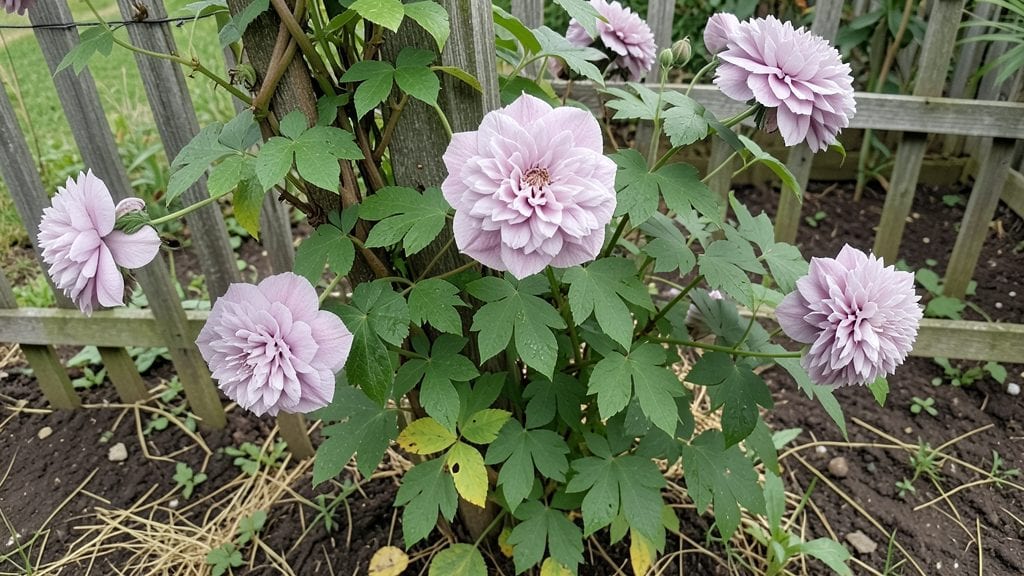
Double flowering clematis transforms your garden into a nonstop floral spectacle. 🌸 I've grown these showstoppers for years, and the secret to their year-round drama isn't just picking the right variety—it's mastering the pruning schedule that keeps them blooming from early summer through frost.
The first time I saw my clematis covered in layers of velvety petals, I knew I'd never go back to regular varieties.
These climbers thrive with 6+ hours of sunlight daily and well-draining soil rich in organic matter. Most gardeners overlook the importance of support structures—plant them near sturdy trellises or arbors so the heavy blooms don't snap stems.
Watering is simple: keep the soil consistently moist but never soggy, especially during the first growing season when roots establish. The payoff? Lush, football-sized blooms that turn heads and attract hummingbirds all season long.
Pruning might sound intimidating, but it's the game-changer for double clematis. Group varieties into three pruning categories and time your cuts right—early spring for some, late winter for others—and you'll get two bloom cycles instead of one.
The key is patience: these plants reward careful pruning with excessive flowering that makes your garden the envy of the neighborhood. Once you see the results, you'll never treat clematis the same way again.
Works beautifully in borders, containers, or as a focal point on fences. Whether you're a beginner or seasoned gardener, this guide will help you grow clematis that put on a show from June through October—and sometimes even later with proper care. Let's get those vines blooming like never before!
📚 In This Guide
- What you need
- Instructions
- Tips and common mistakes
- Wrapping up and next steps
What you need
- ● Double flowering clematis plants: Choose 3–5 healthy vines (container-grown or bare-root) from reputable nurseries (e.g., Clematis ‘Nelly Moser,’ ‘Jackmanii,’ or ‘Multiflora’ for prolific blooms).
- ● Well-draining potting mix: 10–15 gallons of a blend like 50% garden soil + 30% compost + 20% perlite/sand (avoid heavy clay!).
- ● Support structure: Trellis or arbor: 6–10 ft tall, sturdy enough to hold 15–20 lbs of blooms (e.g., metal lattice, wooden trellis, or obelisk).
- ● Twine or soft ties: 10–15 ft of jute or plastic-coated twine (avoid wire—it can damage stems!).
- ● Mulch: 2–3 inches of wood chips or straw to retain moisture and regulate soil temp.
- ● Fertilizer: Balanced granular fertilizer (10-10-10): 1 cup per plant at planting.
- ○ Slow-release clematis fertilizer: Optional but recommended for heavy bloomers (e.g., Espoma Clematis Food).
- ● Gardening gloves: 1 pair (nitrile-coated for grip and protection).
- ● Trowel or spade: Medium-sized (for digging planting holes 12–18 inches deep).
- ● Pruning shears: Bypass pruners (sharp and clean to avoid disease).
- ● Watering can or hose with nozzle: 1–2 gallons capacity for deep watering.
- ○ pH test kit: Optional but helpful (clematis thrives in 6.0–7.0 pH).
- ○ Soil moisture meter: Optional for tracking water needs.
- ● Sunlight: 6+ hours of direct sun daily (morning sun + afternoon shade in hot climates).
- ● Water source: Drip irrigation or soaker hose for consistent moisture (clematis roots are shallow!).
- ○ Wind protection: Optional for young vines (use a temporary windbreak if in exposed areas).
- ● Know your pruning group: Double flowering clematis are typically Group 2 or 3—research your variety’s pruning needs!
Step-by-Step instructions for cultivating double flowering clematis
Master these pruning techniques and you'll transform your clematis into a lush, repeat-blooming star.
🌱 Step 1: Select and Prepare the Planting Site
Double flowering clematis thrives in partial shade—choose a location with morning sun and afternoon shade to prevent leaf scorch. The soil must be well-draining but consistently moist; amend heavy clay with 2-3 inches of organic compost mixed into the top 12 inches of soil. Clematis roots are shallow but extensive, so avoid planting near trees or shrubs that compete for nutrients.
Dig a hole twice as wide as the root ball but only as deep as the container. This encourages roots to spread horizontally rather than sinking deeper, which is crucial for stability. Gently loosen any circling roots before placing the plant in the hole. The crown (where stems meet roots) should sit just below soil level—burying it too deep suffocates the plant, while leaving it exposed invites rot.
☀️ Step 2: Establish Support and Mulch Properly
Install a 5-6 foot tall trellis, arbor, or sturdy wire frame immediately after planting—clematis vines grow aggressively and need support from day one. Secure the main stems with soft plant ties or spiral garden twine to prevent wind damage. Double flowering varieties produce heavier blooms, so choose a support that won’t sag under weight.
Apply 3-4 inches of mulch (such as shredded bark or wood chips) around the base, keeping it 6 inches away from the stem to prevent moisture buildup. Mulch conserves soil moisture and regulates temperature, but never let it touch the crown. Water deeply after planting to settle the soil and encourage root expansion. Keep the soil evenly moist but never soggy for the first 4-6 weeks—this critical period determines whether the plant establishes strong roots.
✂️ Step 3: Prune for Year-Round Blooms
Double flowering clematis requires three distinct pruning phases to maximize blooms. First, in early spring (before buds swell), remove dead or weak stems and cut back last year’s growth to just above a strong pair of buds. This encourages new, vigorous shoots that will produce both spring and summer flowers. Avoid heavy pruning in autumn—wait until after the first hard frost when the plant is dormant.
In late summer, after the main flush of blooms, perform a light trim to remove spent flowers and any leggy growth. This redirects energy toward fall blooms and next year’s growth. Never prune into old wood—double flowering varieties bloom on both old and new wood, so always cut just above a visible bud or growth node. Use clean, sharp pruners to avoid tearing stems, which invites disease.
💧 Step 4: Maintain Through the Seasons
Water deeply once a week during the growing season, aiming for 1-1.5 inches of water per week. Clematis roots extend far, so soaker hoses or drip irrigation deliver moisture evenly without wetting foliage (which promotes fungal diseases). In hot, dry spells, increase frequency to every 4-5 days, checking soil moisture by pushing a finger 2 inches deep—if it’s dry, water again.
Fertilize twice a year: apply a balanced, slow-release fertilizer (10-10-10) in early spring when new growth appears, and again in early summer after the first flush of blooms. Avoid high-nitrogen fertilizers—they produce lush foliage at the expense of flowers. In late autumn, add a layer of compost around the base to replenish nutrients for next season’s growth.
⏰ Step 5: Winterize for Next Year’s Blooms
Once temperatures drop below 20°F, protect the crown by mounding 4-6 inches of mulch around the base. For extreme climates (below 10°F), wrap the entire plant in burlap or frost cloth, securing it loosely to allow airflow. Double flowering clematis is hardy to USDA Zone 4, but young plants or tender varieties benefit from extra insulation. Remove winter protection in early spring as soon as new growth appears.
This is the moment that matters: never prune in winter. Dormant stems hide next year’s flower buds, and cutting too early removes potential blooms. Wait until late winter or early spring (when buds are visible but not yet swollen) to prune. A well-maintained clematis will reward you with three seasons of blooms—spring, summer, and fall—if you follow this schedule precisely.
Tips & tricks for perfect double flowering clematis cultivation
Transforming your clematis into a year-round blooming powerhouse starts with these game-changing insights that go beyond the basics.
Soil Preparation Secret: The 2-3 inches of organic compost mixed into the top 12 inches of soil isn't just about nutrients—it's about creating the perfect crumbly texture that prevents compaction. I've seen clematis roots struggle in heavy clay even with compost, so if your soil is particularly dense, consider adding 10-20% perlite or coarse sand to improve drainage while maintaining moisture retention. This mimics the forest floor conditions these vines thrive in.
Pruning Precision: When cutting back to just above a strong pair of buds in Step 3, look for buds that face outward from the stem—they'll grow toward sunlight and produce more flowers. I learned this the hard way by pruning too close to inward-facing buds, which resulted in dense foliage but fewer blooms. Always make cuts at a 45-degree angle just above the bud to prevent water from pooling and causing rot.
Winter Protection Strategy: The 4-6 inches of mulch you mound around the base when temperatures drop below 20°F serves two critical purposes: insulation and moisture retention. For extreme climates below 10°F, I recommend adding an extra layer of straw over the frost cloth—this creates an air pocket that prevents temperature fluctuations. Remove the mulch in early spring before new growth appears, but leave the straw in place until the soil warms up.
Watering Wisdom: The 1-1.5 inches of water per week guideline is perfect, but timing matters just as much as quantity. Water in the early morning so foliage has all day to dry, preventing fungal diseases. I've found that using a soaker hose placed 6 inches away from the stem delivers water exactly where the roots need it most—without wetting the leaves that can develop mildew.
Pro Tips for Double Flowering Clematis
- Transforming your clematis into a year-round blooming powerhouse starts with these game-changing insights that go beyond the basics.
- Soil Preparation Secret: The 2-3 inches of organic compost mixed into the top 12 inches of soil isn't just about nutrients—it's about creating the perfect crumbly texture that prevents compaction.
- Pruning Precision: When cutting back to just above a strong pair of buds in Step 3, look for buds that face outward from the stem—they'll grow toward sunlight and produce more flowers.
Frequently asked questions
Got questions about growing double flowering clematis? You’re not alone! Here are some of the most common concerns—and their easy answers—to help you cultivate stunning, repeat-blooming vines with confidence.
What’s the best way to prune double flowering clematis?
Prune in three stages: First, cut back dead or weak stems in early spring. Then, after the first flush of blooms (usually late spring), trim back 1/3 of the previous year’s growth to encourage a second flush. Finally, do a light tidy-up in late fall, leaving 2–3 feet of growth to protect the plant over winter.
When do double flowering clematis bloom twice?
Most double-flowering varieties bloom twice a year: the first flush in late spring (May–June) and a second, lighter bloom in late summer to fall (August–September). Early pruning (after the first bloom) triggers the second wave. Patience is key! Some varieties need 2–3 years to establish strong growth.
Can I grow double flowering clematis in containers?
Choose a large container (at least 15 gallons) with drainage holes and use a well-draining potting mix (add perlite or sand). Provide morning sun and afternoon shade to prevent stress. Water consistently, as containers dry out faster. Dwarf varieties like ‘Jackmanii’ or ‘Niobe’ work best for pots.
Why aren’t my double flowering clematis blooms opening fully?
Overcrowded buds or poor pollination often cause this. Try these fixes:
- Thin out dense foliage to improve airflow.
- Hand-pollinate by gently shaking stems on a sunny day.
- Check for aphids or spider mites—spray with neem oil if needed.
- Ensure they get 6+ hours of sunlight daily.
Do double flowering clematis survive harsh winters?
Most varieties are hardy to USDA Zones 4–9, but young plants or tender varieties (like ‘Multi Blue’) need protection. Mulch heavily (4–6 inches) around the base and cover with burlap or straw if temps drop below 10°F. Avoid pruning until after the last frost—dormant buds form on old wood!
Wrapping up and next steps
Double flowering clematis isn’t just a plant—it’s a year-round masterpiece that rewards patience and care with breathtaking blooms and lush foliage. Whether you’re a seasoned gardener or just starting, mastering pruning and maintenance will unlock its full potential, turning your garden into a vibrant showstopper. 🌸
Ready to dive in? Start by assessing your clematis’ growth habit—grab those pruners and begin your pruning journey today! With the right techniques, you’ll enjoy stunning, repeat blooms and a thriving garden that turns heads all season long.