Companion Plants
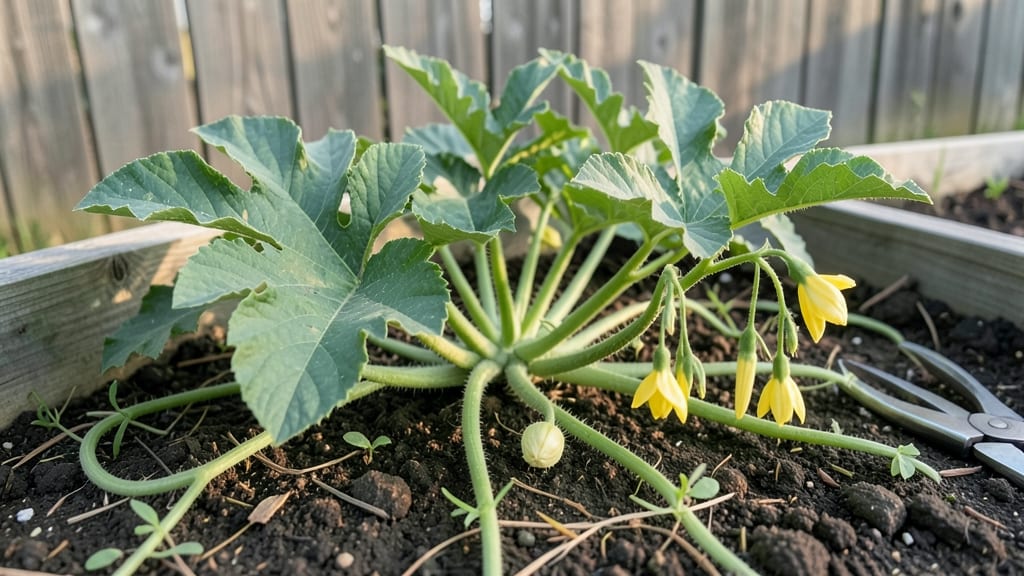
Yes, watermelon plants have flowers, with distinct male and female blooms growing on the same vine. The male flowers bloom first and serve as pollinators, while female flowers develop at the nodes where fruit eventually forms. Successful pollination—whether by bees or manual help—is crucial for fruit development.
Watermelon vines produce two types of flowers that play distinct roles in fruit production. 🌸 The male flowers, which appear first, are typically smaller with long stems and no fruit behind them.
Female flowers, on the other hand, have a tiny watermelon-shaped ovary at their base, signaling where fruit will develop if pollinated. Without proper pollination—whether from bees or gentle manual assistance—these female flowers will simply wilt away without producing fruit.
Understanding this process helps gardeners troubleshoot issues like poor fruit set. For example, if you notice lots of male flowers but few female ones developing into fruit, it might indicate pollination problems rather than a lack of blooms. This distinction is key to maximizing your harvest!
💡 In This Article
- Watermelon Flower Types and Their Role in Fruit Production
- How to Encourage Healthy Watermelon Flowering and Pollination
Watermelon flower types and their role in fruit production
Watermelon plants exhibit a fascinating dual-flower system where each vine produces both male and female blooms, though they serve completely different purposes. The male flowers appear first, typically within 4-6 weeks after planting, and look like small, yellow-orange trumpets with long, slender stems.
These flowers contain pollen but no ovary, acting purely as pollinators for the female flowers that follow. Their primary role is to fertilize the female blooms, which is why you'll often see them in abundance before any fruit appears.
The female flowers emerge later, usually at the vine's leaf nodes, and are immediately recognizable by their distinctive swollen base—this is the future fruit's ovary, often described as a tiny watermelon shape.
These blooms are slightly larger than male flowers, with thicker petals and a more robust structure to support the developing fruit. The ovary's presence is your first visual cue that a successful pollination could lead to fruit development.
Without fertilization, these female flowers will drop off within 24-48 hours, leaving no trace behind.
Here's what's actually happening botanically: When a bee or other pollinator transfers pollen from a male flower to a female flower's stigma, it triggers a hormonal response in the plant. This activates the ovary to begin growing into a watermelon, while the surrounding petals wither away.
The process involves ethylene gas production, which signals the fruit to start developing. What most people don't realize is that this pollination window is extremely brief—often just 24 hours—which is why consistent pollinator activity is crucial for good fruit set.
The timing of these flowers follows a predictable pattern based on the plant's growth stage. Early-season vines focus on producing male flowers to ensure pollination readiness, while later in the season, the plant shifts energy toward female flowers as it prepares for fruit development.
This sequential blooming is an adaptation that maximizes reproductive success. For gardeners, this means you might see 80-90% male flowers in the first flowering wave, with female flowers becoming more prevalent as the plant matures.
Visual identification is key for troubleshooting. Male flowers have long, thin stems and no swelling at the base, while female flowers show that distinctive mini-watermelon shape at their base.
The color difference can also help: male flowers often have a slightly paler yellow hue compared to the more vibrant orange-yellow of female blooms. Paying attention to these details helps you diagnose issues—like poor pollination—before they affect your harvest.
What makes this system particularly interesting is how it reflects watermelons' evolutionary strategy. By producing separate male and female flowers on the same plant, watermelons ensure cross-pollination, which increases genetic diversity in the offspring.
This is why you'll rarely see fruit develop from self-pollinated female flowers in controlled environments—the plant's design relies on external pollinators to bring together genetic material from different flowers.